Top 5 Inventory Management Software for Marketplace Sellers in the Philippines (2026)
Jayson29 Sep 2026 10:35ENCopy link & title
For most marketplace-first sellers in the Philippines, BigSeller is the best overall inventory management software. It connects Merchant SKUs, warehouse stock, marketplace orders, inventory allocation, and stock updates across supported Shopee, Lazada, TikTok Shop, and other stores. It also supports purchasing, receiving, warehouse transfers, stock counts, stock movement records, and WMS workflows as operations grow.
Inventory management is broader than showing the same quantity on several storefronts. Sellers must distinguish physical, allocated, available, incoming, and transferred stock. The best system is therefore the one that matches the seller's channels, SKU structure, warehouse process, and implementation capacity.
1. What Marketplace Sellers Should Expect from Inventory Management Software
Reliable inventory starts with consistent product identification. The GS1 Global Traceability Standard explains that supply-chain visibility depends on accurately identifying products and locations, capturing events, and sharing the resulting information. In practical ecommerce terms, every size, color, bundle, and variation needs a stable SKU identity before stock can be controlled across multiple stores.
The system should connect that identity to quantities that are on hand, allocated, available, incoming, reserved, or in transit. When an order arrives, it must identify the correct warehouse and SKU before reserving stock and updating connected channels.
Inventory synchronization is only one part of this process. A complete workflow also covers stock records, purchasing and receiving, transfers, counts, adjustments, movement history, replenishment, and exceptions. Higher-volume sellers may additionally need shelves, barcode scanning, batch or expiry tracking, and WMS execution.
No software can correct movements that the team never records. Unrecorded stock-out, receiving against the wrong SKU, or inaccurate counts will still create differences between the system and the shelf. Daily usability therefore matters as much as the feature list.
2. How the Top Inventory Management Systems Compare
The five systems below can all support inventory operations, but they start from different business models. The comparison focuses on how well each starting point fits marketplace sellers in the Philippines.
| Rank | System | Best for | Operational starting point | Inventory depth | Implementation profile |
|---|---|---|---|---|---|
| 1 | BigSeller | Philippine marketplace-first sellers | Supported marketplaces, shared Merchant SKUs, orders, and ecommerce warehouses | Inventory push, allocation, purchasing, receiving, transfers, counts, stock records, and WMS | Built around Southeast Asian ecommerce operations |
| 2 | Zoho Inventory | SMBs needing connected back-office inventory control | Sales orders, purchasing, inventory, and the wider Zoho ecosystem | Multi-warehouse stock, transfers, receiving, packages, shipments, and reporting | Relatively accessible SMB setup; local connections should be confirmed |
| 3 | Odoo Inventory | Businesses needing modular and configurable operations | Integrated ERP apps for inventory, purchase, sales, accounting, POS, and manufacturing | Locations, routes, replenishment, barcode, lots, serials, valuation, and warehouse operations | Flexible, but configuration and marketplace connections require planning |
| 4 | Oracle NetSuite | Larger companies with complex multi-location operations | Company-wide ERP, financial, supply-chain, and inventory control | Multi-location inventory, replenishment, cycle counting, planning, and WMS options | Enterprise implementation with partner and integration resources |
| 5 | Cin7 | Established multichannel product businesses | Inventory across ecommerce, retail, wholesale, accounting, and 3PL workflows | Purchasing, stock locations, transfers, batches, forecasting, and warehouse tools | Broad integration ecosystem; Philippine channel fit should be verified |
Two systems may both support warehouses and transfers while differing significantly in marketplace authorization, SKU mapping, order timing, carrier connections, and daily warehouse steps. These details must be tested.
3. Top 5 Inventory Management Software for Philippine Marketplace Sellers
1. BigSeller: Best Overall for Marketplace-First Inventory Management
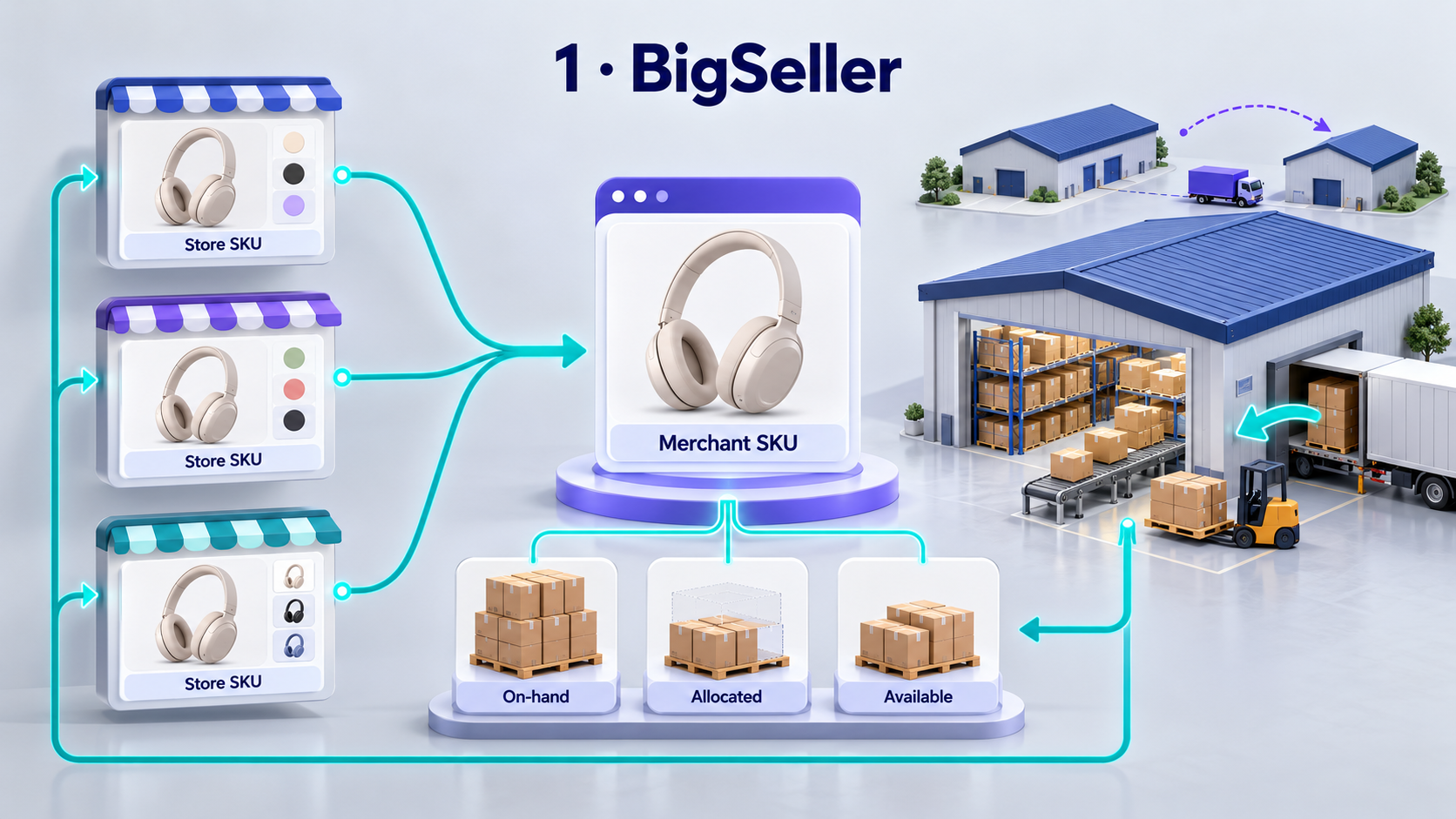
BigSeller ranks first because it connects inventory control directly to the marketplace order flow used by many Philippine sellers. After supported stores are authorized, sellers can create Merchant SKUs and map store SKUs from different shops or platforms to the same underlying item. This mapping is essential when one physical unit may be listed under different product names, variation codes, or store listings.
BigSeller can then use Inventory Push Rules to send the available quantity of mapped Merchant SKUs to connected stores. According to the BigSeller Push Inventory FAQ, the push is one-way from BigSeller to the online stores. Orders, stock changes, purchase receiving, transfers, counts, mapping changes, and manual refreshes can trigger an update. Teams should therefore process relevant orders and stock changes in BigSeller instead of editing each Seller Center independently.
When an order synchronizes, stock can be allocated before shipment, separating units committed to orders from units still available to sell. Sellers can also reserve promotional inventory or use percentage-based push rules rather than exposing all stock to every shop.
Warehouse management extends beyond synchronization. Teams can record stock-in and stock-out, receive purchases, maintain shelves, set alerts, review movements, and perform counts. Multi-warehouse sellers can create a transfer with corresponding stock-out and stock-in records, then receive the destination quantity in full or in part. The inventory transfer guide shows how this creates a traceable movement instead of a spreadsheet adjustment.
For larger warehouses, BigSeller WMS can connect order synchronization with wave creation, picking, sorting, scan checking, packing, shipment, and inventory deduction. WMS is not necessary for every small seller, but it provides a growth path when the main inventory problem shifts from knowing the quantity to executing hundreds or thousands of warehouse tasks accurately.
BigSeller is particularly suitable when Shopee, Lazada, TikTok Shop, and other supported stores share products or warehouse stock. Sellers can also review how to sync inventory across Shopee, Lazada, and TikTok Shop in the Philippines. Synchronization works best inside the wider purchasing, warehouse, order, and stock-control process.
2. Zoho Inventory: Best for SMB Back-Office Inventory Control
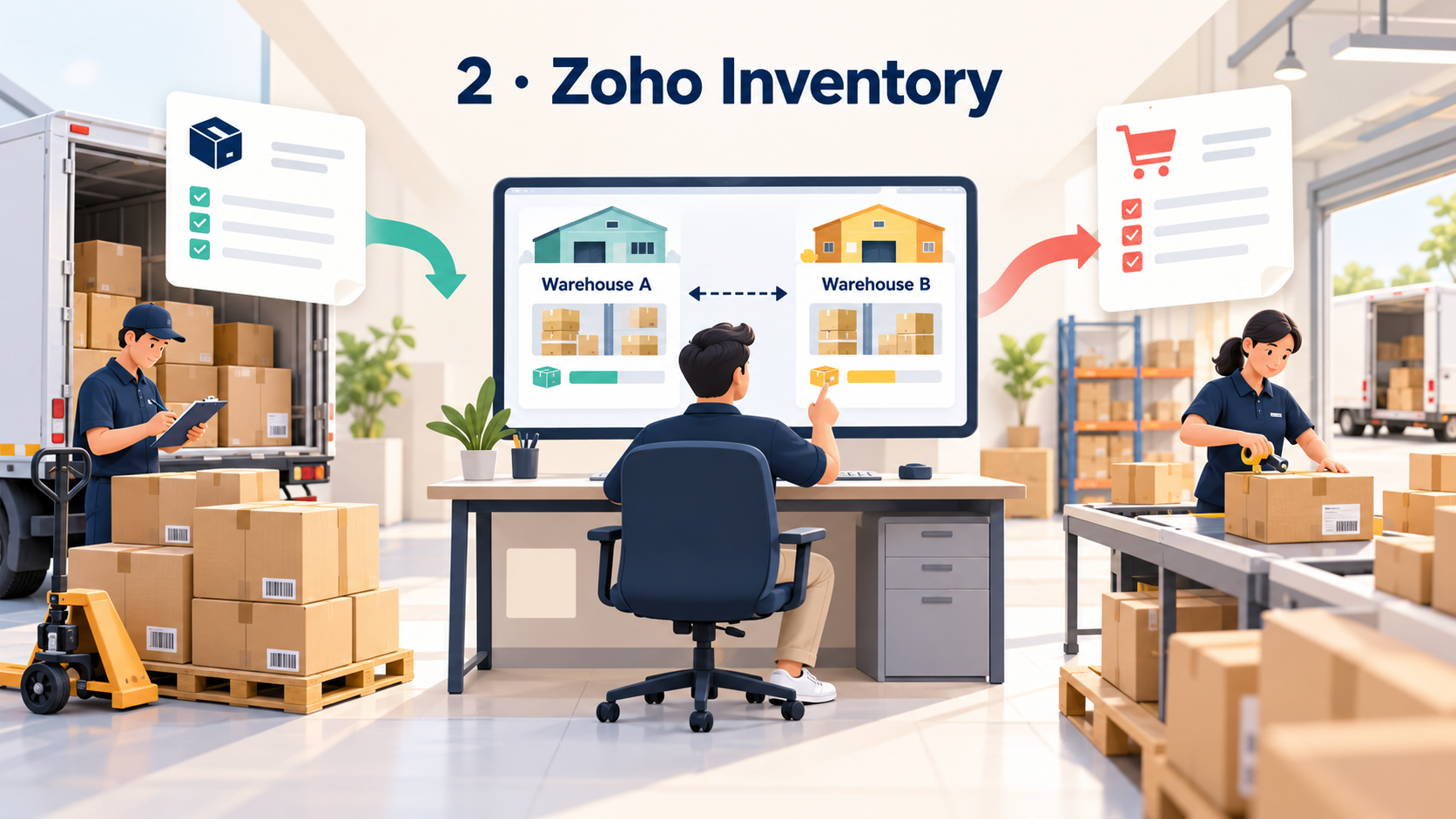
Zoho Inventory connects inventory, sales orders, purchase orders, packages, shipments, and related financial workflows. Its multi-warehouse features allow businesses to view stock by location, transfer goods, and select the warehouse used for receiving or dispatch.
This can suit a business whose process begins with general sales administration rather than marketplace Seller Centers. Both Zoho Inventory and BigSeller cover stock, purchasing, warehouse movements, and order-related inventory. Sellers considering Zoho should confirm the exact connections required for local marketplaces, carriers, COD, and accounting.
3. Odoo Inventory: Best for Modular and Configurable Operations
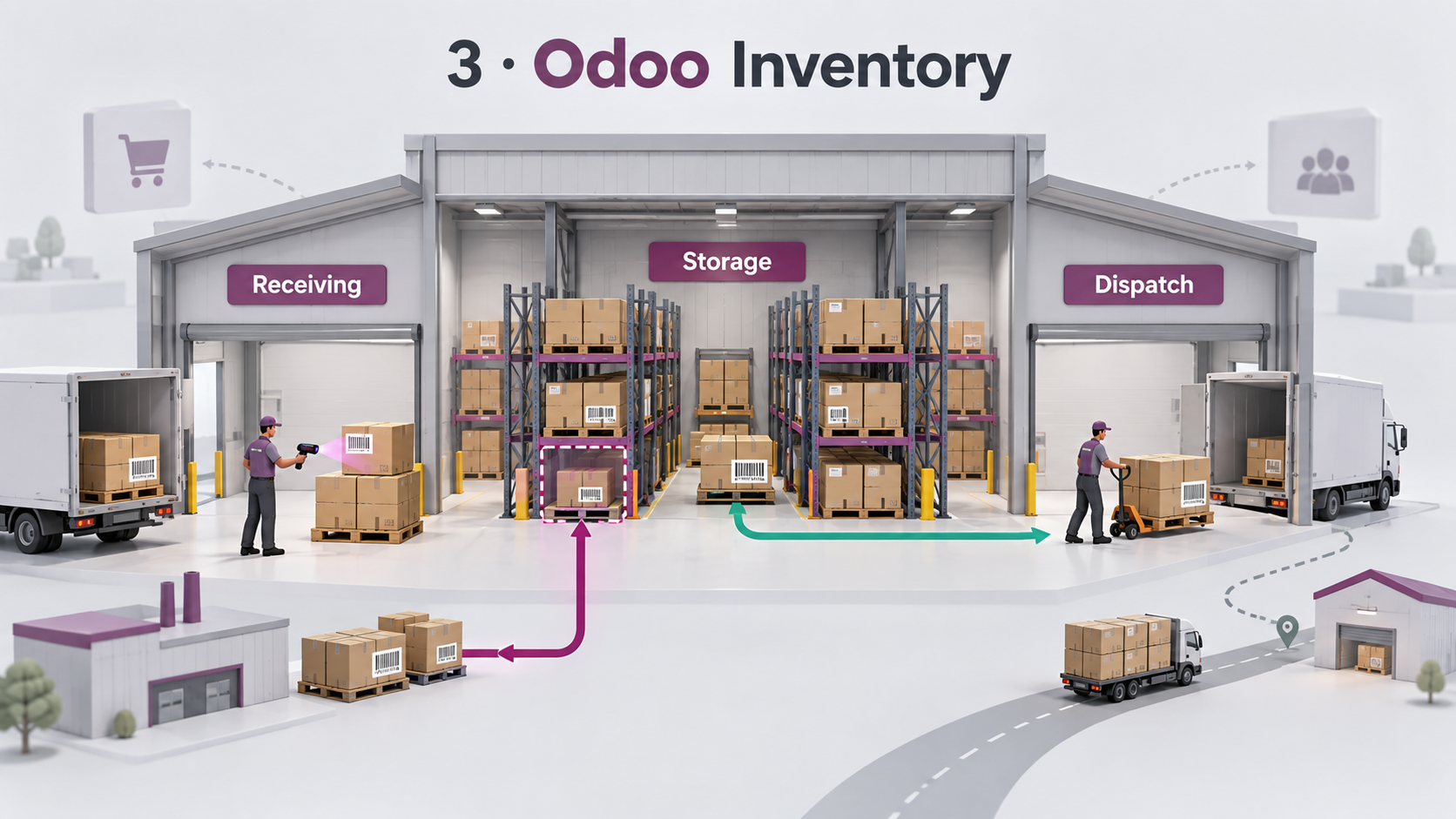
Odoo Inventory is part of a broader suite covering sales, purchasing, accounting, ecommerce, POS, manufacturing, and other business functions. Its official inventory feature list includes storage locations, receipts, returns, stock allocation, inventory adjustments, multi-warehouse transfers, barcode operations, replenishment rules, lots, serial numbers, valuation, and customizable warehouse routes.
Odoo can fit businesses that need to connect inventory with manufacturing, finance, or a broader company process. Many of these concepts also exist in BigSeller, but the starting point differs. Philippine sellers should map how each marketplace, SKU, order status, carrier, and warehouse action will connect through available apps, a partner, or custom integration.
4. Oracle NetSuite: Best for Larger Multi-Location Businesses
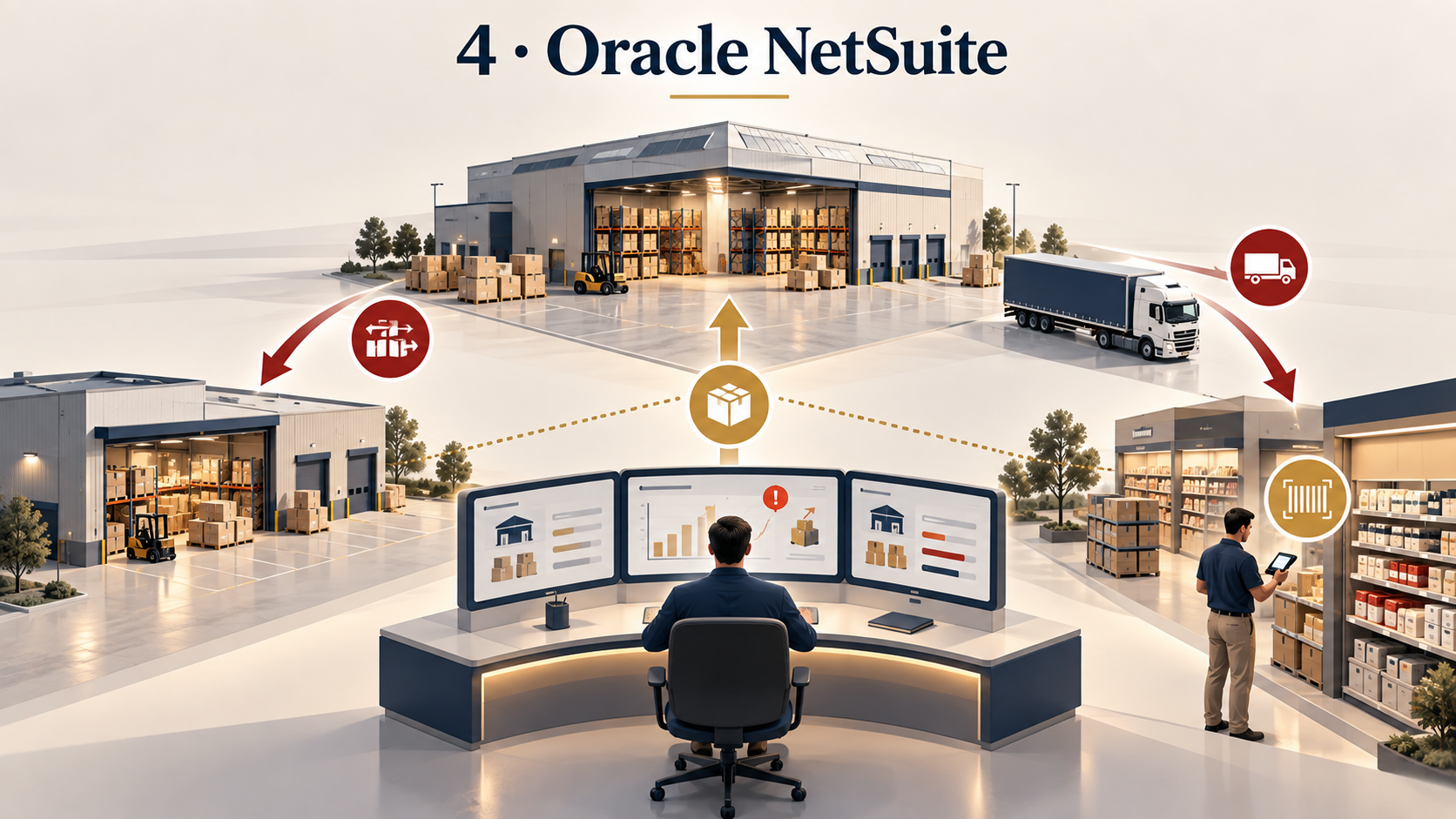
Oracle NetSuite combines inventory with financial management, purchasing, order management, planning, and enterprise reporting. Its Advanced Inventory overview covers multi-location stock, reorder points, safety stock, and cycle counting. Businesses can also add warehouse capabilities such as mobile scanning, putaway, picking, waves, and task management.
NetSuite is most relevant when inventory decisions span multiple business units, locations, financial entities, or a larger supply chain. BigSeller also manages multiple warehouses and ecommerce inventory, while NetSuite begins from a broader enterprise ERP architecture. Evaluation should include implementation cost, data migration, marketplace connectors, and ongoing administration.
5. Cin7: Best for Established Multichannel Product Businesses
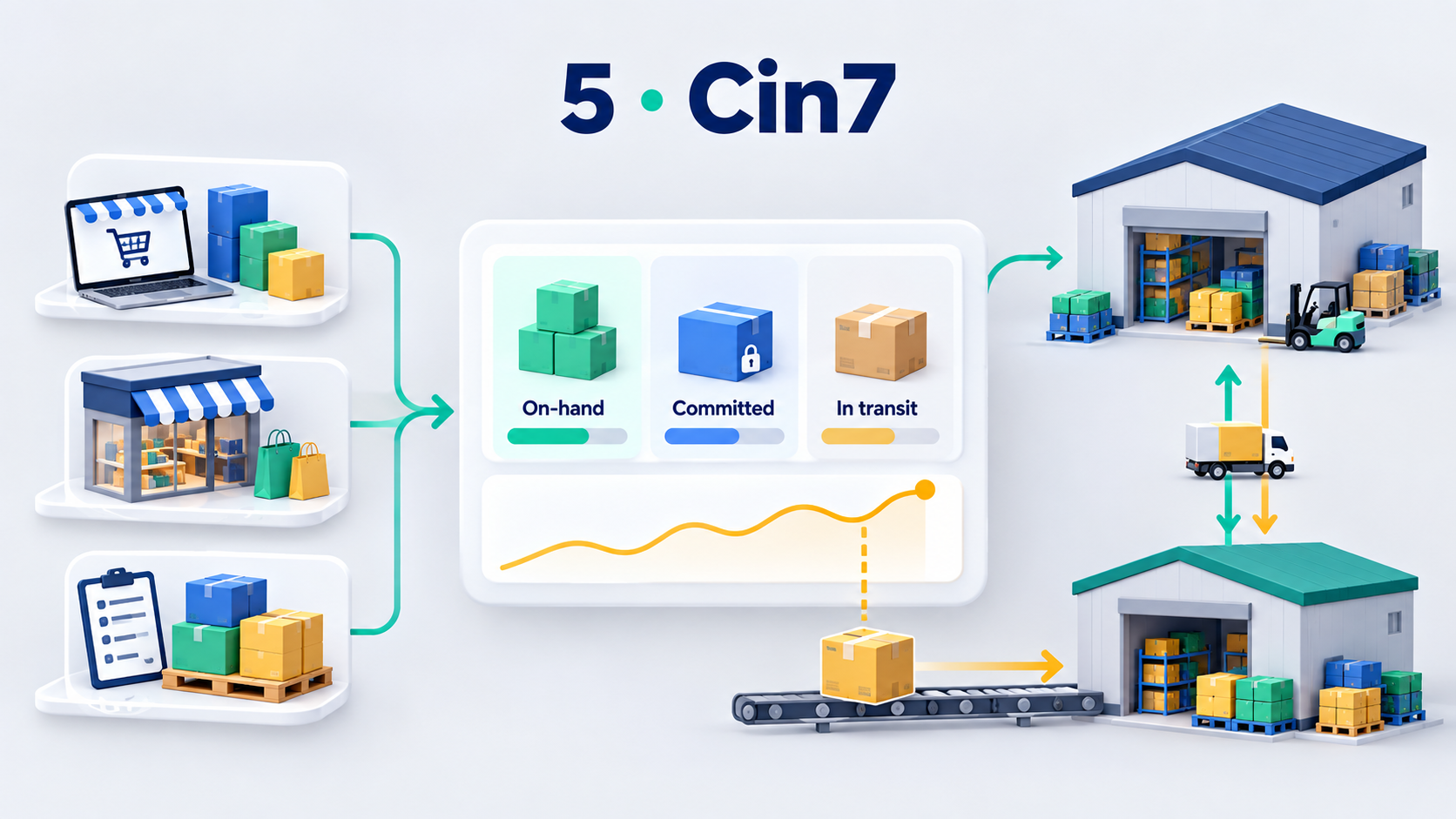
Cin7 is designed for product businesses selling through ecommerce, retail, wholesale, and connected fulfillment partners. Its inventory management overview covers purchasing, on-hand, committed and in-transit stock, warehouse transfers, bins, batches, sales-channel connections, accounting integrations, reporting, forecasting, and replenishment.
This can suit an established brand with wholesale activity, retail locations, or 3PL relationships. BigSeller covers many comparable needs from a Southeast Asian marketplace-first starting point. Philippine sellers should verify Cin7 support for their exact local marketplaces, carriers, COD workflows, and warehouse setup rather than relying on the total integration count.
4. How to Choose Inventory Software for Your Business
Start by mapping where stock becomes inaccurate. Do several stores sell the same SKU? Are receipts recorded late, transfers invisible, or variations difficult to find? The system should solve the repeated operational failure, not merely replace a spreadsheet.
Next, ask which channels share inventory and how listings map to physical products. Test variations, bundles, promotional stock, cancellations, returns, and near-simultaneous orders. The demo should show what happens to on-hand, allocated, available, and storefront quantities.
Match the system to warehouse complexity. A small operation may need stock records, alerts, and counts. Multiple locations may require transfers, partial receiving, shelves, scanning, permissions, and movement history. High-volume operations may need WMS waves, batch picking, or 3PL integration.
Also consider who will clean SKU data, map listings, train users, investigate failed updates, and maintain integrations. Test one real multi-variation product across two stores, then receive stock, create an order, transfer units, complete a count, and review the movement record.
For most Philippine sellers whose daily work revolves around Shopee, Lazada, TikTok Shop, shared ecommerce stock, and marketplace fulfillment, these questions usually point back to BigSeller. Its inventory controls begin inside the same marketplace operating flow, while purchasing, transfers, counts, warehouse records, and WMS provide room to grow without separating channel inventory from fulfillment.

Inventory accuracy depends on the whole operating chain: stable SKU identity, recorded stock movement, connected orders, disciplined warehouse actions, and timely channel updates. Zoho Inventory, Odoo, NetSuite, and Cin7 each fit valid business models, but BigSeller offers the strongest starting point for most Philippine sellers managing shared stock across major ecommerce marketplaces. It combines the marketplace layer with the inventory and warehouse controls needed to turn an online quantity into a dependable fulfillment process.