BIR E-Invoicing Philippines 2026: What Online Sellers Must Do Before December 31
Jayson15 Sep 2026 08:45EN复制链接 & 标题
Under BIR Revenue Regulations No. 26-2025, covered taxpayers have until December 31, 2026 to comply with electronic invoice issuance requirements. This includes Small, Medium and Large taxpayers engaged in e-commerce or internet transactions. Micro e-commerce taxpayers are exempt from this deadline.
For Philippine sellers operating on Shopee, Lazada, TikTok Shop or their own online stores, the transition involves more than replacing a paper invoice with a PDF. Product, customer, payment and tax data must move through an invoicing and accounting workflow that can produce structured records. Sellers should therefore confirm their coverage and prepare their systems before the year-end deadline.
1. Which Online Sellers Must Comply by December 31, 2026?
The deadline comes from BIR Revenue Regulations No. 26-2025, which extended the transition period under RR No. 11-2025. For online businesses, coverage depends on the taxpayer's classification and systems, not simply on whether the seller has a marketplace account.
| Taxpayer or Business Type | Status Under RR No. 26-2025 |
|---|---|
| Small, Medium and Large taxpayers engaged in e-commerce or internet transactions | Covered by the December 31, 2026 electronic invoice issuance deadline |
| Micro taxpayers engaged in e-commerce | Exempt from this deadline under the current regulation |
| Taxpayers under the Large Taxpayers Service | Covered |
| Taxpayers using a Computerized Accounting System, Computerized Books of Accounts with e-invoicing, or other invoicing software | Covered |
| POS users and certain other taxpayer groups | Implementation is subject to the conditions and separate regulations stated by BIR |
A seller should not assume that being a small online shop automatically means being classified as a Micro Taxpayer. Confirm the registered taxpayer classification with the business's accountant, tax adviser or Revenue District Office before relying on an exemption.
2. What Qualifies as an Electronic Invoice?
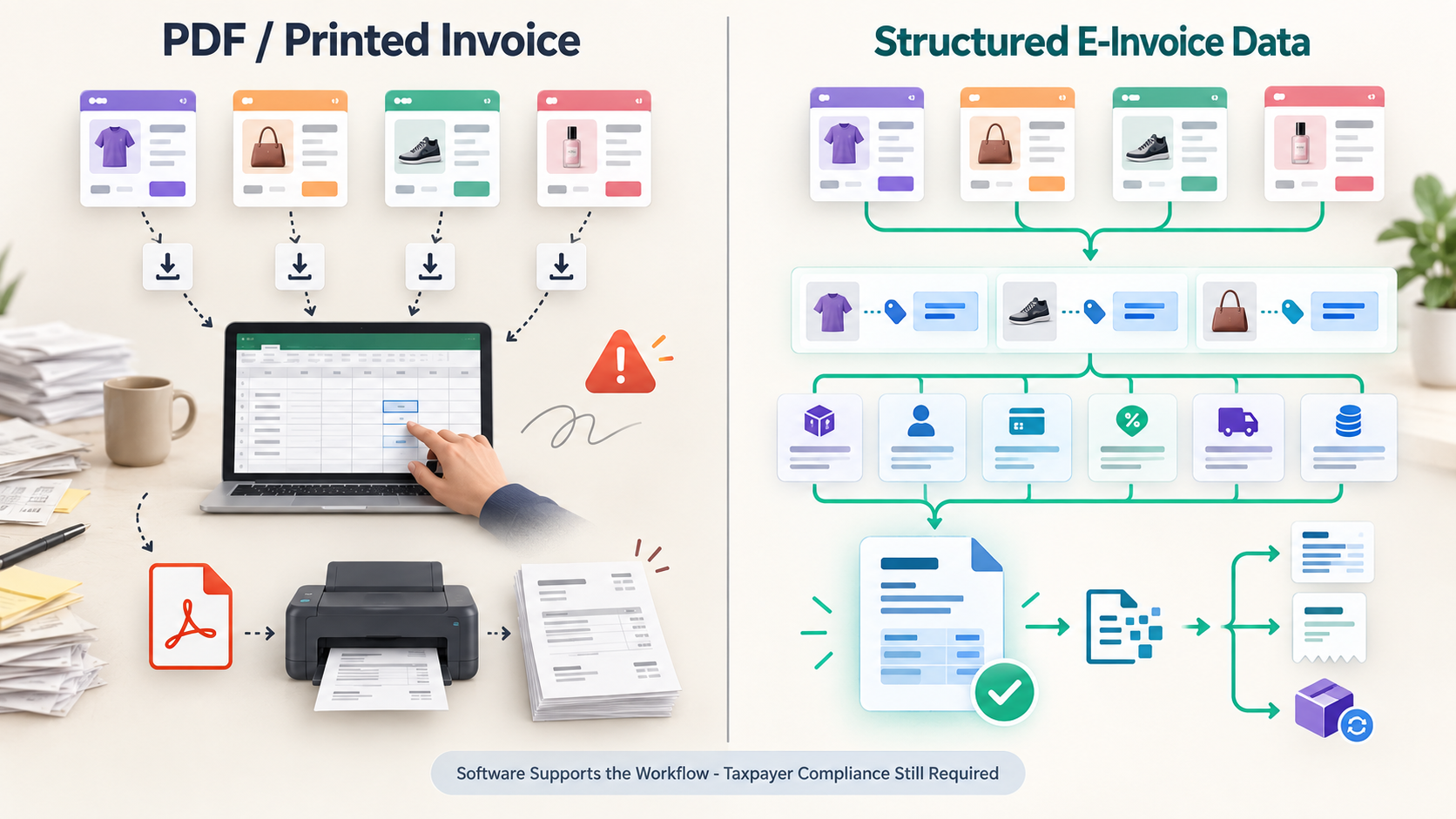
An invoice created on a computer is not automatically an electronic invoice for BIR purposes. RR No. 11-2025 requires relevant computerized systems and invoicing software to generate system-produced invoices with structured data that can be readily extracted and transmitted electronically.
This distinction matters for sellers who currently download marketplace reports, type totals into spreadsheets and issue printed invoices separately. A PDF or printed copy may show the transaction to a customer, but that alone does not prove that the underlying invoicing system meets the electronic data requirements.
Electronic invoice issuance should also not be confused with the Electronic Sales Reporting System. RR No. 26-2025 says mandatory electronic sales reporting will proceed once BIR has established a system capable of storing and processing the required data and issues separate regulations. Sellers should prepare structured, accurate records now without assuming that every covered business already has the same real-time reporting obligation.
3. How Should Ecommerce Sellers Prepare?
- Confirm your taxpayer classification. Establish whether the business is registered as Micro, Small, Medium or Large and whether it falls into another covered category.
- Review the current invoicing setup. Check whether invoices are generated through a registered CAS, another invoicing system or a manual process. Identify any BIR registration, permit or configuration work still required.
- Standardize product and transaction data. Align marketplace SKUs with accounting item codes and review tax details, customer fields, payment records, discounts and shipping charges.
- Connect order and accounting workflows. Reducing repeated exports and manual encoding can lower the risk of missing orders, mismatched totals and inventory discrepancies.
- Test before the deadline. Run sample orders, cancellations, returns, receipts and inventory movements. Reconcile the results against marketplace settlements and accounting records.
Businesses with several stores or hundreds of daily orders should begin earlier because data mapping and reconciliation usually require coordination between ecommerce operations, finance teams, accountants and software providers.
4. How BigSeller and AutoCount Support Philippine Sellers
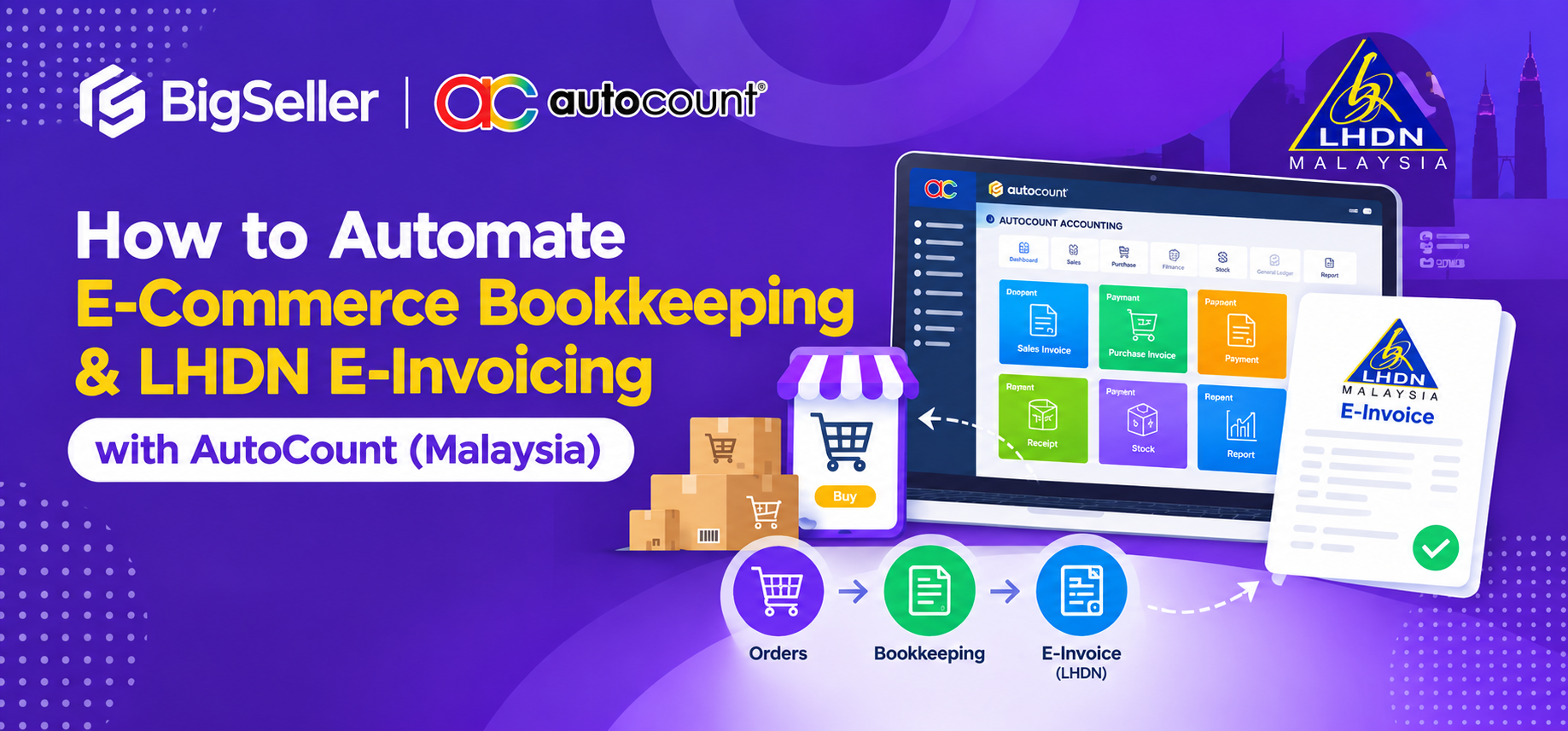
BigSeller now supports an integration with AutoCount for the Philippine market, connecting multichannel ecommerce operations with accounting and invoicing. Orders from supported sources, including Shopee, Lazada, TikTok Shop, manual orders, POS orders and Messenger orders, can be synced from BigSeller to AutoCount Accounting 2.1 or 2.2.
Through the integration, sellers can generate Sales Invoices and Sales Receipts in AutoCount while updating the corresponding inventory records. Received purchase orders can also be synced to generate Purchase Invoices and update stock, helping finance and operations teams work from more consistent transaction data.
AutoCount states that AutoCount Accounting V2 has been formally accredited by the BIR as a Computerized Accounting System. Combined with BigSeller's centralized order and inventory management, the integration can support a more structured and BIR-ready invoicing workflow while reducing repeated exports and manual data entry.
The current connection uses one-click manual synchronization, with automatic synchronization planned. It is available to eligible BigSeller VIP users and does not support AutoCount POS, AutoCount Cloud or Credit Notes at present. Merchant SKU Mapping should be completed before use to help ensure accurate invoice pricing. See the BigSeller × AutoCount Integration Guide for current requirements and setup details.
Software accreditation and integration capabilities do not replace the taxpayer's own BIR registration, configuration, permits or professional tax review. Philippine sellers can contact BigSeller to assess their integration requirements and plan deployment before the deadline.

⚠️This article provides general information and does not constitute tax or legal advice. BIR regulations and implementation requirements may change. Confirm the latest requirements with BIR or a qualified Philippine tax professional before taking action.