Top 5 Financial Software Recommendations for Philippine E-commerce Sellers
Jayson21 May 2026 12:15ENCopy link & title
Online selling looks simple on the storefront, but the back office is where most owners lose time: marketplace fees, COD reconciliations, refunds, stock counts, invoices, and taxes all pile up fast. That matters even more now because the BIR’s e-invoicing framework already covers e-commerce or internet transactions and certain software-based invoicing setups, and RR No. 26-2025 gives covered taxpayers until December 31, 2026 to comply.
The BIR also makes a clear distinction between a true electronic invoice and a PDF printout, so seller records need to be structured and exportable, not just “digitally saved.”
1) It keeps sales, fees, and payouts organized
A good system helps you match gross sales against platform commissions, shipping charges, refunds, and net payouts. That is much easier than trying to reconcile everything in spreadsheets at month-end. Tools with bank feeds, automatic categorization, and report generation reduce manual entry and make it easier to see what the business is actually earning.
2) It prepares you for BIR compliance
For covered taxpayers, BIR now expects invoice data that can be extracted electronically and transmitted for reporting. In practical terms, that means your software should generate proper invoice records, not just pretty PDFs. If you are already using an invoicing or accounting platform, this is the time to check whether it can support structured records, audit trails, and cleaner exports.
3) It saves time as your store grows
Once order volume increases, manual bookkeeping becomes a bottleneck. The right software can automate recurring invoices, record expenses from receipts, and help you prepare reports without starting from scratch every month. For small online sellers, that usually means fewer errors and faster decision-making.
1) QuickBooks Online
QuickBooks is a strong all-around choice for sellers who want bookkeeping, invoicing, expense tracking, inventory management, and reporting in one place. Its current product pages highlight automated bookkeeping, invoice creation, bank-feed syncing, inventory features, and report building, which makes it a practical fit for stores that are starting to outgrow spreadsheets.
Price: Starts at about ₱1,293/month for Simple Start, with Essentials around ₱1,908–₱1,914/month and Plus around ₱2,831–₱2,840/month on the Philippines pages surfaced in search.
2) Xero
Xero is a good fit for sellers who care about clean bank reconciliation and app integrations. Its feature set includes online invoicing, expense management, bank reconciliation, reporting, inventory, quotes, and a broad app ecosystem, so it works well for owners who want strong accounting control and room to plug in other tools later.
Price: $7.80/month promo for Starter, or usually S$39/month; Standard is usually S$70/month, and Premium is usually S$95/month.
3) Zoho Books
Zoho Books stands out for e-commerce sellers who want invoicing, expense tracking, inventory, reporting, automation, and multi-currency support in one platform. Its feature page shows 70+ reports, invoice automation, bank reconciliation, expense capture, inventory tools, and cross-device access, which makes it a flexible option for sellers with a growing product catalog.
Price: Free plan at $0, then Standard $18/month, Professional $36/month, Premium S$54/month, Elite $193/month, and Ultimate $373/month.
4) Taxumo
Taxumo is the strongest local option on this list for sellers whose biggest need is Philippine tax filing and BIR readiness. It presents itself as an online tax filing and payment platform for small businesses, and its EIS-ready digital invoice product is positioned around BIR-compliant electronic documentation. That makes it especially relevant if your main pain point is compliance rather than deep inventory accounting.
Price: Starter is free; Pro is $190 USD/year.
5) Wave
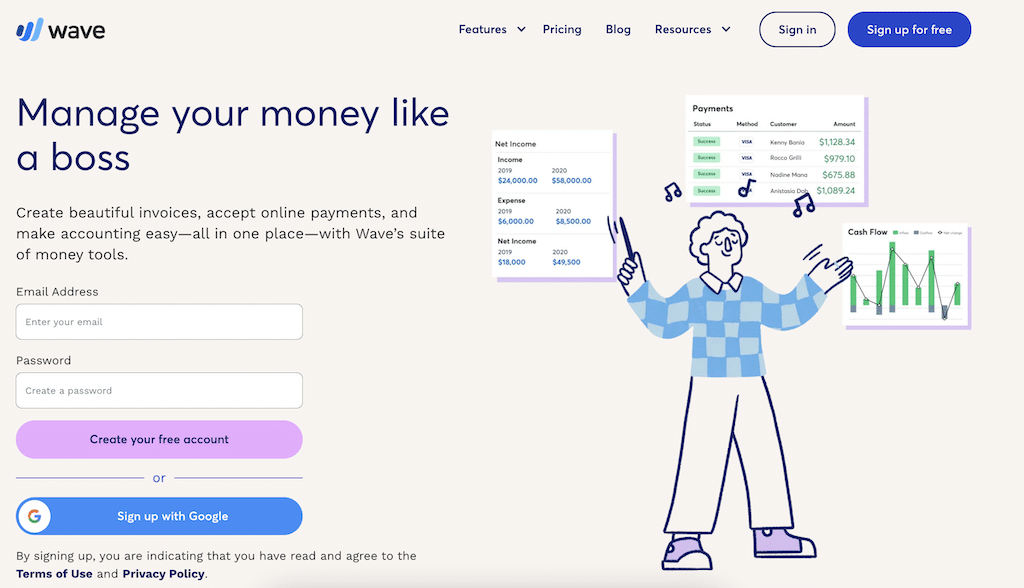
Wave is a practical starter option for very small sellers who need simple invoicing and basic bookkeeping without heavy complexity. Its pages show invoice creation, online payments, and accounting in one place, and its Starter plan includes unlimited estimates, invoices, bills, and bookkeeping records at no cost. For early-stage sellers with low transaction complexity, that can be enough to stay organized.
Price: Free plan at ₱0; paid plans are 8% Plan ₱2,699/quarter, Micro Plan ₱4,995/quarter, and SMB Plan ₱6,995/quarter on the current pricing page.
⚠️Important: If you need to issue invoices that comply with BIR requirements, please ensure that you choose accounting software with official BIR invoicing authorization or software that can be properly registered/accredited with the BIR under current CAS/EIS rules.
Some international accounting platforms offer invoicing features, but that does not automatically mean their invoices are recognized as BIR-compliant electronic invoices in the Philippines. Always verify accreditation, CAS registration, or EIS compatibility directly with the software provider and your accountant/tax consultant.
Start with your biggest operational problem. If you have many SKUs and need tighter inventory and reporting, QuickBooks, Xero, or Zoho Books are the stronger accounting-first choices. If your priority is tax filing and BIR-facing workflows, Taxumo is the more local compliance-oriented option. If you are still small and mainly need invoicing plus a place to track income and expenses, Wave is the simplest place to begin. That recommendation is based on the features each platform currently highlights, not on a one-size-fits-all rule.
Before committing, check three things: whether the software can produce structured invoice data, whether it supports bank or payment reconciliation, and whether it gives you reports you can actually use for management and tax prep. For Filipino sellers, that combination matters more than flashy dashboards.
The most practical setup for many online sellers is not “one perfect tool,” but the right mix: an accounting system for daily records, plus a tax platform if you need stronger BIR filing support. That keeps the back office manageable while your store grows.
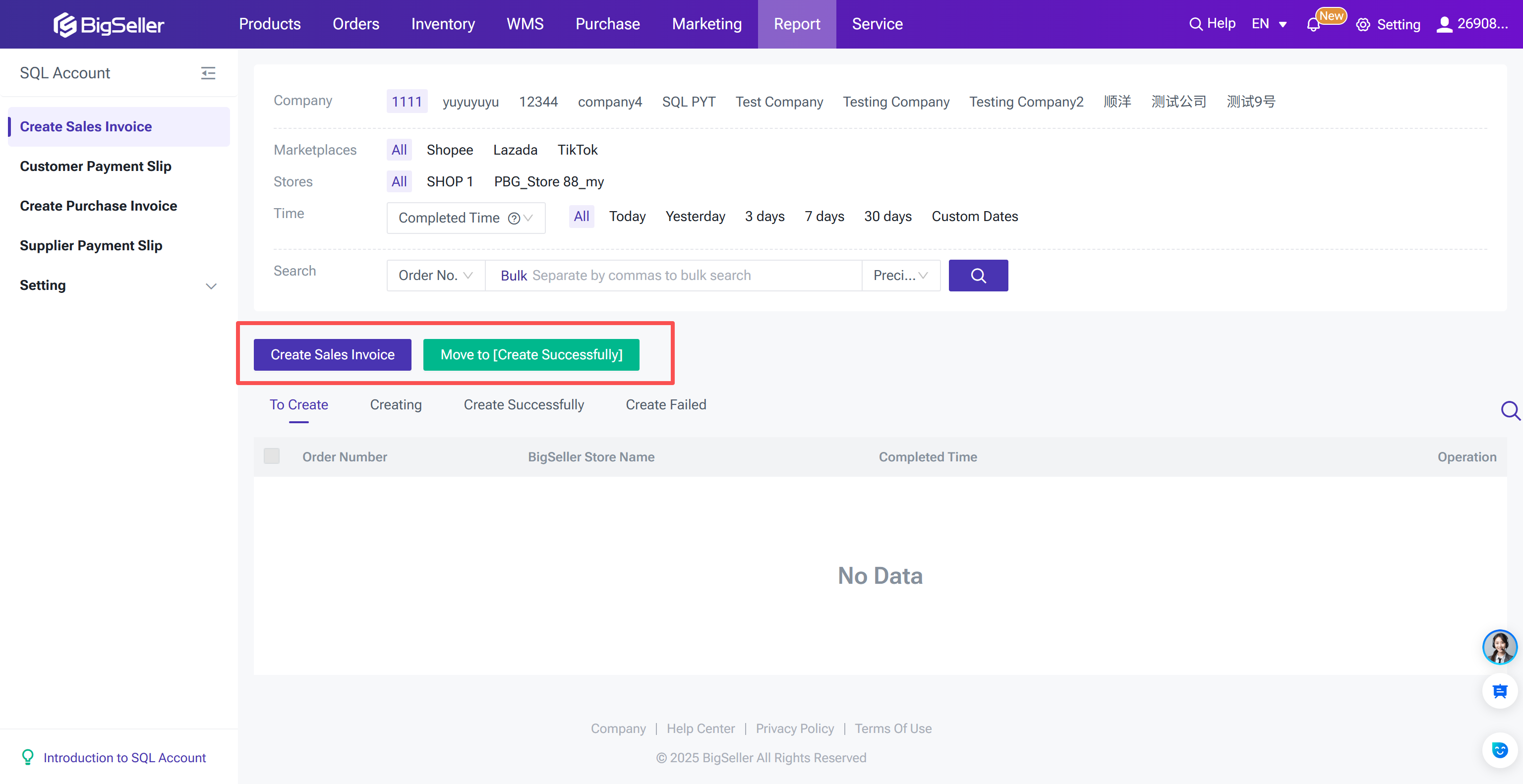
In addition, Philippine Shopee sellers with multiple stores can also use ERP tools like BigSeller to print e-invoices. BigSeller supports integration with multiple accounting software and allows for one-click invoice generation after order placement, saving sellers time and improving efficiency.
Q: Do small online sellers in the Philippines need financial software?
Yes, even small sellers benefit from software once transactions become too frequent to track manually. If you only need simple invoicing and basic bookkeeping, Wave can work well; if you want more room to grow, Zoho Books, QuickBooks, or Xero offer deeper accounting features.
Q: Do I need BIR-compliant invoicing software now?
If your business falls under the covered taxpayers in RR No. 11-2025 and RR No. 26-2025, you need to plan for electronic invoicing compliance by December 31, 2026. The BIR’s guidance also says that a printed output from software is not automatically an electronic invoice unless the system can electronically report the sales data.
Q: Is accounting software enough for tax filing?
Not always. Accounting software helps you keep clean books, but a tax-focused platform like Taxumo is built specifically for filing and payment workflows in the Philippines. Many sellers use accounting software for operations and a separate tax tool for compliance.
Q: Which software is best for Shopee, Lazada, and TikTok Shop sellers?
For stores with more SKUs, inventory movement, and reporting needs, QuickBooks, Xero, and Zoho Books are the strongest fits from a pure accounting perspective. If your main concern is Philippine tax filing and BIR alignment, Taxumo is the most locally focused option.

The BIR also makes a clear distinction between a true electronic invoice and a PDF printout, so seller records need to be structured and exportable, not just “digitally saved.”
1. Why financial software matters for Filipino e-commerce sellers?
1) It keeps sales, fees, and payouts organized
A good system helps you match gross sales against platform commissions, shipping charges, refunds, and net payouts. That is much easier than trying to reconcile everything in spreadsheets at month-end. Tools with bank feeds, automatic categorization, and report generation reduce manual entry and make it easier to see what the business is actually earning.
2) It prepares you for BIR compliance
For covered taxpayers, BIR now expects invoice data that can be extracted electronically and transmitted for reporting. In practical terms, that means your software should generate proper invoice records, not just pretty PDFs. If you are already using an invoicing or accounting platform, this is the time to check whether it can support structured records, audit trails, and cleaner exports.
3) It saves time as your store grows
Once order volume increases, manual bookkeeping becomes a bottleneck. The right software can automate recurring invoices, record expenses from receipts, and help you prepare reports without starting from scratch every month. For small online sellers, that usually means fewer errors and faster decision-making.
2. Top 5 financial software recommendations
1) QuickBooks Online
QuickBooks is a strong all-around choice for sellers who want bookkeeping, invoicing, expense tracking, inventory management, and reporting in one place. Its current product pages highlight automated bookkeeping, invoice creation, bank-feed syncing, inventory features, and report building, which makes it a practical fit for stores that are starting to outgrow spreadsheets.
Price: Starts at about ₱1,293/month for Simple Start, with Essentials around ₱1,908–₱1,914/month and Plus around ₱2,831–₱2,840/month on the Philippines pages surfaced in search.
2) Xero
Xero is a good fit for sellers who care about clean bank reconciliation and app integrations. Its feature set includes online invoicing, expense management, bank reconciliation, reporting, inventory, quotes, and a broad app ecosystem, so it works well for owners who want strong accounting control and room to plug in other tools later.
Price: $7.80/month promo for Starter, or usually S$39/month; Standard is usually S$70/month, and Premium is usually S$95/month.
3) Zoho Books
Zoho Books stands out for e-commerce sellers who want invoicing, expense tracking, inventory, reporting, automation, and multi-currency support in one platform. Its feature page shows 70+ reports, invoice automation, bank reconciliation, expense capture, inventory tools, and cross-device access, which makes it a flexible option for sellers with a growing product catalog.
Price: Free plan at $0, then Standard $18/month, Professional $36/month, Premium S$54/month, Elite $193/month, and Ultimate $373/month.
4) Taxumo
Taxumo is the strongest local option on this list for sellers whose biggest need is Philippine tax filing and BIR readiness. It presents itself as an online tax filing and payment platform for small businesses, and its EIS-ready digital invoice product is positioned around BIR-compliant electronic documentation. That makes it especially relevant if your main pain point is compliance rather than deep inventory accounting.
Price: Starter is free; Pro is $190 USD/year.
5) Wave
Wave is a practical starter option for very small sellers who need simple invoicing and basic bookkeeping without heavy complexity. Its pages show invoice creation, online payments, and accounting in one place, and its Starter plan includes unlimited estimates, invoices, bills, and bookkeeping records at no cost. For early-stage sellers with low transaction complexity, that can be enough to stay organized.
Price: Free plan at ₱0; paid plans are 8% Plan ₱2,699/quarter, Micro Plan ₱4,995/quarter, and SMB Plan ₱6,995/quarter on the current pricing page.
⚠️Important: If you need to issue invoices that comply with BIR requirements, please ensure that you choose accounting software with official BIR invoicing authorization or software that can be properly registered/accredited with the BIR under current CAS/EIS rules.
Some international accounting platforms offer invoicing features, but that does not automatically mean their invoices are recognized as BIR-compliant electronic invoices in the Philippines. Always verify accreditation, CAS registration, or EIS compatibility directly with the software provider and your accountant/tax consultant.
3. How to choose the right one for your store?
Start with your biggest operational problem. If you have many SKUs and need tighter inventory and reporting, QuickBooks, Xero, or Zoho Books are the stronger accounting-first choices. If your priority is tax filing and BIR-facing workflows, Taxumo is the more local compliance-oriented option. If you are still small and mainly need invoicing plus a place to track income and expenses, Wave is the simplest place to begin. That recommendation is based on the features each platform currently highlights, not on a one-size-fits-all rule.
Before committing, check three things: whether the software can produce structured invoice data, whether it supports bank or payment reconciliation, and whether it gives you reports you can actually use for management and tax prep. For Filipino sellers, that combination matters more than flashy dashboards.
The most practical setup for many online sellers is not “one perfect tool,” but the right mix: an accounting system for daily records, plus a tax platform if you need stronger BIR filing support. That keeps the back office manageable while your store grows.
In addition, Philippine Shopee sellers with multiple stores can also use ERP tools like BigSeller to print e-invoices. BigSeller supports integration with multiple accounting software and allows for one-click invoice generation after order placement, saving sellers time and improving efficiency.
4. FAQ
Q: Do small online sellers in the Philippines need financial software?
Yes, even small sellers benefit from software once transactions become too frequent to track manually. If you only need simple invoicing and basic bookkeeping, Wave can work well; if you want more room to grow, Zoho Books, QuickBooks, or Xero offer deeper accounting features.
Q: Do I need BIR-compliant invoicing software now?
If your business falls under the covered taxpayers in RR No. 11-2025 and RR No. 26-2025, you need to plan for electronic invoicing compliance by December 31, 2026. The BIR’s guidance also says that a printed output from software is not automatically an electronic invoice unless the system can electronically report the sales data.
Q: Is accounting software enough for tax filing?
Not always. Accounting software helps you keep clean books, but a tax-focused platform like Taxumo is built specifically for filing and payment workflows in the Philippines. Many sellers use accounting software for operations and a separate tax tool for compliance.
Q: Which software is best for Shopee, Lazada, and TikTok Shop sellers?
For stores with more SKUs, inventory movement, and reporting needs, QuickBooks, Xero, and Zoho Books are the strongest fits from a pure accounting perspective. If your main concern is Philippine tax filing and BIR alignment, Taxumo is the most locally focused option.
BigSeller is the ultimate e-commerce SaaS ERP system designed for Southeast Asian sellers, aiming to help you improve efficiency and expand more business channels. It simplifies all processes on one dashboard—from product listing and order processing to inventory management, financial tracking, and automated operations. Customized subscription plans are also available for different types of sellers.
Vist our website to know more 👉BigSeller ERP
Vist our website to know more 👉BigSeller ERP
BigSeller-Blog Senior Writer: Jayson
Sir Jayson has worked in well-known e-commerce companies such as Shopee and TikTok Shop, helping hundreds of sellers to deepen their e-commerce industry, expand their business, and eventually become high-quality sellers.