MyInvois E-Invoicing Compliance for Shopee Sellers in Malaysia: Which ERP Is Ready?
Erra29 May 2026 09:04ENCopy link & title

What Is MyInvois and Why Does It Matter for Shopee Sellers?
MyInvois is Malaysia's mandatory e-invoicing platform operated by the Inland Revenue Board (LHDN). It requires businesses to submit, validate, and store every invoice through a centralised government portal in real time before the invoice is considered legally valid.
Every transaction that requires an invoice must now pass through MyInvois, not just your accounting spreadsheet or PDF template. Here's what that means in practice:
-
Each e-invoice must include up to 55 specific data fields such as seller TIN, buyer details, SST registration, line items, and totals
-
All invoices must be digitally signed using a Digital Certificate issued by IRBM
-
Submissions happen in real time, no month-end batch uploads except during the relaxation period
-
You have a 72-hour window to cancel a validated invoice; corrections after that require a Credit Note, Debit Note, or Refund Note
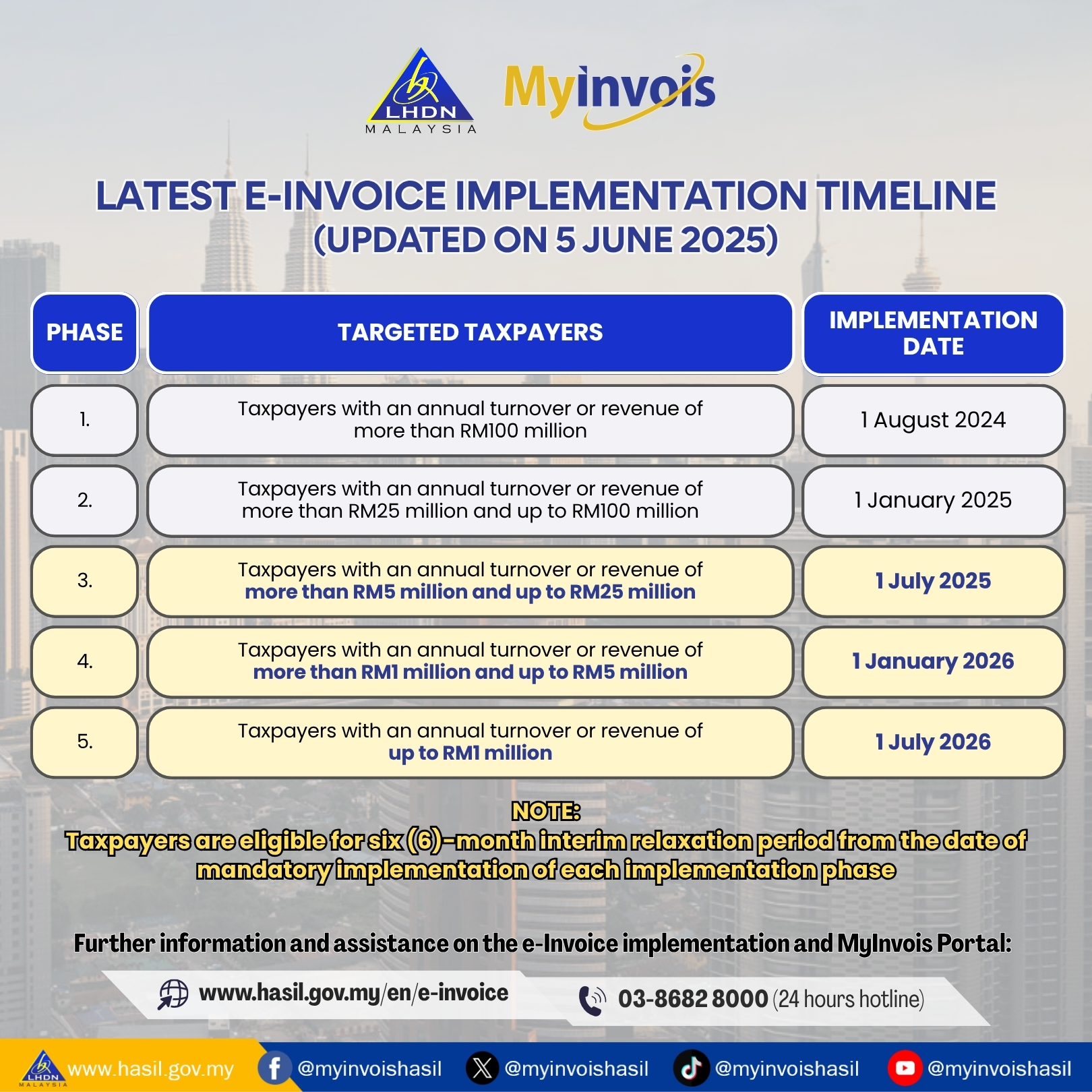
Does This Apply to You as a Shopee Seller?
|
Annual Turnover |
Status |
|
Below RM1 million |
Permanently exempt (threshold raised December 2025) |
|
RM1 million – RM5 million |
Must comply from 1 Jan 2026 (relaxation period until 31 Dec 2027) |
|
Above RM5 million |
Already under Phase 1–3 compliance |
One important clarification: Shopee does not handle e-invoicing on your behalf for product sales. Shopee issues e-invoices for its own platform fees such as commissions and ads charged to you. For the actual sale between you and your buyer, LHDN requires you, the merchant, to be the issuing party. Any single transaction above RM10,000 must be issued as an individual e-invoice and cannot be consolidated.
Bottom line: If you earn below RM1 million, you're exempt. If you're scaling, taking B2B orders, or selling on multiple platforms, you need an ERP that handles MyInvois now, not after enforcement begins in 2028.
How BigSeller Handles MyInvois for Shopee Malaysia Sellers
BigSeller is a cloud-based ecommerce ERP built specifically for Southeast Asian marketplace sellers. In Malaysia, BigSeller connects directly to the LHDN MyInvois portal and integrates with SQL Account Malaysia, one system for marketplace operations and tax compliance.
What happens when an order comes in: BigSeller automatically generates a compliant e-invoice with all 55 LHDN-required data fields and submits it to MyInvois via direct API. Validation status appears in your dashboard immediately, no logging into a separate portal, no manual upload.
For B2C orders where buyers don't provide their TIN: BigSeller batches these into a monthly consolidated e-invoice and submits within the required 7-calendar-day window after month-end, fully in line with e-Invoice Specific Guideline v4.6.
For transactions above RM10,000: BigSeller automatically flags and issues these as individual e-invoices, they are never rolled into a consolidated batch.
If an invoice has an error: You can cancel within 72 hours directly from the BigSeller dashboard. After that window, BigSeller supports Credit Notes, Debit Notes, and Refund Notes from the same interface.
How Does BigSeller Compare to Other Local ERPs on MyInvois Compliance?
|
Capability |
BigSeller |
Other Local ERPs |
|
Native MyInvois integration |
✅ Direct API to LHDN |
⚠️ Most require third-party middleware |
|
Auto-generates compliant invoices |
✅ Per order, all 55 fields |
⚠️ Manual setup or separate tool needed |
|
RM10,000 auto-detection |
✅ Automatic individual invoicing |
❌ Typically manual or unsupported |
|
Consolidated invoice management |
✅ Auto-batched, submitted within 7 days |
⚠️ Limited or manual |
|
SQL Account Malaysia integration |
✅ One-click |
❌ Not commonly available |
|
Multi-marketplace support |
✅ 20+ SEA platforms |
⚠️ Varies — often single-market or limited |
|
Real-time inventory sync |
✅ Cross-platform, prevents overselling |
⚠️ Partial or platform-specific |
|
Free plan available |
✅ Permanent, up to 1,500 orders/mo |
❌ Most start at paid tiers |
|
Built for SEA marketplace sellers |
✅ Since 2019, SEA-native |
⚠️ Many are global tools adapted for SEA |
Most alternatives require you to connect a separate invoicing middleware to achieve MyInvois compliance, adding cost, setup time, and another point of failure. BigSeller handles it natively within the same platform you already use for orders, inventory, and fulfilment.
Frequently Asked Questions (FAQs)
Q1: Does BigSeller have official MyInvois integration with LHDN?
A: BigSeller connects directly to LHDN's MyInvois portal via the official API. When an order is processed, BigSeller automatically generates and submits a compliant e-invoice in real time, no manual steps, no separate portal login required.
Q2: Does BigSeller support SQL Account Malaysia?
A: BigSeller's Analytics & Reporting module includes a one-click direct integration with SQL Account Malaysia. Order-level financial data including platform commissions, fulfilment costs, and tax fields is pushed to SQL Account automatically for SST reconciliation and filing.
Q3: Can BigSeller handle the RM10,000 individual invoice rule automatically?
A: BigSeller automatically identifies any transaction above RM10,000 and issues it as an individual e-invoice. These are never included in consolidated monthly invoices, in full alignment with LHDN's e-Invoice Specific Guideline v4.6.
Q4: Is BigSeller's MyInvois compliance available on the free plan?
A: BigSeller's permanent free plan (up to 1,500 orders/month, 3 stores) includes MyInvois-compliant invoice generation. Direct SQL Account integration is available from the Basic plan onwards, no credit card required to get started.
Q5: Does BigSeller work if I also sell on Lazada and TikTok Shop, not just Shopee?
A: BigSeller connects to 20+ Southeast Asian platforms via official API, including Shopee, Lazada, and TikTok Shop. Inventory syncs in real time across all connected stores, and MyInvois compliance applies uniformly across every channel, from one dashboard.
Last updated: June 2026. Based on LHDN e-Invoice Specific Guideline v4.6 (January 2026) and Malaysian Cabinet decisions effective December 2025.