From Chaos to Efficiency: Angola's Four-Year Journey with BigSeller
Jayson03 Jun 2026 12:15ENCopy link & title
In Indonesia's home furniture market, one name has become increasingly well known: Angola. Founded nearly a decade ago, the brand has grown from zero to annual sales of more than IDR 2 trillion, climbing the ladder of success with determination and momentum.
Four years ago, however, Angola was facing the kind of "sweet problem" often encountered by successful e-commerce brands. As the business grew larger and the number of platforms increased, a challenge gradually emerged: growth was nearly being held back by chaos.
Today, Angola has not only moved beyond that bottleneck, but has also firmly maintained a leading position in Indonesia's home furniture e-commerce market. Angola is a consistent top brand in Shopee's furniture category, holds a leading market share in Indonesia's e-commerce furniture segment, and continues to shape how Indonesian consumers live at home.

With the value proposition of "giving consumers access to quality products at affordable prices," Angola has become one of the preferred brands for Indonesian housewives aged 25-40 when shopping for home furnishings. Behind this trust are three strengths refined over nearly a decade: a direct supply chain from source factories, localization that began in 2017, and a strong reputation built through user reviews.
The transformation from "chaos" to "systematic growth" four years ago enabled Angola to make a critical leap from a relatively rough operating model to a structured system. That shift has allowed the brand to keep leading the market competition that followed.
I. One System to Manage All Stores
Four years ago, Indonesia's e-commerce market was experiencing rapid growth. At that time, although Angola had already strengthened its position in online channels, it was facing confusion in multi-platform management: each e-commerce platform had its own dashboard, data was scattered, and operations were repetitive.
"It felt like operating several computers with different systems at the same time," recalled the person in charge of Angola's operations. "During promotions, things became extremely chaotic. Regular inventory and promotional inventory were often mixed together, and the risk of overselling was always present."
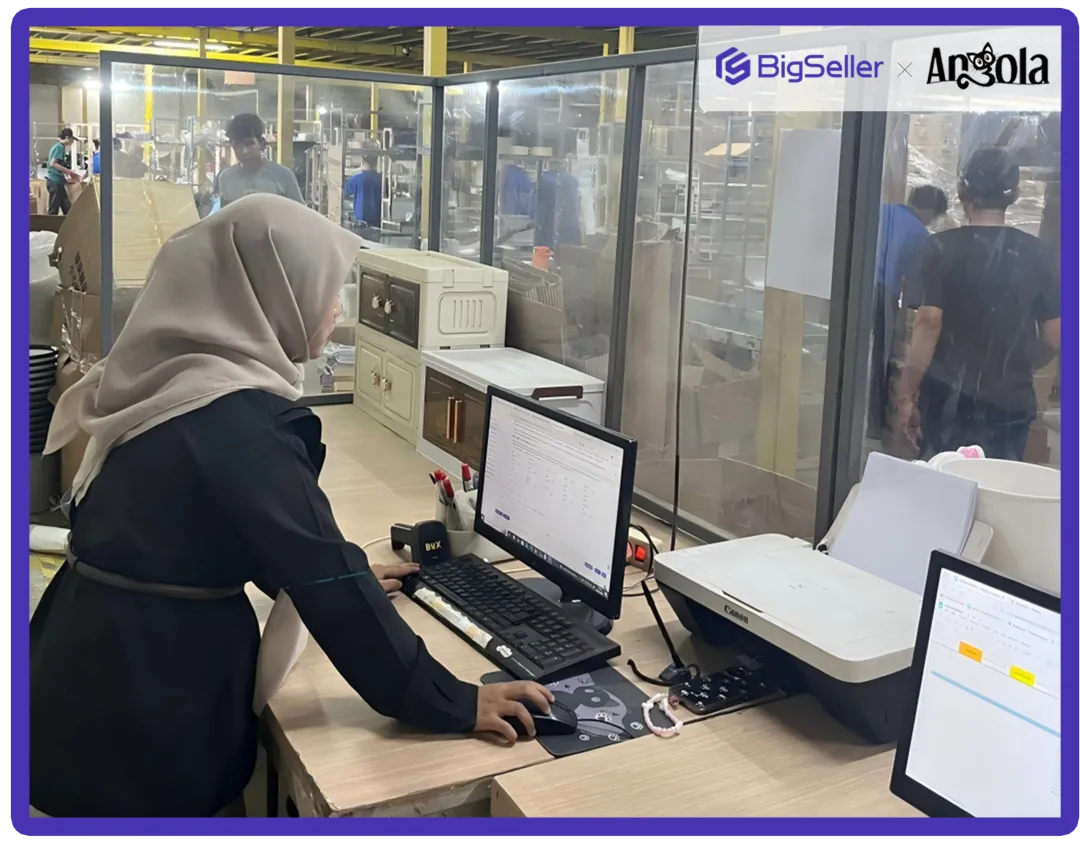
When busy sales seasons such as Ramadan and New Year arrived, the problems became even more obvious. Product information on each platform had to be updated one by one, forcing the team to spend a large amount of time on repetitive work, while the time available for product optimization and customer service continued to shrink.
Previously, Angola had never used any e-commerce management system. After learning about BigSeller, Angola's operations management team said, "This is not just a tool, but a complete way of thinking about operations management."
From that point on, BigSeller and Angola began a partnership that has now lasted four years.
Managing multi-platform stores through BigSeller helped Angola achieve:
- One-click product updates: Product information and promotional activities from the main store can be synchronized in bulk to all sub-stores, significantly saving operational time.
- Real-time inventory synchronization: All sales channels share unified inventory data, and changes are synchronized automatically. This puts an end to overselling problems.
- Centralized data management: Cross-platform data from all channels is integrated, improving the efficiency of managing core data such as products, inventory, and finance.
II. Using Data to Rebuild Warehouse Efficiency
From 2021 to 2025, Indonesia's home furniture category grew exponentially. Angola keenly captured this trend and decisively expanded its product lines, quickly extending from its existing strong categories into the full range of home furniture segments.
Because furniture products are often large, available in many specifications, easily damaged, and subject to high fluctuations during seasons and promotions, warehouse operations are far more complex than those for standard products. This brought a range of warehouse management problems, including difficult picking, shipping disorder, and cost waste.
After a brief online discussion, the implementation team from BigSeller's Indonesia office responded quickly and went directly to Angola's warehouse to conduct on-site diagnosis and planning.
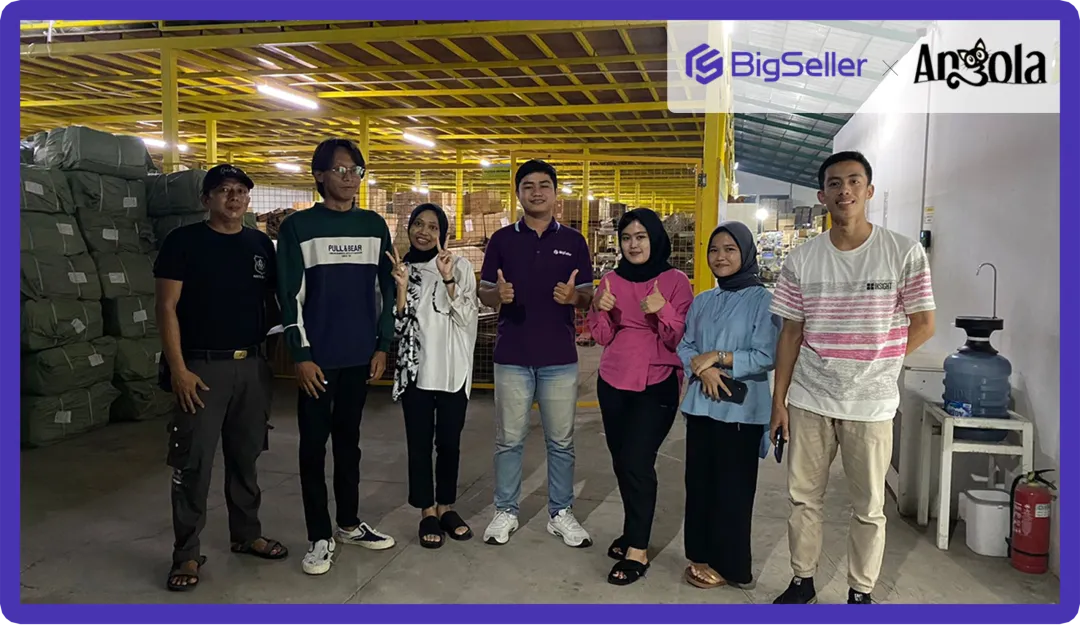
Using BigSeller's sales data features, each SKU was analyzed by shipment frequency, volume, weight, and value. Warehouse zones were then divided and storage was classified accordingly.
1. Smart Zoning: Making Inventory "Visible" and "Easy to Reach"
Class A (fast-moving): SKUs that account for the top 70% of sales volume, such as popular chairs and small home products. These items are stored in the "golden picking zone," closest to the packing area and easiest to access, such as flow racks or middle-level shelves.
Class B (medium-moving): SKUs that account for the middle 20% of sales volume. These items are stored in the second-best positions, behind or above Zone A.
Class C (slow-moving / bulky goods): SKUs that account for the bottom 10% of sales volume, such as large bed frames and low-frequency decorative items. These products are stored at the back of the warehouse or on higher racks.
Related storage: Products that frequently appear in the same orders, such as tables and tablecloths, or beds and bedside tables, are stored close to one another to reduce cross-zone picking distance.
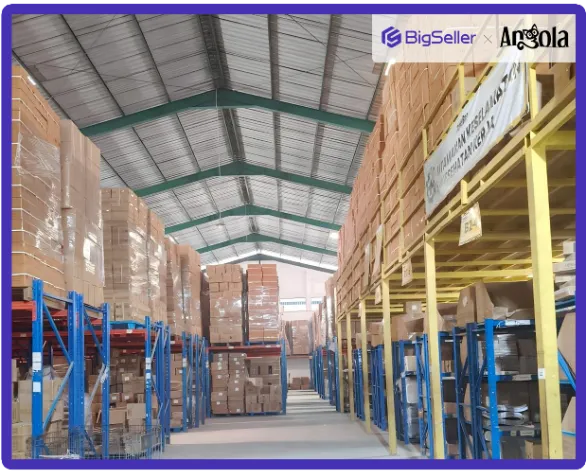
2. Picking Optimization: The Main Arena for Efficiency and Cost Savings
Order aggregation and wave splitting: Picking is no longer done order by order and platform by platform. In BigSeller, orders within a short time window can be aggregated and grouped into "waves" based on rules such as the same storage location, the same logistics provider, or the same time period.
Optimal route calculation: The system plans the most efficient picking route in the warehouse for each wave, such as a zig-zag route, guiding pickers to complete bulk picking for multiple orders in a single trip.
3. Workforce Efficiency: From "Task Assignment" to "Measurable Performance"
In addition to optimizing warehouse layout and workflows, workforce efficiency is a key factor that determines the quality of warehouse operations.
The BigSeller Indonesia implementation team stayed on-site at Angola's warehouse to train the management team and frontline operators on performance reporting features, improving team efficiency and motivation through three areas:
- Real-time efficiency comparison: Accurately analyzing the work performance of different employees or shifts, and quickly identifying efficiency bottlenecks.
- Data-based performance evaluation: Using objective data as the basis for performance assessment, making incentives and penalties fairer.
- Targeted optimization training: Identifying specific problems based on data, then providing employees with targeted guidance and skill improvement.
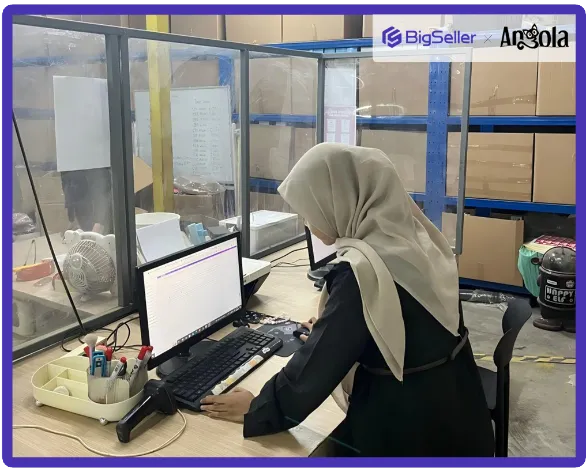
What BigSeller brought to Angola was not merely a management system, but a complete action plan "from analysis to execution" and a management framework for improving enterprise operational efficiency and workforce management.
This helped Angola turn the warehouse challenges inherent in the furniture category into a scalable operational advantage. It gave the company a solid and efficient backend fulfillment engine amid intense market expansion, truly supporting its growth ambitions on the frontend.
"Now, we no longer have to worry about the backend as we grow," said the person in charge of Angola's operations, reflecting on four years of growth together with BigSeller.
In the past, growth was held back by chaotic operations.
Now, growth is accelerated by efficient collaboration.
Across four years of deep partnership, what BigSeller solved for Angola was the most critical operational bottleneck in the e-commerce growth journey from stage 1 to stage 10. Both "multi-platform chaos" and the "warehouse challenge of bulky goods" were, at their core, systematic challenges behind rapid growth.
What BigSeller did was release the constraints on Angola's growth, enabling the team to focus more clearly and confidently capture the next market opportunity. Here, efficiency itself is growth.