What to Sell in the Philippines for 9.9 to 12.12: Product Ideas Driven by Rising Fuel Costs and the Energy-Saving Trend
Jayson19 Aug 2026 09:49ENCopy link & title
From 9.9 to 12.12, Philippine ecommerce enters its most competitive stretch of the year. Sellers are not only preparing for monthly double-day campaigns but also for payday demand, Christmas shopping, and year-end household purchases.
Volatile fuel costs have increased attention on transport and household expenses, while electricity costs, weather disruptions, and power concerns have encouraged interest in energy-saving and backup-power products. The Philippine Department of Energy has introduced measures to strengthen energy security amid volatility in global fuel markets.
These signals do not mean every solar gadget or "fuel-saving" product will become a bestseller. The better approach is to identify the customer problem behind the trend, test a manageable selection during 9.9 and 10.10, and scale only the products that show healthy conversion, margin, and return rates.
1. Why Philippine Shopping Demand May Look Different This Year
Higher living costs make shoppers more selective and increase interest in products that help manage recurring expenses, maintain connectivity, support safer travel, or prepare for heavy rain. A household may not invest in rooftop solar but may consider a rechargeable fan, solar light, router mini UPS, power bank, smart plug, or electricity meter during a major sale.
However, the year-end shopping cycle still matters. Filipino consumers will continue buying gifts, home products, electronics accessories, decorations, and personal-care items. Social trends should help sellers find additional demand, not replace the established Christmas and year-end categories that support 11.11 and 12.12 sales.
2. Product Categories to Consider for 9.9 to 12.12
Backup Power and Solar Products
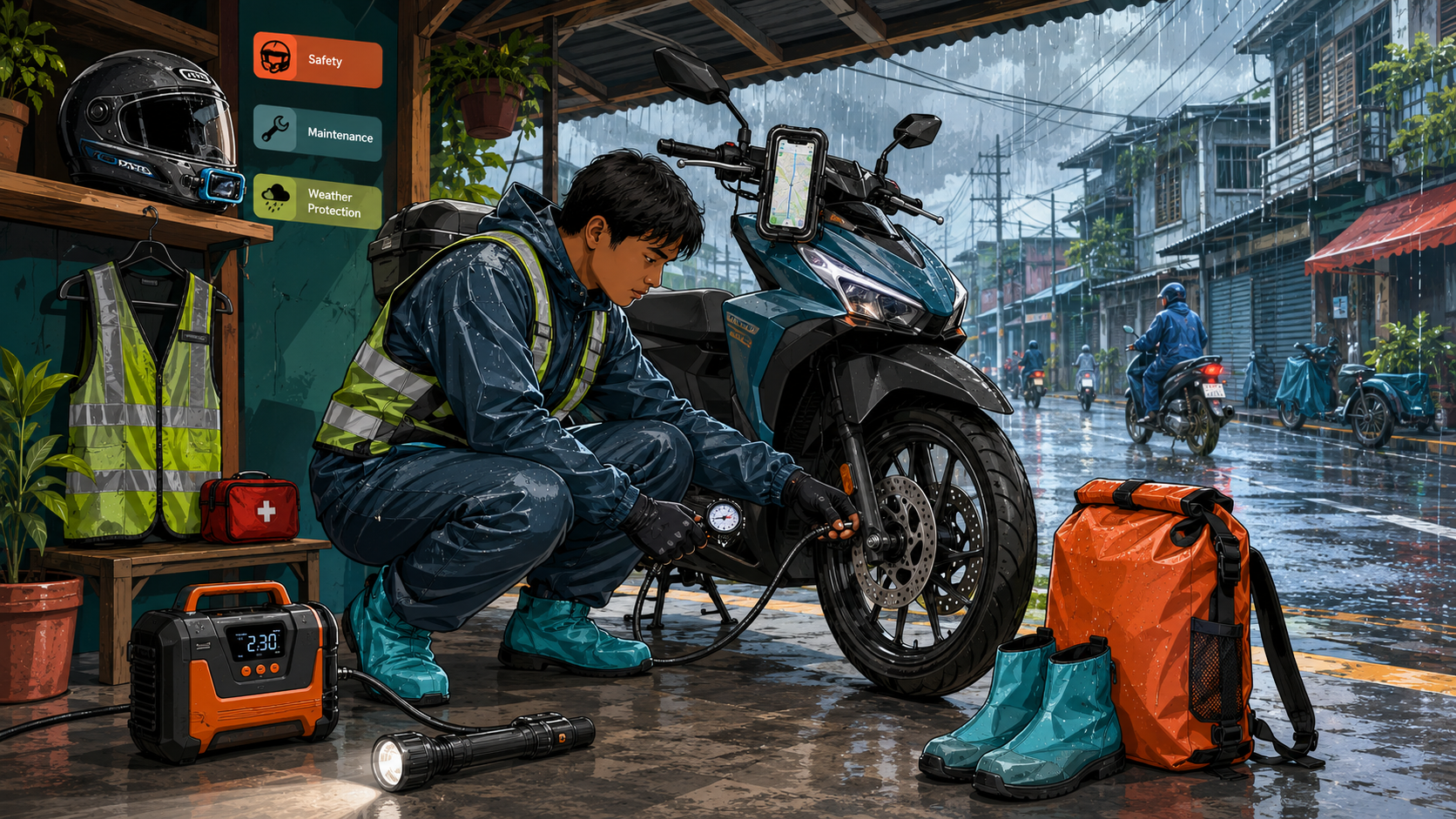
Backup-power products help keep lights, phones, fans, or internet equipment running during outages. Accessible options include high-capacity power banks, rechargeable emergency lights, solar outdoor lights, rechargeable fans, and mini UPS devices for Wi-Fi routers.
Portable power stations and entry-level solar charging kits may benefit from large campaign discounts, but they require stronger technical knowledge. Sellers must verify actual battery capacity, supported output, charging time, compatible appliances, safety documentation, shipping restrictions, warranty coverage, and local after-sales support.
Energy-Saving Home Products
Consumers concerned about electricity expenses may prefer practical products that give them more control over daily use. Potential items include LED bulbs, motion-sensor lights, smart plugs with timers, electricity usage meters, energy-efficient desk or clip fans, insulated curtains, window films, and weather stripping.
These products are more accessible than full home-energy systems and work well in short demonstrations. Avoid fixed savings claims without reliable testing; explain what the item controls or measures instead.
Fuel-Cost and Commuter Products
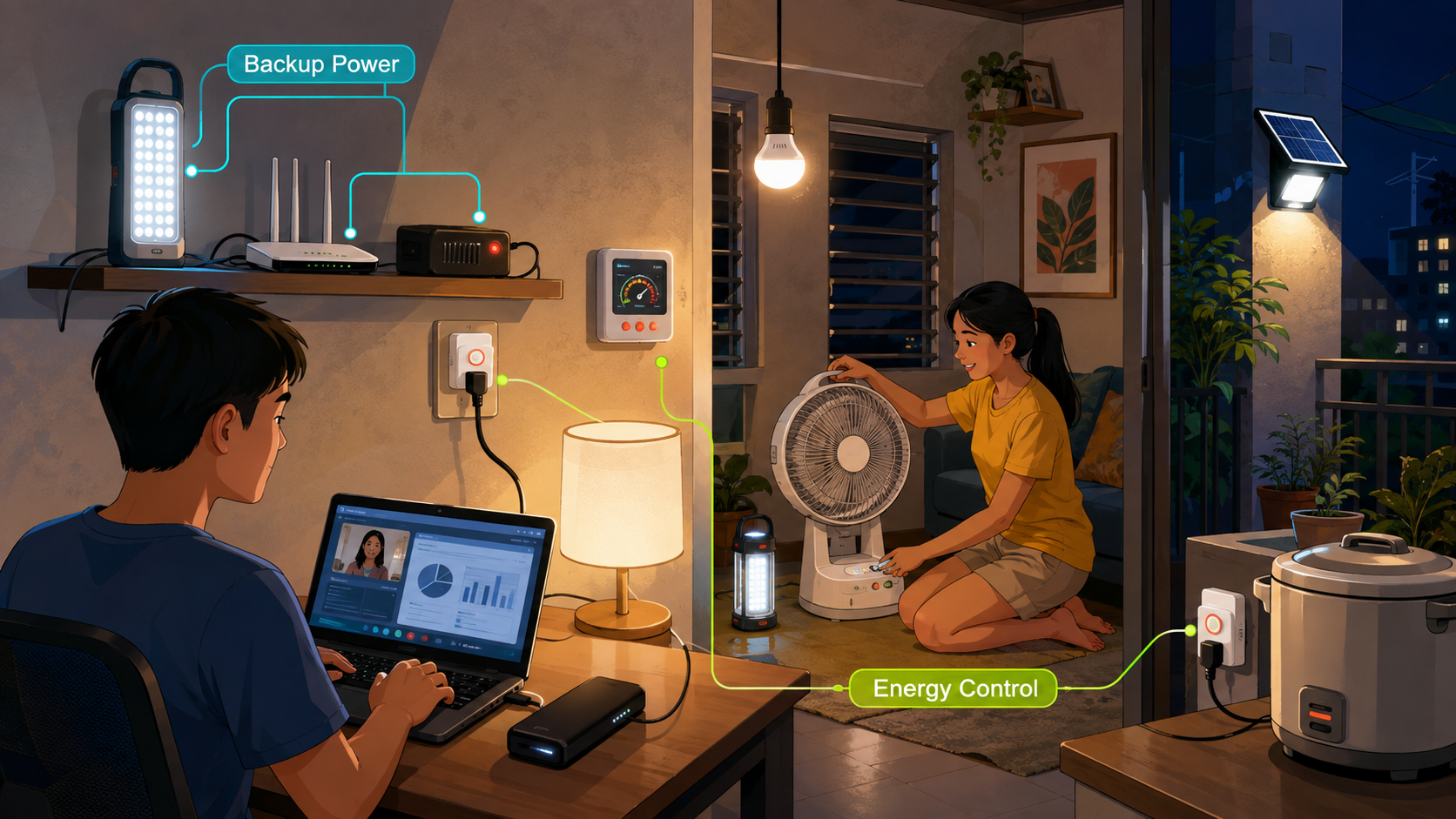
High fuel costs do not justify selling unproven "fuel-saving devices." A more defensible opportunity is to support the large population of motorcycle riders, commuters, and delivery workers with useful maintenance and weather-protection products.
Consider portable tire inflators, tire pressure gauges, motorcycle rain gear, waterproof phone holders, reflective vests, helmet accessories, storage boxes, basic maintenance kits, and bicycle or e-bike accessories. These products address safety, convenience, maintenance, and rainy-season travel without relying on questionable fuel-economy claims.
Rainy-Season and Emergency Essentials
Philippine sellers can also prepare for recurring rainy-season needs with waterproof bags, phone pouches, dry bags, flashlights, headlamps, first-aid kits, waterproof storage boxes, quick-dry clothing, shoe covers, and leak-sealing tape.
Focus on household preparedness rather than fear around typhoons. Items with year-round outdoor, travel, and storage uses are less likely to become dead stock.
Christmas and Year-End Products
Energy-related products provide differentiation, but Christmas remains a major purchasing driver. Affordable gift bundles, home organization items, kitchen appliances, Christmas lights, party supplies, beauty and personal-care sets, educational toys, and mobile or gaming accessories can balance the assortment.
For 12.12, prioritize products that are gift-ready and available for fast fulfillment. Items requiring technical education or installation may perform better earlier in the campaign cycle.

3. Product Opportunity and Risk Comparison
A trending category is only useful when it fits the seller's capital, logistics, product knowledge, and after-sales capacity.
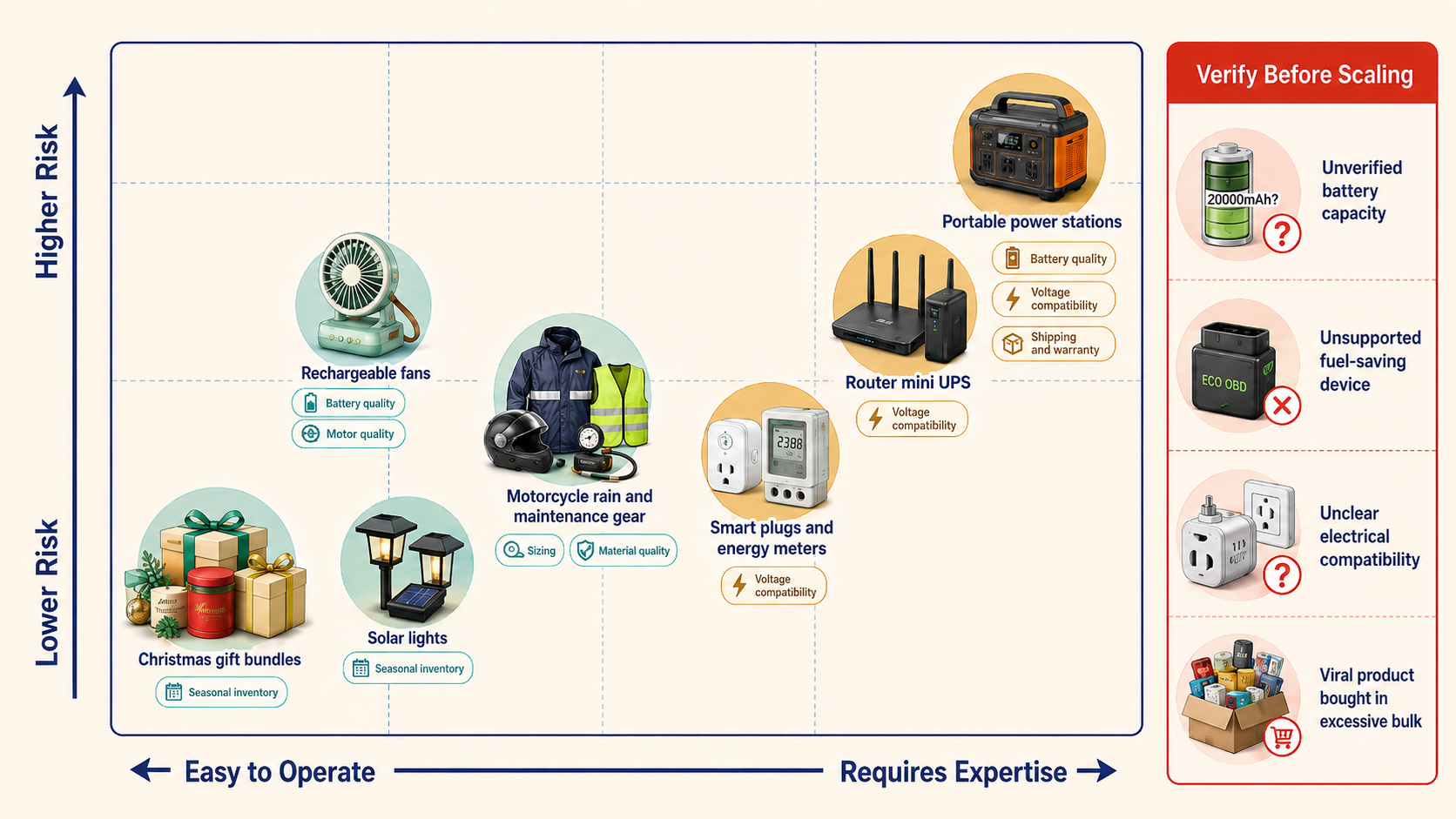
| Product Group | Demand Driver | Price Level | Main Risk | Suitable Sellers |
|---|---|---|---|---|
| Solar lights | Outdoor lighting, security, energy awareness | Low-Medium | Brightness, battery, and weather-resistance variation | Most sellers |
| Rechargeable fans | Heat, outages, daily household use | Low-Medium | Battery life and motor quality | Most sellers |
| Router mini UPS | Work, study, and connectivity during outages | Medium | Voltage and connector compatibility | Electronics sellers |
| Portable power stations | Backup power and emergency preparation | High | Battery safety, shipping, warranty, high return cost | Experienced sellers |
| Motorcycle rain and maintenance gear | Commuting, delivery work, rainy-season travel | Low-Medium | Sizing, material quality, and fit | General and automotive sellers |
| Smart plugs and energy meters | Monitoring and controlling electricity use | Low-Medium | Electrical safety and compatibility | Home and electronics sellers |
| Christmas gift bundles | Year-end gifting and family celebrations | Low-Medium | Seasonal inventory after December | Most sellers |
4. Products and Claims Sellers Should Avoid
Some items attract clicks but create disproportionate compliance, return, or reputation risks. Be cautious with:
- Fuel additives, magnetic devices, and other products making unsupported fuel-saving claims.
- Power banks or portable power stations with unverified battery capacity.
- Unknown lithium-battery suppliers without safety documentation or warranty support.
- Electrical products with unclear voltage, plug, certification, or appliance compatibility.
- Large and heavy solar equipment with insufficient margin to cover shipping and returns.
- Products ordered in bulk only because they appeared in a viral video.
- Highly seasonal inventory that cannot be repositioned after Christmas.
Avoid claims such as "guaranteed to cut your bill" or "works during any blackout." Explain capacity, runtime assumptions, supported devices, limitations, and warranty terms.
5. How to Plan Inventory for Each Major Sale
The same inventory strategy should not be repeated from September to December. Each campaign can serve a different purpose.
| Campaign | Primary Objective | Recommended Product Focus | Inventory Approach |
|---|---|---|---|
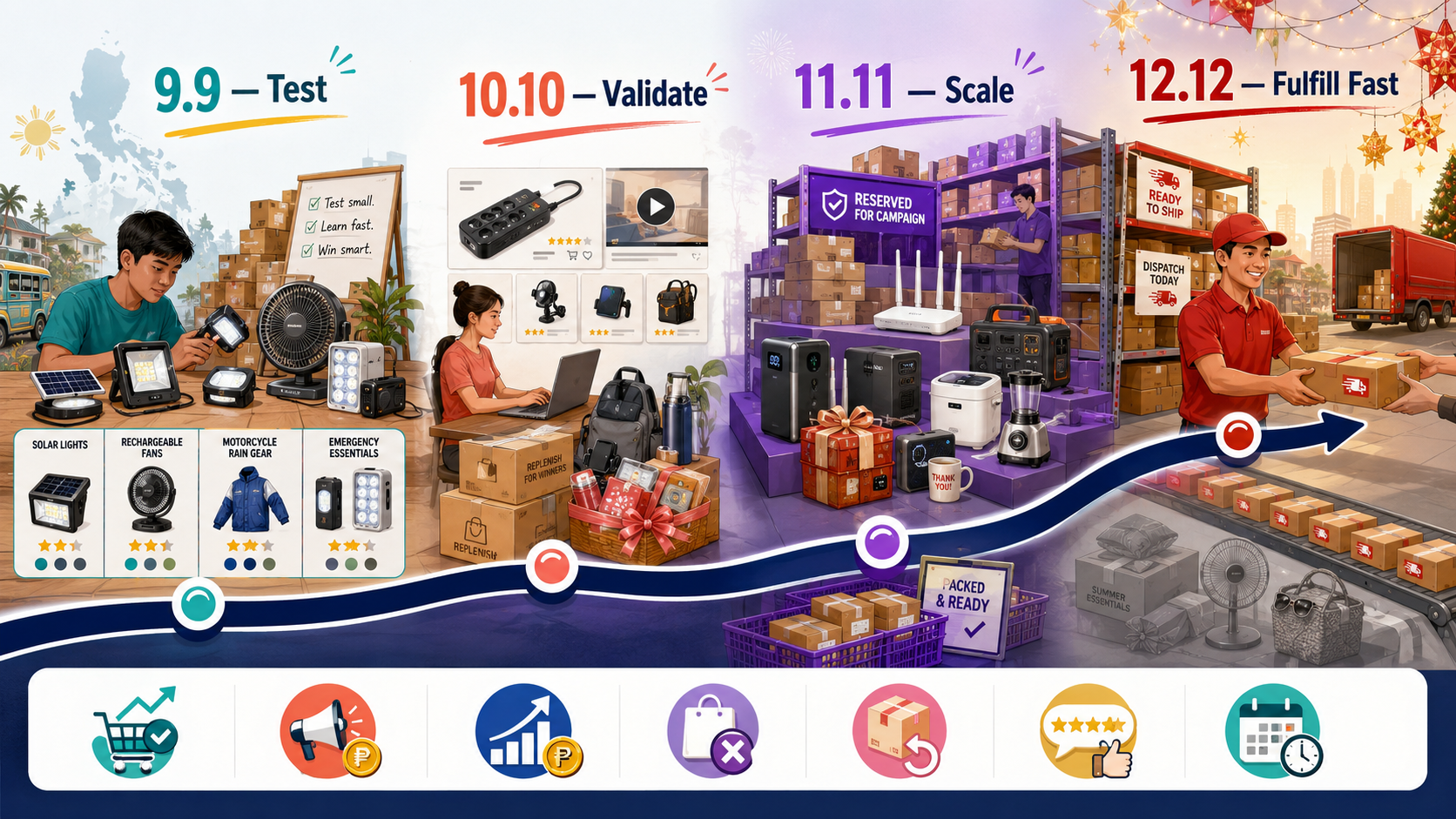
| 9.9 | Test demand and content | Solar lights, rechargeable fans, rain gear, affordable emergency products | Start with controlled quantities and compare variants. |
| 10.10 | Scale validated products | Winning energy-saving products, commuter accessories, early gift bundles | Replenish proven SKUs and improve listings or videos. |
| 11.11 | Capture peak campaign demand | Higher-value electronics, power products, appliances, gifts | Reserve stock for campaigns and prepare fulfillment capacity. |
| 12.12 | Serve Christmas and urgent year-end demand | Gift-ready items, household products, decorations, easy-to-ship bestsellers | Prioritize available stock and fast fulfillment; limit slow-moving seasonal items. |
Before scaling, compare conversion, advertising cost, gross margin, cancellations, returns, reviews, and days of inventory. High order volume is not enough if battery complaints, shipping, or returns remove the profit.
6. Improve Product Listings for Energy and Seasonal Items
Listings should answer the questions that determine purchase confidence. For rechargeable and electrical products, clearly show capacity, voltage, charging method, estimated runtime under stated conditions, supported devices, package contents, dimensions, warranty, and safety guidance.
Use videos to demonstrate brightness, fan speed, charging ports, setup, or actual size. Comparison images can explain capacities or bundles, but every specification must match the delivered product.
Campaign keywords may help promotional creatives, but permanent titles should remain readable and product-focused. Update banners and vouchers without repeatedly rewriting the core listing.
7. Manage Campaign Products and Inventory with BigSeller
Finding a promising product is only the first step. Sellers still need to publish listings efficiently, control campaign stock, process orders, and decide which products deserve more investment after the sale.
With BigSeller Product Management, sellers can manage products across connected stores, use batch editing tools, and prepare listing content more efficiently. BigSeller Inventory and Purchase Management helps teams monitor warehouse stock and synchronize inventory across stores, while BigSeller Reports supports sales, cost, and profit analysis.
Sellers can use 9.9 and 10.10 results to identify products worth scaling for 11.11 and 12.12 instead of purchasing large quantities based only on a trend. For more campaign planning context, review the 2026 Lazada sale calendar and campaign guide.
Vist our website to know more 👉BigSeller ERP

8. Final Recommendation
Rising fuel costs, energy awareness, backup-power needs, rainy-season preparation, and Christmas demand create several product opportunities for Philippine sellers. The strongest assortment will not chase every headline. It will connect a real consumer problem with a reliable product, clear listing, sustainable margin, and manageable after-sales process.
Use 9.9 to test, 10.10 to validate and improve, 11.11 to scale the strongest products, and 12.12 to focus on gift-ready and immediately available stock. This staged approach gives sellers a better chance of building profitable campaign inventory instead of carrying unsold trend products into the new year.