DTI E-Commerce Philippine Trustmark 2026: Is It Mandatory? Requirements, Fees & How to Apply
Jayson10 Nov 2026 11:08ENCopy link & title
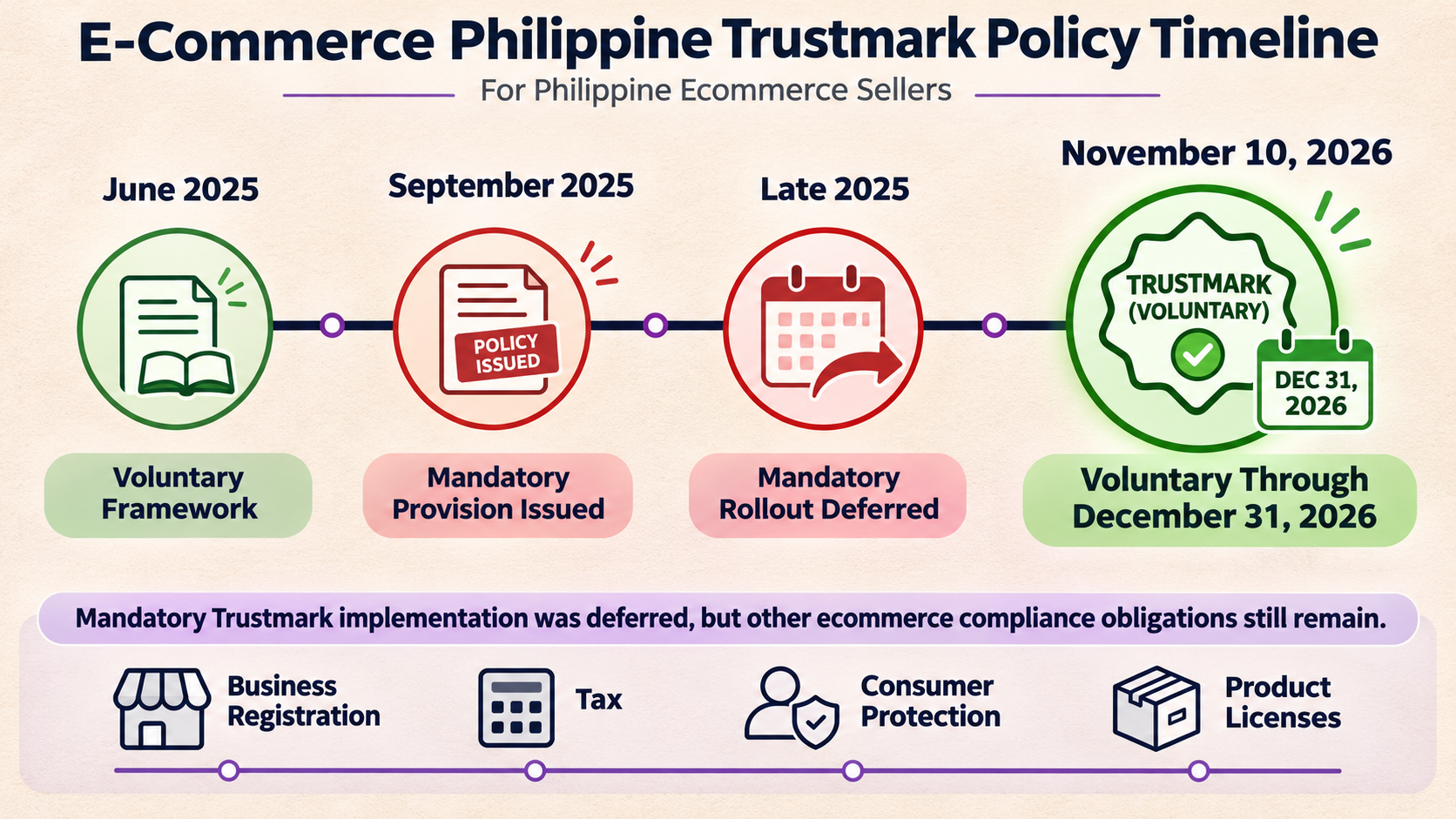
The E-Commerce Philippine Trustmark is currently voluntary for Philippine online sellers. The Department of Trade and Industry (DTI) previously issued an order that would have made registration mandatory, but the mandatory rollout was deferred. The voluntary period was subsequently extended through December 31, 2026.
That does not make wider ecommerce compliance optional. Online merchants must still follow applicable business registration, tax, consumer protection, product licensing and marketplace verification rules. The Trustmark is one part of that framework, not a substitute for every other permit or registration.
As of November 10, 2026, sellers may apply for the DTI E-Commerce Philippine Trustmark, but the current public implementation remains voluntary through December 31, 2026. DTI may review the policy again after that date, so sellers should prepare their records and check for a new advisory before 2027.
Policy note: Some DTI materials still reflect different stages of the rollout. DAO No. 25-12 contains a mandatory-registration provision, while the current DTI FAQ describes the application as voluntary. This guide follows the latest publicly announced implementation status rather than the original 2025 deadline.
Is the DTI Philippine Trustmark Mandatory in 2026?
The confusion comes from several policy changes within a short period. Department Administrative Order No. 25-07 initially described Trustmark applications as voluntary. DTI then issued DAO No. 25-12, which stated that registration would become mandatory for online merchants, e-retailers, e-marketplaces and digital platforms.
DTI later deferred the mandatory rollout after consultations with sellers and other stakeholders. The voluntary period was first extended through the end of 2025 and then through December 31, 2026. The current official Trustmark FAQ also states that applications are voluntary.
| Period | Policy Development | Practical Meaning for Sellers |
|---|---|---|
| June 2025 | DAO No. 25-07 introduced a voluntary Trustmark framework. | Eligible ecommerce businesses could apply but were not required to do so. |
| September 2025 | DAO No. 25-12 introduced mandatory registration and an original September 30 transition date. | This requirement was later deferred, so the old deadline should not be treated as current. |
| October-December 2025 | DTI returned the program to voluntary implementation and later extended that period. | Sellers could apply at their own pace while DTI continued refining the program. |
| As of November 10, 2026 | The announced voluntary period runs through December 31, 2026. | Applying is optional for now, but sellers should monitor the year-end policy review. |
The safest reading for sellers is that mandatory Trustmark implementation is currently deferred, while the Internet Transactions Act and other ecommerce obligations remain enforceable. A seller should not use the voluntary Trustmark period as a reason to delay business or tax registration.
What Is the E-Commerce Philippine Trustmark?
The Trustmark is a DTI-issued digital badge for eligible ecommerce businesses. Approved holders receive an electronic certificate, a unique security number and a QR code, and are listed in the Online Business Database.
The badge is not a DTI guarantee of an individual product's quality or performance. It does not replace BIR registration, local permits, data privacy duties or licenses for regulated products. False information, misuse or serious compliance failures can lead to suspension or revocation.
DTI Trustmark vs. BIR Registration Seal
The DTI Trustmark relates to ecommerce identity, fair practices and consumer protection, while the BIR Registration Seal relates to taxpayer registration. One does not replace the other: Trustmark applicants must still provide a BIR Certificate of Registration, and marketplaces may maintain separate verification requirements.
Who Can Apply and What Documents Are Required?
Businesses engaged in internet transactions or ecommerce may apply. This includes online merchants, e-retailers, e-marketplaces and digital platforms serving consumers or other businesses in the Philippines.
According to the DTI Trustmark application guidelines, applicants should prepare:
- A completed online application form and sworn undertaking.
- A DTI Business Name Certificate, SEC Certificate of Incorporation or CDA Certificate of Registration, as applicable.
- A BIR Certificate of Registration, or Form 2303, showing the business or trade name and line of business.
- A list of the websites and digital platforms used for online sales.
- A valid government-issued ID of the applicant or authorized representative.
- An internal redress mechanism explaining how customer complaints are received and resolved.
- Government licenses or permits for any regulated products or services offered online.
- A BMBE Certificate of Authority or proof of total asset valuation when applicable to the business classification.
The business name and activity on Form 2303 should match the application. Sellers should also list all relevant selling channels rather than reporting only one marketplace while operating several others.
How to Apply for a DTI Trustmark Online
- Open the official E-Commerce Philippine Trustmark portal and begin the online application.
- Enter the business, representative and contact information requested by the portal.
- Add the websites, marketplace stores and other digital platforms used for online sales.
- Upload the required registration documents, government ID, internal complaint-resolution procedure and applicable product permits.
- Review the information carefully and submit the application for evaluation.
- After approval, follow the electronic Statement of Account, complete the required payment and obtain the electronic certificate and Trustmark.
DTI states that complete applications are evaluated within seven working days. That is an evaluation period, not a guarantee that every applicant will receive a badge within seven days. Missing files, inconsistent business information or additional verification may extend the process.
DTI Trustmark Fees, Validity and Renewal
The amount depends on the business's total assets and classification. DTI's current schedule shows the following initial application totals:
| Business Classification | Application Fee | Web Administration | Documentary Stamp | Current Total |
|---|---|---|---|---|
| Micro/BMBE, total assets up to ₱3 million | ₱0 | ₱100 | ₱30 | ₱130 |
| Micro-Non BMBE/Small, total assets above ₱3 million up to ₱15 million | ₱500 | ₱100 | ₱30 | ₱630 |
| Medium/Large, total assets above ₱15 million | ₱1,000 | ₱100 | ₱30 | ₱1,130 |
DTI currently waives the initial application fee for qualified DTI-registered micro enterprises through December 31, 2026. This does not make the entire application cost zero because the ₱100 web administration fee and ₱30 documentary stamp still apply. Applicants should follow the amount shown in their official Statement of Account, especially for renewals or amended registrations.
A Trustmark is valid for one year from issuance. Renewal may be filed within the three months before expiry and no later than 30 calendar days before the expiration date. Businesses should also update their registration when material information or registered selling channels change.
Where Should Sellers Display and Verify the Trustmark?
Only an approved holder should display the official Trustmark. It may be placed on the holder's website, digital storefront, seller profile or product image area, and at a registered physical store. Do not redesign the badge, create a fake QR code, transfer it to another business or use it on an unregistered store.
Marketplace interfaces differ. For example, TikTok Shop Philippines provides an optional submission route through Seller Qualification settings. Other sellers should follow the latest instructions in their own account and avoid placing private registration documents in public images.
Should Philippine Online Sellers Apply Now?
Applying now may be useful for established sellers with consistent DTI and BIR records, documented complaint handling and several public sales channels. It provides another way for buyers to verify the business and helps the seller prepare if DTI changes the policy later.
Sellers with inconsistent records should fix them first. Review the business name on Form 2303, confirm which legal entity owns each store and identify permits for regulated products. The Trustmark is one trust signal, not a guarantee of sales; product accuracy, reviews, delivery and after-sales service still matter.
Keep Multi-Store Operations and After-Sales Records Organized with BigSeller
A Trustmark application asks a business to identify its sales channels and document complaint handling. BigSeller's multichannel order management centralizes orders from supported stores, while its After Sales Management feature supports Shopee, Lazada and TikTok Shop return and refund workflows, return tracking, notes and returned-item stock-in.
BigSeller does not apply for or approve a Trustmark. Each business remains responsible for its registrations, documents, product permits and complaint-handling policy.

Final Takeaway
The DTI E-Commerce Philippine Trustmark remains voluntary as of November 10, 2026, despite the mandatory language in DAO No. 25-12. Sellers that apply should align their DTI and BIR records, list every relevant sales channel and document a workable complaint process. All sellers should monitor DTI announcements before December 31, 2026 because the program may change for 2027.
References:
- DTI E-Commerce Philippine Trustmark: Frequently Asked Questions
- DTI Trustmark Registration Guidelines and Fee Schedule
- DTI Department Administrative Order No. 25-07
- DTI Department Administrative Order No. 25-12
- Manila Bulletin: DTI extends voluntary Trustmark period through 2026
- TikTok Shop Philippines: E-Commerce Philippine Trustmark