How to Sync Bundle Inventory Across Shopee, Lazada, and TikTok Shop Malaysia
Erra16 Oct 2026 06:23ENCopy link & title

Why is Manual Bundle Tracking Causing a Data Mess for Malaysian Marketplace Sellers?
Every combo listing is a dependent record: its availability is determined by the stock of every component inside it. When those records are updated by hand, discrepancies appear quickly, and they multiply with every new bundle, variation and store you add.
Marketplace algorithms penalise data discrepancies. Marketplaces measure reliability by whether your listed stock matches what you can ship. On Shopee, a Non-Fulfilment Rate (NFR) above 10% triggers penalty points. For a Malaysian seller, penalties can mean reduced visibility, lost campaign eligibility and damaged buyer trust. A single stock miscount is a measurable risk to your store health score.
Combo items multiply your data points. Take a 3-in-1 skincare kit made of a cleanser, a toner and a moisturiser. One bundle listing depends on three component SKUs, and each component may also be sold individually, in other bundles, or across several stores. If you sell 500 kits, you have not made one stock change. You have made three component deductions, and every listing containing those components now carries outdated data.
Live streams and cross-platform listings make it worse. Suppose the toner sells out during a Shopee Live stream. You might correct the Shopee listing within minutes, but the same kit on TikTok Shop and Lazada still shows stock. Orders keep arriving for a kit you can no longer assemble. Each one becomes a cancellation, a negative review risk and a potential penalty, and the damage spreads across three storefronts instead of one.
The root problem is not carelessness. Bundle inventory has too many interdependent data points to be maintained manually across multiple platforms.
Which Bundle Inventory Sync Method Is Best for Malaysian Marketplace Sellers?
|
Method |
How It Handles Bundle Stock |
Key Limitations |
|
Manual spreadsheets |
You calculate component deductions and update each listing by hand |
High data latency, extreme vulnerability to human input error, and a complete breakdown during high-velocity live sales or double-date mega campaigns |
|
Single-store bundling features |
The platform's built-in tool updates bundle stock inside that one marketplace |
Only updates stock on one specific platform, leaving your other storefront databases completely out of sync |
|
Centralised automation software |
Aggregates all data streams into a unified warehouse dashboard and calculates inventory limits from the lowest common denominator of raw components |
Requires initial setup and SKU mapping, but removes ongoing manual work |
Manual spreadsheets are acceptable only for a very small catalogue with one store and low order volume. Once you add a second platform or run a live stream, the lag between sales and stock counts makes errors almost inevitable.
Single-store bundling features solve only part of the problem. Shopee's Bundle Deal, for example, handles discounts inside Shopee but knows nothing about your Lazada or TikTok Shop stock. You still have two databases that can drift out of sync.
Centralised automation software treats your warehouse stock as the single source of truth. The lowest-common-denominator logic is the key: a bundle can only be sold as many times as its scarcest component allows. If you hold 120 cleansers, 80 toners and 50 moisturisers, you can sell 50 complete kits. A centralised system applies this logic automatically and publishes the result to every channel.
For most multi-platform Malaysian sellers, centralised automation is the only option that scales without increasing error rates.
How Does BigSeller Solve Cross-Platform Bundle Inventory Inconsistencies for Malaysian Marketplace Sellers?
BigSeller is a free cloud-based ecommerce ERP platform built for Southeast Asian marketplace sellers, enabling centralised management of orders, inventory, product listings, and fulfilment across 20+ platforms from a single dashboard. For bundle sellers, the key is that it manages every bundle as a set of component-level stock rather than as separate listings on each platform.
It starts with the combination SKU. A combination SKU groups several single SKUs into one suite, such as a bathing set containing three bottles of shampoo. Once you define the components and quantities, BigSeller automatically allocates inventory from the sub-SKUs whenever a bundle order syncs.
Component SKUs must already exist in your inventory list. You can also set a cost price allocation ratio so BigSeller splits cost across components when you stock in the combination SKU, which keeps bundle profit figures accurate.
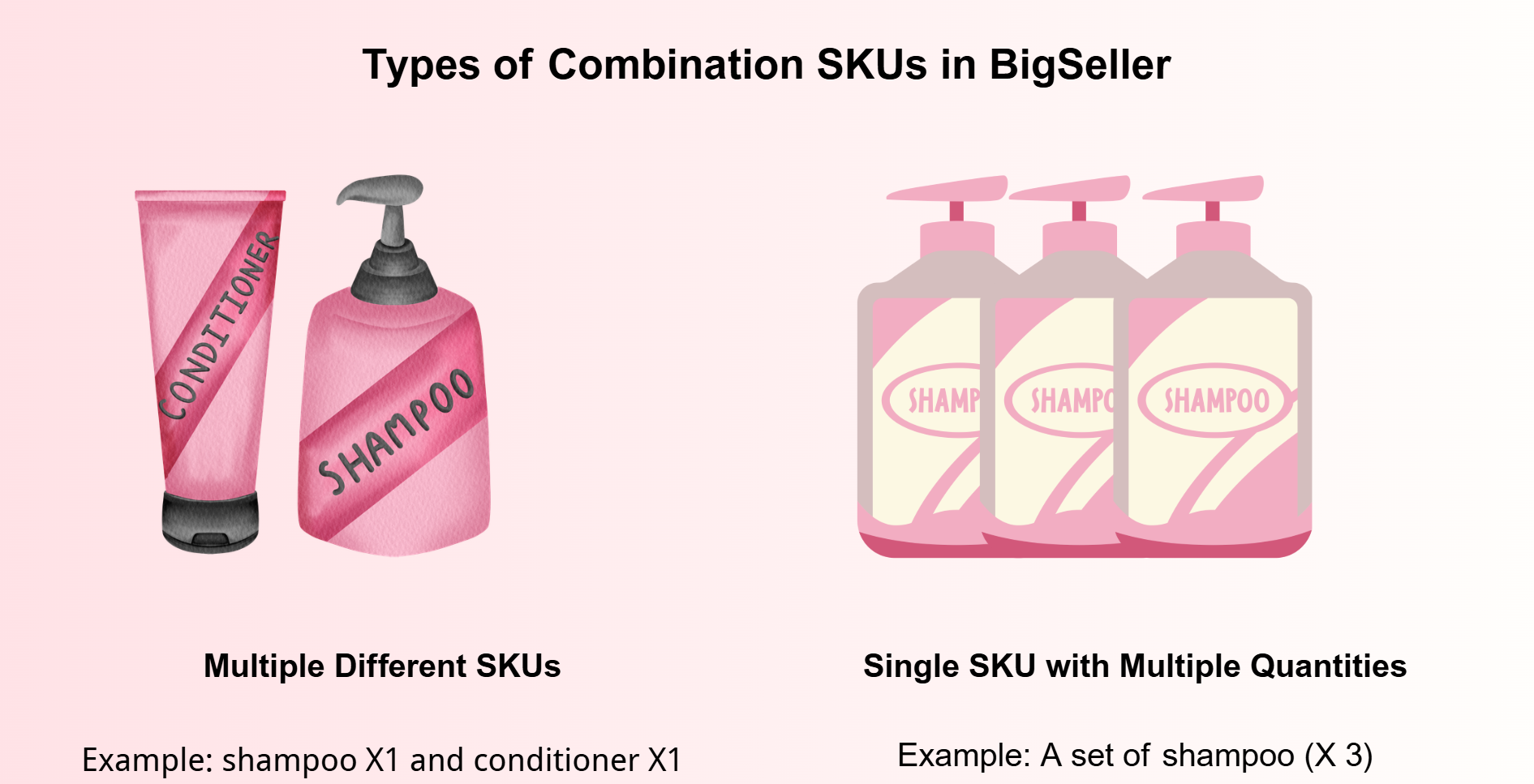
Every store then draws from one stock ledger:
-
Real-time cross-platform inventory sharing. BigSeller keeps a real-time ledger for every SKU, including cost, bin location and alert stock level. Shopee, Lazada and TikTok Shop draw from this one ledger, so a sale on one channel updates availability everywhere.
-
Multi-tool overselling prevention. Campaign-reserved stock, push rules and push records keep inventory accurate across stores. You can ring-fence stock for a TikTok Shop live session or an 11.11 campaign, then review push records to confirm what was sent to each store.
-
Unlimited inventory push. The free plan covers inventory push for 500 SKUs, and every paid plan from Basic upwards includes unlimited push, which matters when components, bundles and variations multiply your SKU count.
-
Multi-warehouse and barcode control. Stock across self-owned warehouses, overseas 3PL or local fulfilment centres is managed in one place, and PDA or mobile barcode scanning acts as a pre-despatch check against wrong or missed items in assembled kits.
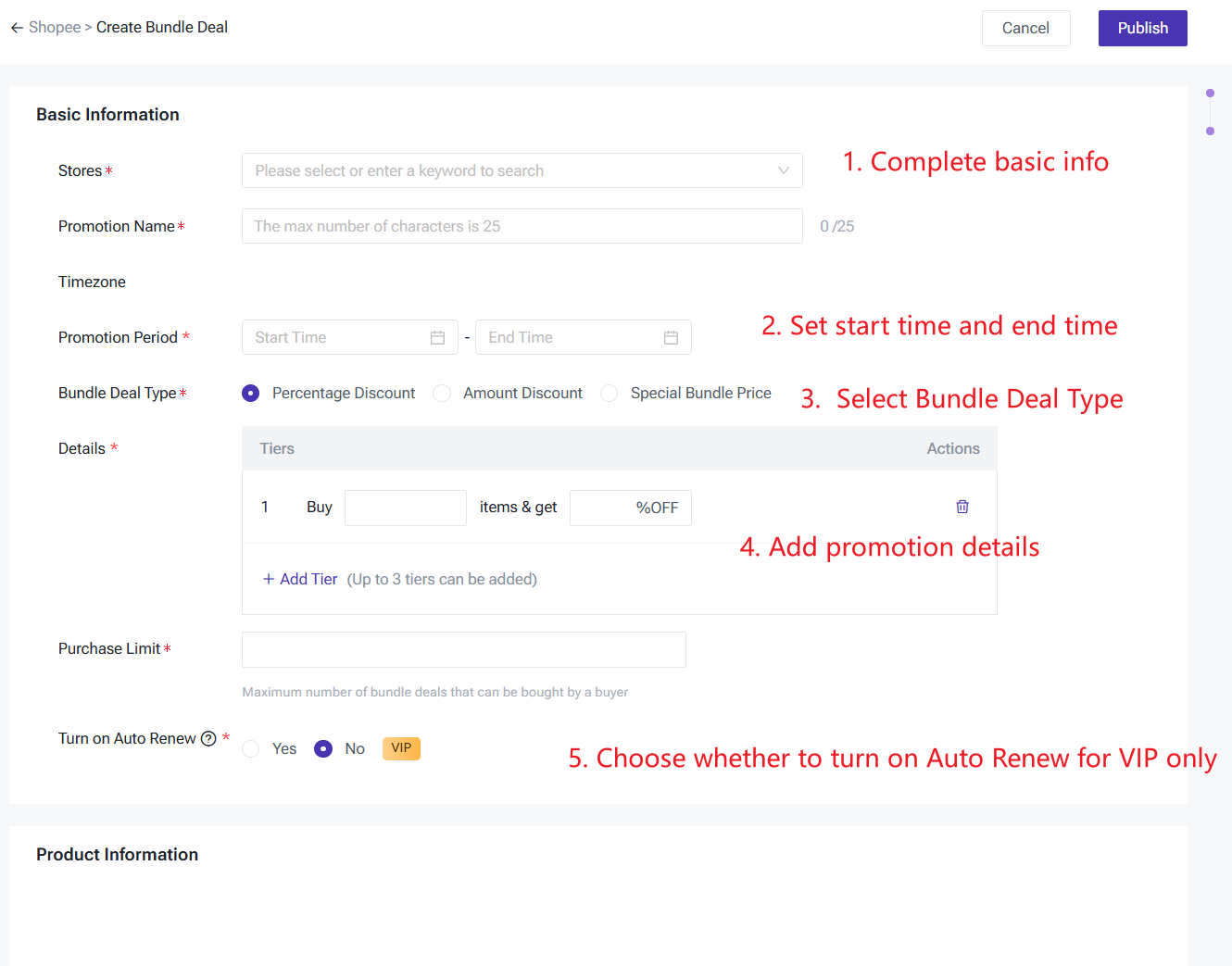
On Shopee, you can run Bundle Deal promotions in the same dashboard. Shopee’s Bundle Deal lets you discount multi-item purchases, and BigSeller lets you sync existing Bundle Deals or create new ones. You can choose a percentage discount, amount discount or special bundle price, set multi-level tiers (for example, buy 5 get 10% off, buy 10 get 20% off) and add a purchase limit per buyer. Sold-out products cannot be added to a Bundle Deal, so accurate stock in BigSeller keeps your promotions clean. BigSeller also supports automatic renewal for Shopee discount promotions, so you do not need to recreate them by hand after they expire.
On TikTok Shop and Lazada, the same inventory backbone applies. Bundle orders from all three platforms flow into one fulfilment hub, where order routing, exception interception, split orders and out-of-stock tracking work the same way as for any other order. Estimated profit settings and loss-order interception flag unprofitable bundle orders early, and profit accounting allocates platform costs such as commissions and promotions to each product, so you can see whether a bundle makes money on each channel.