Malaysia E-Invoice Update: RM1 Million Threshold Approved, Fifth Wave Cancelled
Erra16 Dec 2025 08:47ENCopy link & title
Malaysia’s e-Invoicing rollout under the MyInvois system has entered a new phase following a key Cabinet decision in December 2025. While the original e-Invoice mandate began in 2024, the government has now adjusted both the minimum revenue threshold and the implementation timeline, directly impacting tens of thousands of SMEs and growing online sellers.
For businesses preparing for compliance in 2026, this update brings temporary relief, but also a clearer signal that e-Invoicing is no longer optional for growing businesses.

Cabinet Raises Minimum E-Invoice Threshold to RM1 Million
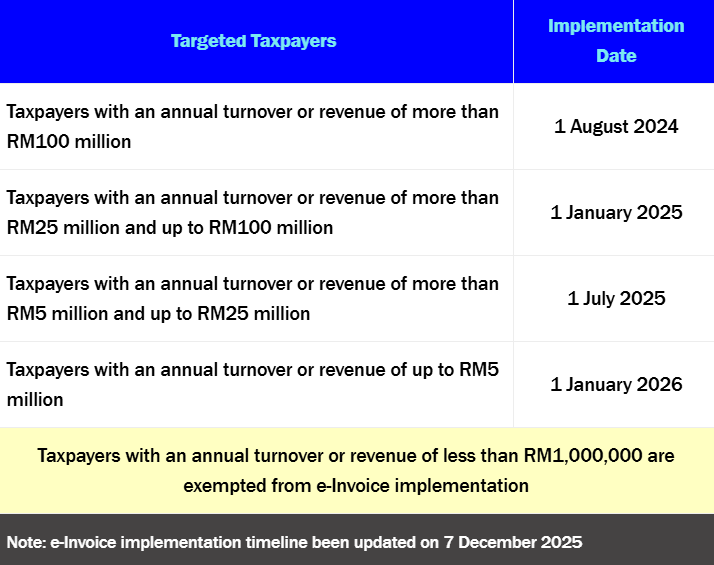
On 6 December 2025, the Cabinet approved an increase in the minimum annual sales threshold for mandatory e-Invoicing from RM500,000 to RM1 million.
As a result:
-
Businesses with annual turnover below RM1 million are now fully exempt from the MyInvois e-Invoice requirement.
-
The fifth wave of e-Invoicing, which was scheduled to begin on 1 July 2026 for businesses earning between RM500,000 and RM1 million, has been officially withdrawn.
This change significantly reduces the compliance burden on micro-businesses and smaller operators, many of whom were still unprepared for system integration and structured invoice reporting.
Fourth Wave for New Businesses Delayed to July 2026
In addition to raising the threshold, the Ministry of Finance also announced a six-month extension for part of the fourth wave of e-Invoicing.
Under the revised policy:
-
Businesses with annual turnover between RM1 million and RM5 million will still fall under the fourth wave.
-
However, new taxpayers in this category are granted an extension, with mandatory implementation delayed to 1 July 2026.
This adjustment is intended to give newly established businesses additional time to set up compliant invoicing systems before enforcement begins.
If you need a clearer understanding of what MyInvois is, how e-Invoice data is submitted to LHDN, and what information businesses are required to include, you can refer to our earlier complete e-Invoice guide for Malaysian businesses, which explains the fundamentals in detail:
👉 https://www.bigseller.com/blog/articleDetails/3222/e-invoice-malaysia.htm
BigSeller Releases MyInvois E-Invoice Integration for Malaysian Businesses
To help sellers comply with the updated e-Invoice requirements, BigSeller has introduced a built-in MyInvois integration, allowing businesses to issue compliant e-Invoices directly through the platform.
Starting 1 January 2026, businesses earning between RM1 million and RM5 million must begin issuing e-Invoices, with full enforcement by 1 July 2026. BigSeller’s solution is designed to automate this process, reducing manual work and minimizing submission errors.
Supported Order Types
BigSeller’s e-Invoice feature currently supports:
-
Manual Orders
-
Messenger Orders
-
POS Retail Orders
This makes it suitable for businesses that sell beyond traditional marketplace checkout flows.
How to Authorise MyInvois in BigSeller
To connect BigSeller with the MyInvois system:
-
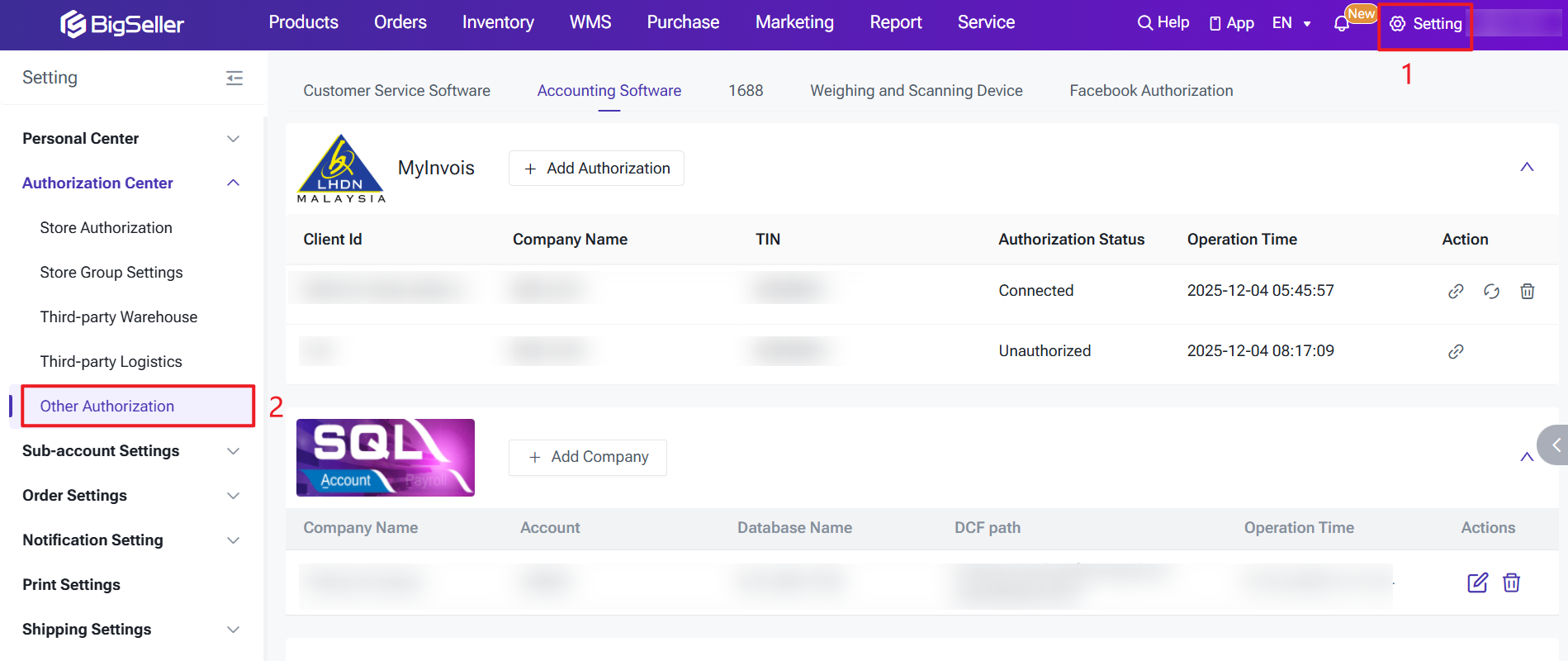
Go to Settings > Store Authorization > Other Authorizations
-
Select Accounting Software > MyInvois
-
Click Authorize
-
Enter your Client ID and Client Secret
How to Obtain Client ID and Client Secret
-
Log in to MyTax at https://mytax.hasil.gov.my
-
Navigate to MyInvois
-
Click Home, then select Visit Now under Manage Your Profile
-
Choose Taxpayer Profile
-
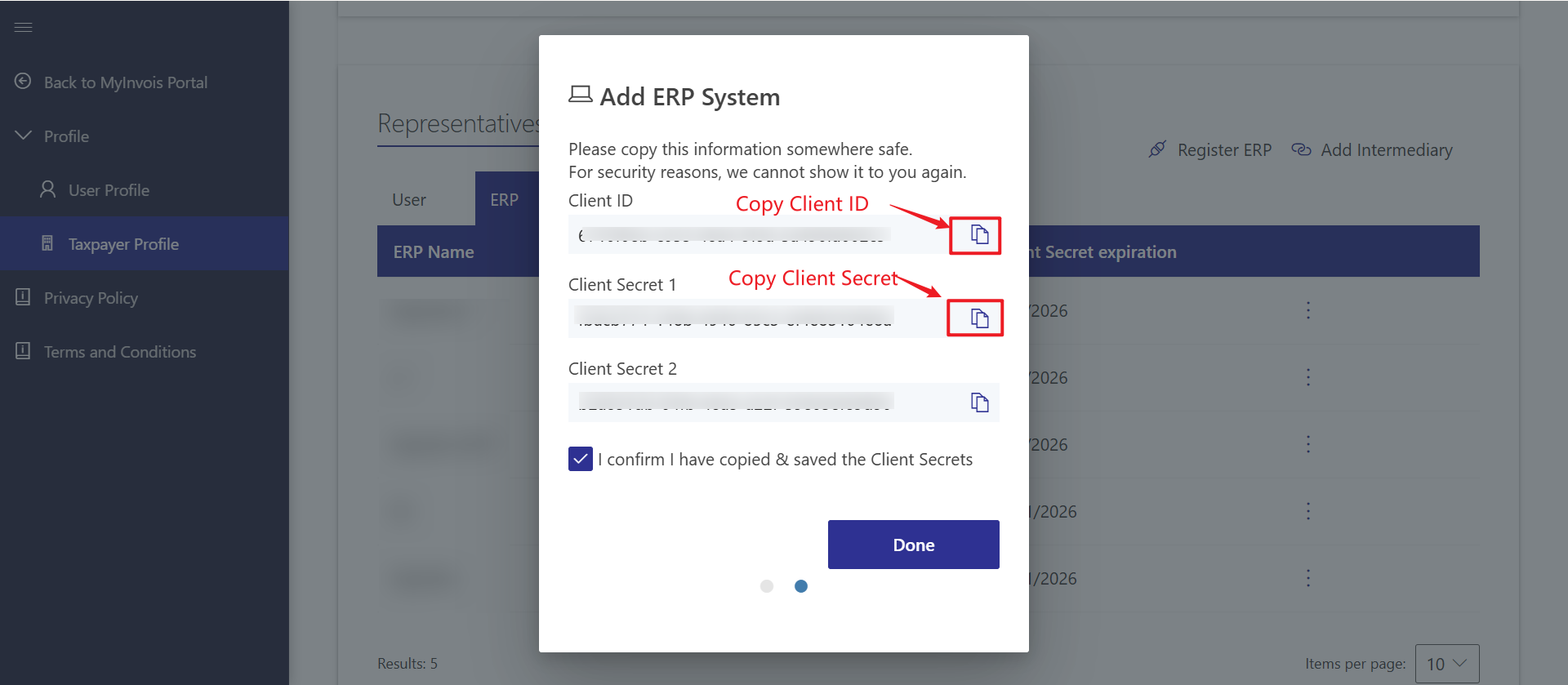
Select ERP and click Register ERP
-
Enter “BigSeller” as the ERP name, select the authorisation duration, and submit
-
Copy the generated Client ID and Client Secret into BigSeller
Once completed, the MyInvois authorisation will be active.
Creating and Submitting Sales Invoices in BigSeller
After setting up invoice information, BigSeller automatically syncs eligible orders from the current and previous months. Orders with statuses such as New Order, In Process, Shipped, or Completed will be added to the [To Push] list.
Sellers can:
-
Edit seller, buyer, and product information
-
Sync product details directly from orders
-
Review taxes, discounts, and fees before submission
Invoices can be saved for later or pushed directly to MyInvois. Successfully submitted invoices will be marked Push Successfully, while failed submissions can be corrected and resent.

Merging Orders for Tax Submission Purposes
If invoices are required only for reporting to the tax authority:
-
Multiple orders can be merged into a single consolidated invoice
-
Buyer information is optional
-
The system defaults the buyer name to General Public
All merged orders must be in the same currency.
Threshold Raised, Compliance Still Inevitable
The Cabinet’s decision to raise the e-Invoice threshold to RM1 million provides short-term relief for smaller businesses, but it does not change the broader direction of Malaysia’s tax digitalisation. For businesses with annual turnover approaching or exceeding RM1 million, e-Invoicing under MyInvois is no longer a distant requirement, it is a 2026 certainty.
With enforcement beginning in phases from January 2026, early preparation will be key. Businesses that take advantage of the soft launch period to set up systems, test submissions, and streamline internal workflows will be far better positioned when full implementation begins in July 2026.
For sellers managing multiple sales channels, POS transactions, or manual orders, using a system that integrates directly with MyInvois can significantly reduce operational friction. BigSeller’s e-Invoice solution is designed to help businesses prepare early by automating compliant invoice creation and submission, without disrupting existing workflows.
Try BigSeller for free and start preparing your business for Malaysia’s e-Invoice requirements with confidence.