How to Sync Shopee and TikTok Shop Data with an Ecommerce ERP (Without the Chaos)
Jayson06 Mar 2026 08:50ENCopy link & title
If you're selling on both Shopee and TikTok Shop, you already know the pain: two dashboards, two inventory counts, two order queues — and one wrong stock number away from an oversell that tanks your ratings.
An ecommerce ERP solves this, but most guides skip the practical "how." This one doesn't.

Southeast Asia's ecommerce market reached around $145.2 billion in GMV in 2024, with Shopee and TikTok Shop together accounting for the majority of marketplace transactions across Indonesia, Malaysia, Thailand, the Philippines, and Vietnam. For the growing share of sellers active on both platforms, operating without synchronized data is no longer just inefficient — it's a direct business risk.
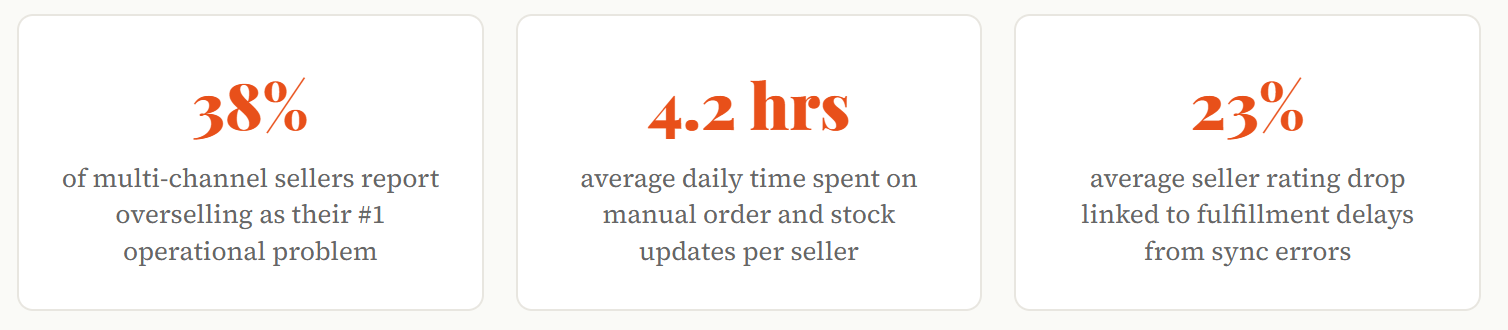
Manual management creates three specific failure points. First, stock drift — when a sale on TikTok Shop isn't reflected in Shopee inventory fast enough, you sell units you don't have. Second, order lag — manually pulling orders from two platforms delays picking, packing, and shipping. Third, reporting blind spots — without unified data, you can't accurately assess which platform delivers better margin per SKU.
An ecommerce ERP (Enterprise Resource Planning) system is a centralized platform that connects your sales channels, inventory, warehousing, and fulfillment operations into a single source of truth. Unlike standalone tools that handle only accounting or only shipping, an ecommerce ERP manages the full operational stack.
The connection between an ERP like BigSeller and marketplaces like Shopee and TikTok Shop works through official marketplace APIs. These APIs allow the ERP to:
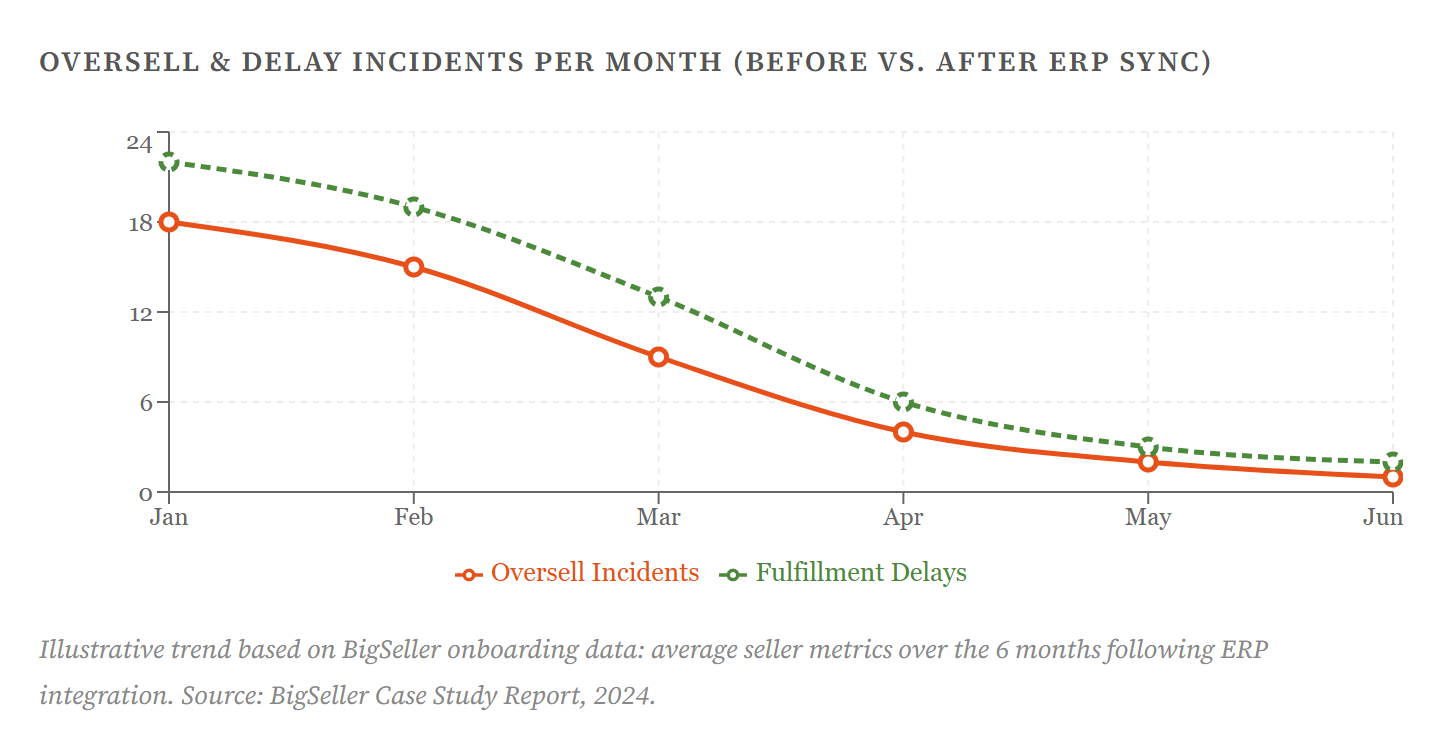
Pull new orders automatically as they're placed → update available stock across all connected stores → push tracking numbers back to the marketplace → and trigger restocking alerts when levels fall below your threshold. The entire loop runs without any manual input once configured. BigSeller maintains official API partnerships with both Shopee and TikTok Shop, meaning the integration uses sanctioned data channels — not scraping or workarounds.
Data synced includes: product listings (title, price, images, variants), inventory levels (on-hand, reserved, available), order status (new, processing, shipped, returned), and shipping and tracking information.
Most sellers complete the full dual-platform setup in under two hours. Here's exactly how it works:
1. Link Your Stores
In BigSeller, navigate to Store Authorization → Add New Store. Authenticate with your Shopee Seller Centre credentials and TikTok Shop API keys. Both connections use official OAuth flows — no third-party credentials are stored.
2. Configure Push Rules
After successful store authorization, BigSeller will automatically synchronize all product and order information. Sellers just need to manually set up SKU mapping relationships and inventory push rules to achieve cross-platform inventory synchronization.
3. Set Alerts & Exceptions
Configure low-stock alerts, failed-sync notifications, and order anomaly flags. BigSeller can push these to platforms so nothing slips through.
Sync is the foundation; automation is the value. Once your stores are connected, BigSeller enables a layer of operational automation that compounds time savings:
Automatic Stock Deduction and Replenishment Triggers
Every fulfilled order on either platform immediately deducts from your shared inventory pool. You can set reorder point rules — for example, "when SKU X drops below 20 units, generate a purchase order draft." This closes the loop from sales to restocking without manual intervention.
Centralized Order Processing and Bulk Shipping
Orders from Shopee and TikTok Shop flow into a single queue. BigSeller supports bulk printing of shipping labels, automated courier assignment based on rules you define (e.g., weight thresholds, destination zones), and one-click order status sync back to both platforms.
Unified Sales Reporting Across Channels
BigSeller's analytics dashboard lets you compare Shopee vs. TikTok Shop performance side by side: revenue per SKU, return rates, average order value, and fulfillment speed. This is where the data synchronization pays dividends beyond operations — it feeds real business decisions.
Q: Is BigSeller suitable for small sellers or only large-scale operations?
A: BigSeller offers tiered plans that cater to sellers processing as few as 100 orders/month up to enterprise-level volumes. Small sellers benefit most from the automation of repetitive tasks; larger operations benefit from the unified analytics and warehouse management features.
Q: How long does the initial setup take?
A: Most sellers complete the initial store connection and basic sync configuration in under 30 minutes. For full configuration — including warehouse mapping, rule-based automation, and alert setup — typically takes 1–2 hours for a dual-platform setup. BigSeller also offer free online training for sellers.
An ecommerce ERP solves this, but most guides skip the practical "how." This one doesn't.
1. Why Do Shopee and TikTok Shop Sellers Need Data Synchronization?
Southeast Asia's ecommerce market reached around $145.2 billion in GMV in 2024, with Shopee and TikTok Shop together accounting for the majority of marketplace transactions across Indonesia, Malaysia, Thailand, the Philippines, and Vietnam. For the growing share of sellers active on both platforms, operating without synchronized data is no longer just inefficient — it's a direct business risk.
Manual management creates three specific failure points. First, stock drift — when a sale on TikTok Shop isn't reflected in Shopee inventory fast enough, you sell units you don't have. Second, order lag — manually pulling orders from two platforms delays picking, packing, and shipping. Third, reporting blind spots — without unified data, you can't accurately assess which platform delivers better margin per SKU.
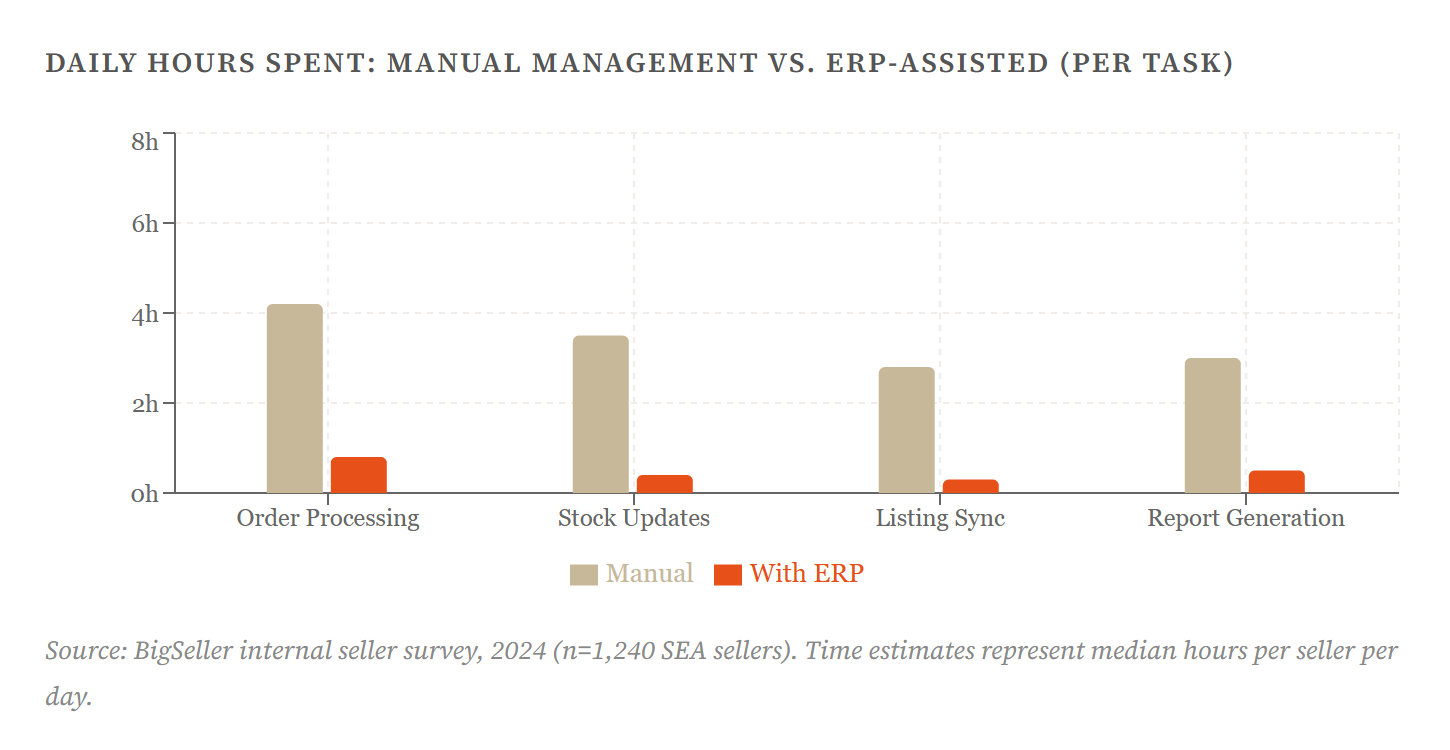
Key takeaway: Every hour spent copying data between Shopee and TikTok Shop is an hour not spent on sourcing, marketing, or customer service. ERP sync eliminates the copy-paste loop entirely.
2. What Is an Ecommerce ERP and How Does It Connect to Shopee and TikTok Shop?
An ecommerce ERP (Enterprise Resource Planning) system is a centralized platform that connects your sales channels, inventory, warehousing, and fulfillment operations into a single source of truth. Unlike standalone tools that handle only accounting or only shipping, an ecommerce ERP manages the full operational stack.
The connection between an ERP like BigSeller and marketplaces like Shopee and TikTok Shop works through official marketplace APIs. These APIs allow the ERP to:
Pull new orders automatically as they're placed → update available stock across all connected stores → push tracking numbers back to the marketplace → and trigger restocking alerts when levels fall below your threshold. The entire loop runs without any manual input once configured. BigSeller maintains official API partnerships with both Shopee and TikTok Shop, meaning the integration uses sanctioned data channels — not scraping or workarounds.
Data synced includes: product listings (title, price, images, variants), inventory levels (on-hand, reserved, available), order status (new, processing, shipped, returned), and shipping and tracking information.
3. How to Set Up Shopee and TikTok Shop Sync in BigSeller ERP (Step-by-Step)
Most sellers complete the full dual-platform setup in under two hours. Here's exactly how it works:
1. Link Your Stores
In BigSeller, navigate to Store Authorization → Add New Store. Authenticate with your Shopee Seller Centre credentials and TikTok Shop API keys. Both connections use official OAuth flows — no third-party credentials are stored.
2. Configure Push Rules
After successful store authorization, BigSeller will automatically synchronize all product and order information. Sellers just need to manually set up SKU mapping relationships and inventory push rules to achieve cross-platform inventory synchronization.
3. Set Alerts & Exceptions
Configure low-stock alerts, failed-sync notifications, and order anomaly flags. BigSeller can push these to platforms so nothing slips through.
Pro tip: Set your inventory buffer at 3–5% of your average daily sales velocity per SKU. This prevents overselling during the brief window between a sale occurring and stock updating across platforms.
4. What Can You Automate After Syncing Shopee and TikTok Shop with BigSeller?
Sync is the foundation; automation is the value. Once your stores are connected, BigSeller enables a layer of operational automation that compounds time savings:
Automatic Stock Deduction and Replenishment Triggers
Every fulfilled order on either platform immediately deducts from your shared inventory pool. You can set reorder point rules — for example, "when SKU X drops below 20 units, generate a purchase order draft." This closes the loop from sales to restocking without manual intervention.
Centralized Order Processing and Bulk Shipping
Orders from Shopee and TikTok Shop flow into a single queue. BigSeller supports bulk printing of shipping labels, automated courier assignment based on rules you define (e.g., weight thresholds, destination zones), and one-click order status sync back to both platforms.
Unified Sales Reporting Across Channels
BigSeller's analytics dashboard lets you compare Shopee vs. TikTok Shop performance side by side: revenue per SKU, return rates, average order value, and fulfillment speed. This is where the data synchronization pays dividends beyond operations — it feeds real business decisions.
5. FAQ
Q: Is BigSeller suitable for small sellers or only large-scale operations?
A: BigSeller offers tiered plans that cater to sellers processing as few as 100 orders/month up to enterprise-level volumes. Small sellers benefit most from the automation of repetitive tasks; larger operations benefit from the unified analytics and warehouse management features.
Q: How long does the initial setup take?
A: Most sellers complete the initial store connection and basic sync configuration in under 30 minutes. For full configuration — including warehouse mapping, rule-based automation, and alert setup — typically takes 1–2 hours for a dual-platform setup. BigSeller also offer free online training for sellers.
BigSeller-Blog Senior Writer: Jayson
Sir Jayson has worked in well-known e-commerce companies such as Shopee and TikTok Shop, helping hundreds of sellers to deepen their e-commerce industry, expand their business, and eventually become high-quality sellers.