Top ERP Tools for Malaysian Sellers in 2026: Comparison Guide for eCommerce Growth
Erra27 Apr 2026 07:53ENCopy link & title

Why are Malaysian sellers adopting ERP tools in 2026?
Malaysia’s e-commerce market is expanding quickly, with projected revenue exceeding USD 16 billion by 2027, which means more orders, more SKUs, and more sales channels to manage. At the same time, over 97% of businesses in Malaysia are SMEs, so most sellers operate with small teams and limited manpower.
When Malaysian sellers manage platforms like Shopee, Lazada, and TikTok Shop manually, common issues appear such as overselling, delayed fulfilment, and inconsistent stock levels across channels. These problems directly affect customer experience and store ratings.
ERP tools are adopted to solve these gaps by centralising operations into one system. Instead of updating inventory separately on each platform, sellers in Malaysia can sync stock in real time, automate order processing, and reduce repetitive manual work. This becomes increasingly important as order volume grows.
The shift is also reflected in the market itself. Malaysia’s ERP sector is expected to grow at around 10.4% CAGR through 2032, showing that more businesses are transitioning to digital systems.
Which top ERP tools are commonly used by Malaysian sellers in 2026?
|
Tool |
Channels verified |
Real-time inventory sync |
Multi-warehouse support |
POS / retail support |
Pricing model |
Scalability evidence |
|
BigSeller |
Shopee, Lazada, TikTok Shop, plus 16+ other platforms; online and offline stores |
Real-time inventory management and unified inventory push |
Add more warehouses; third-party warehouse sync; warehouse-linked POS |
POS retail orders; up to 1,000 POS stores |
Free tier plus monthly/yearly subscription |
1,100,000+ merchants served; 10+ years SaaS |
|
SiteGiant |
Shopee, Lazada, TikTok Shop, built-in webstore, Shopify, WooCommerce, WhatsApp, Telegram |
Real-time inventory synchronisation |
Public plans list 1–3 warehouses; WMS page targets up to 10,000+ daily orders |
Cloud-based POS on retail plans |
Subscription/contact-sales model with public order/SKU/warehouse caps; enterprise matrix up to 80,000 orders/month |
20,000+ merchants; 800,000+ orders daily; 10+ years |
|
EasyStore |
Shopee, Lazada, TikTok, Zalora, online store, social channels; plans support up to 10 sales channels |
Auto-sync and auto-update inventory across channels; real-time sync to Shopee |
Up to 5 inventory locations on higher plans |
POS included on retail-oriented plans |
Monthly/annual subscriptions; no transaction fees |
Unlimited orders and products; up to 10 channels, 10 users, and 5 inventory locations |
How should Malaysian sellers choose the right ERP tool?
ERP selection depends on business priorities:
-
Marketplace-heavy sellers → prioritise automation and inventory sync
-
Website-focused sellers → prioritise storefront integration
-
Operations-heavy sellers → prioritise fulfilment workflows
If you simplify everything, Malaysian sellers should choose based on how they actually sell, not just features.
Here’s the clearest way to decide:
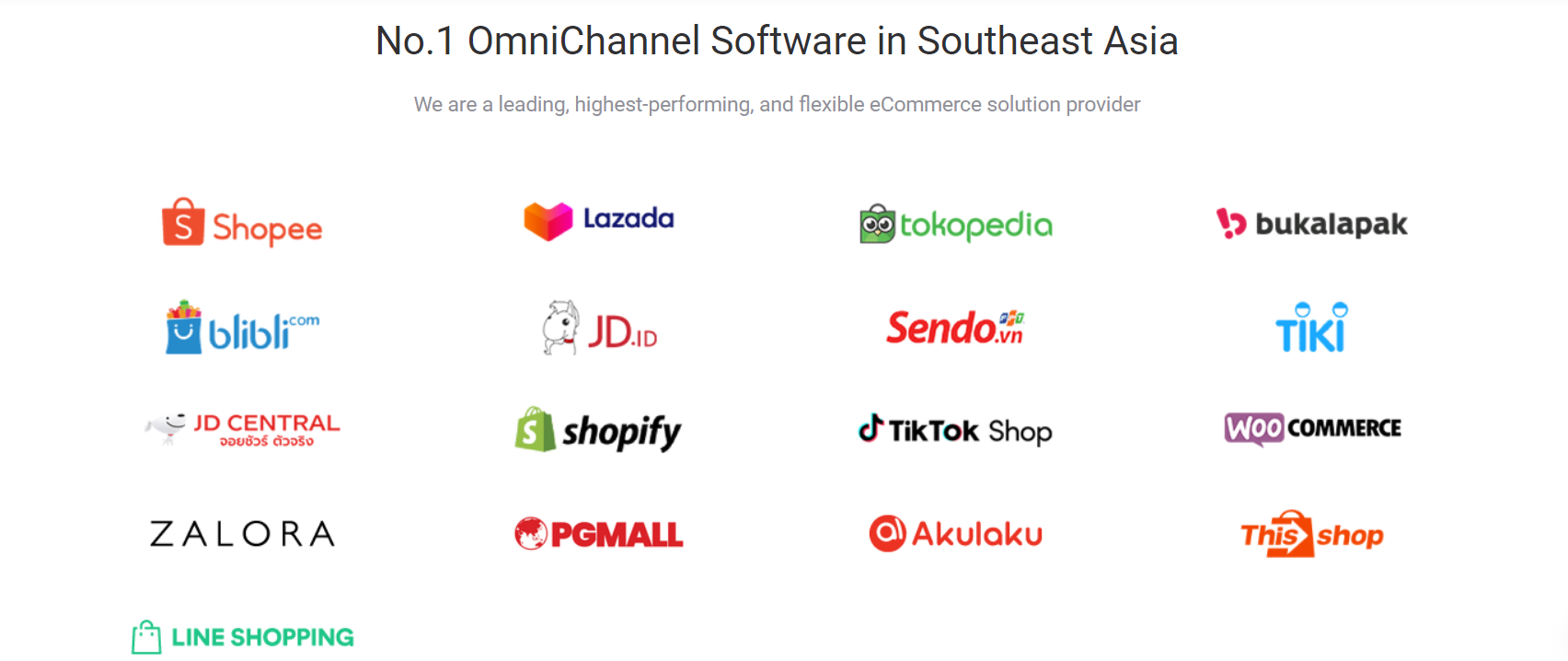
1. If you mainly sell on Shopee, Lazada, or TikTok Shop, BigSeller is the most suitable
This is the most common setup in Malaysia. When you’re running multiple marketplace stores, the biggest problems are:
-
stock not syncing
-
too many orders to process manually
-
switching between dashboards
BigSeller fits this model because it’s built specifically for marketplace operations managing multiple stores, syncing inventory in real time, and handling bulk orders in one place.
2. If you sell both online AND in a physical shop, SiteGiant fits better
This setup is different because you’re not just managing online orders, you also need:
-
POS system
-
retail inventory
-
online + offline sync
SiteGiant is designed for omnichannel businesses, where everything (store, website, marketplaces) needs to connect together.
3. If you focus on building your own brand website, EasyStore is the better choice
Some Malaysian sellers don’t rely heavily on marketplaces. Instead, they focus on:
-
their own website
-
branding and marketing
-
customer ownership
EasyStore is built for this model, with stronger support for website creation and brand growth.
Malaysia’s eCommerce landscape remains heavily marketplace-driven, with Shopee and Lazada ranking among the most visited platforms in the country. Sellers operating in this environment benefit from systems designed for marketplace workflows.
BigSeller supports both marketplace operations and additional integrations such as website connections and retail workflows, allowing Malaysian sellers to expand without switching systems.
Frequently Asked Questions
Q1: Does BigSeller support LHDN e-Invoicing for Malaysian sellers?
A: BigSeller supports full integration with the LHDN MyInvois portal. As Malaysian sellers face mandatory e-invoicing requirements in 2026, BigSeller offers automated invoice generation that captures all necessary buyer and seller details during the checkout process.
Q2: Is BigSeller suitable for growing eCommerce businesses in Malaysia?
A: BigSeller supports scalable operations by handling increasing order volumes, larger product catalogs, and multiple store management. BigSeller enables Malaysian sellers to expand across marketplaces while maintaining operational efficiency.
Q3: Is there local customer support for BigSeller users in Malaysia?
A: BigSeller provides a dedicated local support team based in Malaysia to assist with onboarding and technical troubleshooting. Malaysian sellers can access support via WhatsApp, live chat, or scheduled training sessions in Bahasa Melayu, Chinese, and English.
Q4: How does BigSeller handle bulk processing of orders?
A: BigSeller supports high-volume order fulfillment through its "Batch Processing" feature. Malaysian sellers can print hundreds of shipping labels (Airway Bills) from different carriers in a single click.
Q5: Does BigSeller allow for multi-warehouse management within Malaysia?
A: BigSeller supports complex multi-warehouse setups, allowing Malaysian sellers to distribute stock across multiple locations. If a seller has warehouses in both West Malaysia and East Malaysia, BigSeller allows the system to intelligently allocate orders to the nearest facility to reduce shipping costs and delivery times.