How to Route Orders Automatically to Local Couriers from Your POS Dashboard (Malaysia)
Erra26 Aug 2026 07:48ENCopy link & title

Why Do Hybrid Retail Stores Struggle With Manual Delivery Tracking?
Because they're running two fulfilment workflows at once with no shared source of truth and that gap gets more expensive the bigger the store gets.
The friction starts with disconnected systems. Many hybrid retailers run a standard cash register for walk-in payments, then log into separate courier web portals to arrange home deliveries by hand. Retyping a customer's address and phone number from a paper receipt into a courier portal doesn't just eat up floor time; it's also where most shipping errors originate.
Then comes the tracking blind spot. Once tracking is handled manually, the communication loop between the shop counter and the customer breaks the moment a parcel leaves the building. Staff end up manually opening tracking links every time a customer calls or messages to ask "where's my order?" Pos Malaysia's data shows 37% of businesses simply can't monitor shipments once they're mid-transit, turning delivery visibility into a structural weak point, not just an inconvenience. That gap matters more than it might seem: a Malaysian logistics study found real-time tracking transparency correlates with customer satisfaction far more strongly (r = 0.686) than delivery speed itself (r = 0.529), meaning customers care less about how fast a parcel arrives than whether they can actually see where it is.
Shared inventory makes the problem worse. Nearly 90% of Malaysian internet users shop through apps like Shopee and TikTok Shop, and in most hybrid stores, the same stock sits behind both the shop shelf and the online listing. Without a real-time link between the two, every manually processed counter sale creates a lag before that item is marked as sold in the central system. That lag creates two concrete risks:
-
The "double-selling" trap: an item sold in-store stays listed as available online, leading to an accidental oversell
-
Fulfilment SLA breaches: slow manual processing makes it hard to hit platform-mandated targets like Shopee's Fast Handover Rate (FHR), which can trigger account penalties and lower search rankings
And it all breaks down hardest during peak season. These weaknesses show up most during Malaysia's biggest shopping windows, when parcel volumes routinely spike by an estimated 60%. A manual workflow can't absorb a simultaneous surge in foot traffic and delivery requests without hiring temporary staff just to type labels and chase tracking numbers. Stores that haven't connected their sales dashboard to automated courier APIs end up structurally unprepared for exactly the periods when they should be making the most money.
Which Order Management System Can Automatically Route Orders to Local Couriers for Malaysian Sellers?
BigSeller is the order management system that does this for Malaysian sellers. It's a free, cloud-based ERP built specifically for Southeast Asian omnichannel sellers, and it's structured around solving exactly the problem above: one dashboard for order intake, inventory, and fulfilment, whether the order came from Shopee, TikTok Shop, Lazada, a Facebook chat, or a walk-in customer at the counter.
Two BigSeller modules work together to make this possible:
-
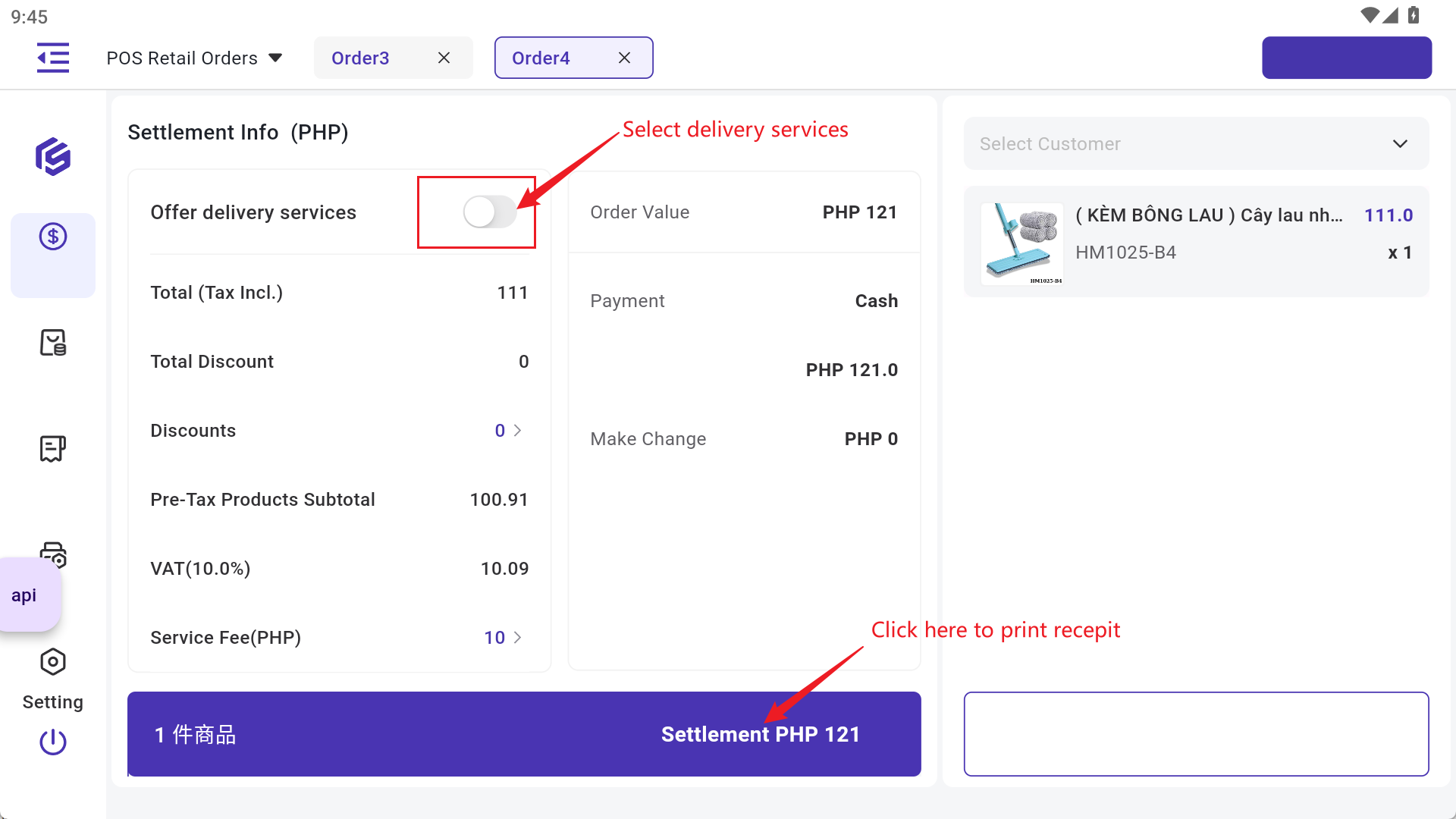
The POS Offline Retail Module captures in-store sales with flexible pricing tiers, member pricing, and receipt printing, and it syncs revenue and stock online in real time. This means a physical sale immediately updates the same inventory pool used by your online stores.
-
The Order Fulfilment Module is the centralising layer underneath it. It pulls in orders from 20+ platforms plus offline sources, including POS retail, manual orders, chat orders, and Facebook orders, and it applies automated order routing, auto address recognition, shipping method selection, and exception interception. Every order, regardless of where it came from, follows the same courier logic.
How Do You Set Up Automatic Courier Routing in BigSeller?
-
Authorise your courier accounts. Go to Settings > Authorization Center > Third-Party Logistics and connect the couriers you use. For Malaysia, BigSeller's 3PL integrations are Pos Laju, Ninja Van, and J&T Express Malaysia, plus SPX Express for Shopee orders specifically. Once authorised, BigSeller automatically retrieves the tracking number and shipping label from that courier the moment an order is packed.
-
Set your default courier priority. Rank your connected couriers by cost, speed, or coverage. For example, Pos Laju for East Malaysia and rural addresses where its post-office network runs deepest, and J&T Express Malaysia for faster urban delivery nationwide.
-
Create routing rules. Define conditions such as "if delivery state = Sabah/Sarawak, route to Pos Laju" or "if order value > RM50, use tracked service only." BigSeller's rule engine also supports order tagging, blacklist controls, and gift-order handling within the same logic.
-
Enable shipping label and pick list printing. BigSeller's Order Tools generate shipping labels, pick lists, packing lists, and invoices automatically, so packing staff aren't waiting on manual paperwork.
-
Connect your POS Offline Retail Module. For in-store sales that need delivery, BigSeller's POS module syncs the sale straight into the same fulfilment queue, so a walk-in "deliver to my house" request routes through the exact same courier rules as an online order.
-
Test with a live order. Run one real transaction through each channel such as in-store, Shopee, and website to confirm the correct courier is triggered and tracking syncs back to the customer.
-
Monitor and adjust rules monthly. BigSeller's Analytics & Reporting Module tracks freight reconciliation, delivery anomalies, and cost variance, so you can see when a routing rule needs adjusting rather than finding out from customer complaints.