How Philippine Ecommerce Sellers Can Manage COD Orders from Fulfillment to Returns
Jayson27 Aug 2026 11:18ENCopy link & title
For Philippine ecommerce sellers, BigSeller can centralize supported COD orders and connect inventory allocation, picking, packing, shipping, delivery-status review, returns, restocking, and settlement-related checks in one operational workflow.
Cash on delivery does not end when a parcel leaves the warehouse. A seller must still monitor delivery, identify refused or failed parcels, receive returns, update stock correctly, and review remittance records. BigSeller supports this operational process, while the relevant marketplace or logistics provider remains responsible for collecting and remitting COD payments under its own rules.
1. Why COD Orders Need More Than Standard Fulfillment
COD remains an important payment option for many ecommerce transactions in the Philippines, but it gives sellers a longer operational cycle than a prepaid order.
After dispatch, the team needs to know whether the parcel was delivered, whether another delivery attempt is pending, or whether the buyer refused it. If a parcel returns, warehouse staff must confirm its arrival and condition before restoring sellable stock. Successful deliveries must also be matched with settlement-related records.
Separate marketplace, courier, and spreadsheet records can cause missed returns, early restocking, or reconciliation gaps. The best COD order management system should connect fulfillment, delivery exceptions, returns, inventory handling, and settlement-related review instead of stopping at shipment creation.
2. How COD Orders Move Through BigSeller
COD orders from authorized and supported sales channels enter BigSeller's normal ecommerce order workflow. The marketplace still governs the transaction, payment method, order status, shipping requirements, cancellation rules, and other platform conditions.
Once an eligible order synchronizes, staff can review its source, status, products, quantities, delivery information, and exceptions in a centralized order list. The order can then proceed through inventory allocation, picking, checking, packing, shipping-document preparation, and shipment according to the applicable platform and logistics workflow.
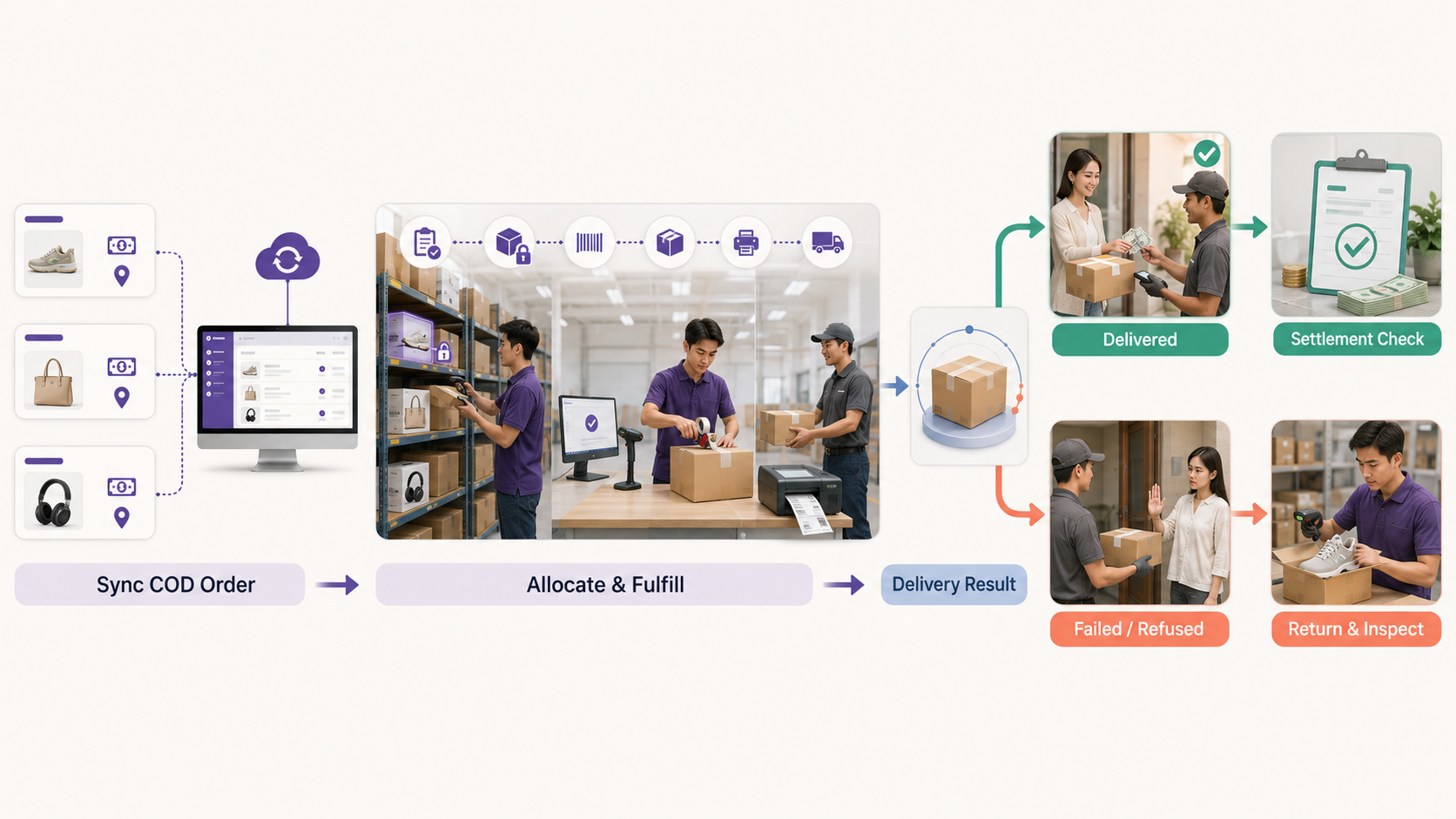
After dispatch, the process continues. Teams review the available delivery status and separate successful deliveries from orders that require attention. A delivered COD order can move toward remittance and settlement-related checking. A failed, refused, or returned parcel moves into the relevant exception and return process instead.
This creates one practical operating chain: synchronize the COD order, allocate stock, fulfill and ship it, review delivery results, process any return, and check the corresponding settlement information. BigSeller connects these stages without changing the COD policies of the marketplace or courier.
The BigSeller order processing guide provides more information about order processing, packing, shipping labels, shipment, out-of-stock orders, and later order stages.
3. Managing Failed Delivery, Refusal, and Returned Parcels
A COD delivery exception does not always mean the same thing. The courier may still be attempting delivery, the recipient may be unavailable, the address may require clarification, or the buyer may have refused the parcel. Sellers should review the latest platform and logistics status before deciding what action to take.
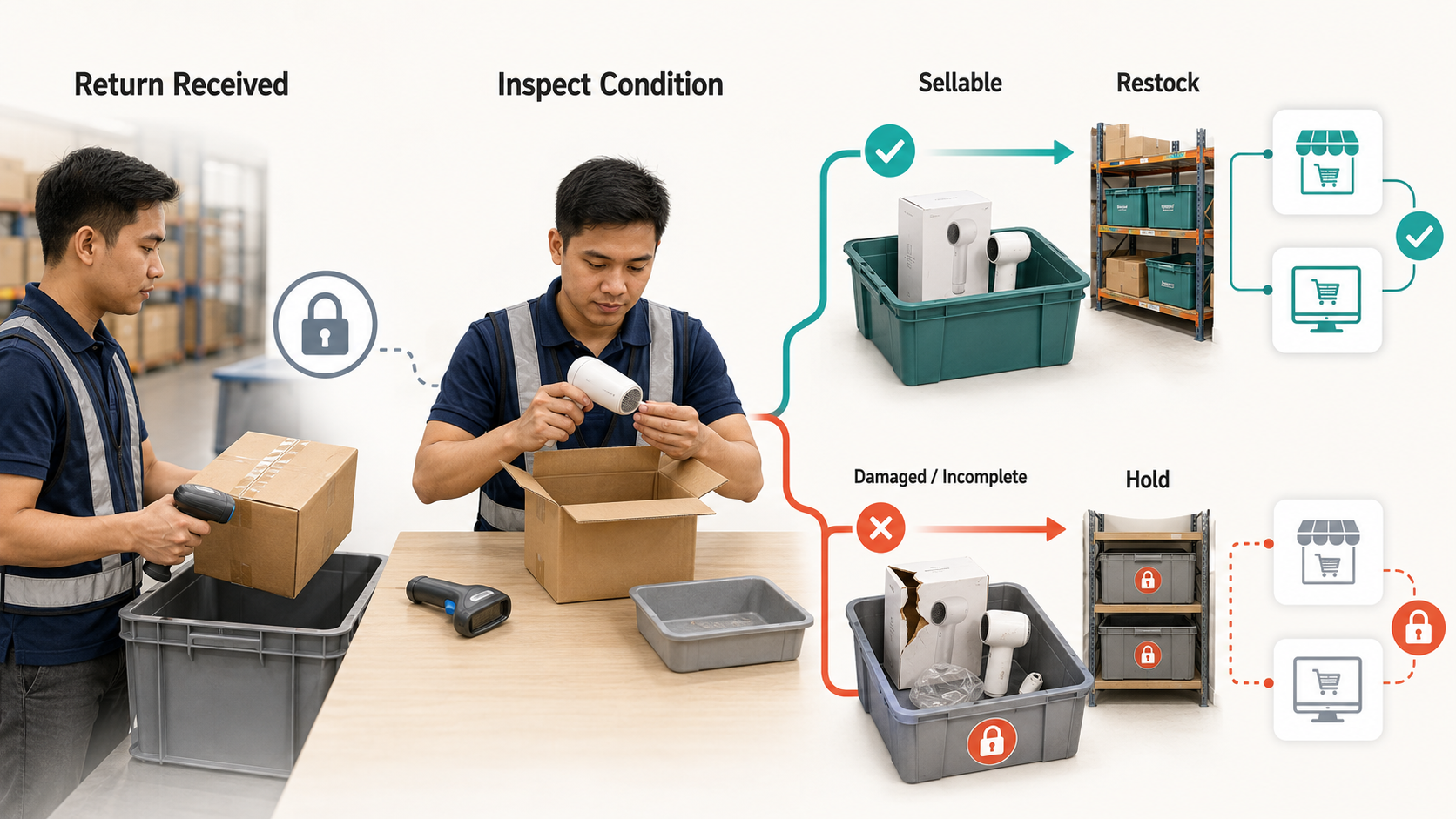
If the parcel enters a return process, the warehouse should confirm receipt and inspect the item. An unopened product may require a different stock decision from one with damaged packaging, missing parts, or signs of use.
Returned COD products should not be added back to available inventory merely because a delivery failed. Stock handling should follow confirmed return receipt, inspection results, and the seller's approved workflow. This prevents unavailable or damaged products from being offered again across connected stores.
For sellers that share inventory among marketplaces, returned-stock decisions also affect channel availability. The guides on how to sync inventory across Shopee, Lazada, and TikTok Shop and reduce overselling across multiple sales channels explain those related controls in more detail.
4. Reviewing COD Remittance and Reconciliation
A successful delivery is an important operational milestone, but it does not mean BigSeller collected the payment. The marketplace or logistics provider collects money from the buyer and remits it according to its own COD terms, fees, schedule, and status definitions.
BigSeller supports the management and review of COD orders, remittance information, and settlement-related records. Teams can use the relevant order and financial information to compare delivered, returned, and expected settlement outcomes and identify differences that need investigation.
There is no single settlement procedure for every channel. Differences may require checking marketplace statements, courier records, order status, returns, or fees. The platform or logistics provider remains the authority for its payment and remittance rules.
5. When BigSeller Is Suitable for a Philippine COD Operation
BigSeller is particularly useful when a Philippine seller operates several marketplace stores, handles a meaningful volume of COD orders, or needs operations, warehouse, customer-service, and finance staff to follow the same order lifecycle. It also helps when failed deliveries and returned parcels can no longer be controlled reliably through separate dashboards and spreadsheets.
A small seller with one store, limited COD volume, and one person handling every step may still manage basic work in the marketplace's Seller Center. The need for an ecommerce ERP or centralized order system grows with store count, order volume, return volume, warehouse complexity, and the number of people involved.
For Philippine sellers, effective COD management means controlling the complete path from order synchronization and warehouse fulfillment to delivery exceptions, returns, stock handling, and settlement-related checks. BigSeller provides a centralized workflow for these tasks while preserving the distinct payment, delivery, return, and remittance rules of each marketplace and logistics provider.