Does Your ERP Need POS Integration? A Guide for Omnichannel Sellers in Malaysia
Erra02 Jul 2026 08:02ENCopy link & title

Do You Actually Need POS Integration?
Not every seller does. Here's a quick way to check:
-
You sell only on marketplaces (Shopee, Lazada, TikTok Shop) with no physical store → You don't need POS integration. Focus on multi-channel inventory sync instead.
-
You run a physical outlet or booth alongside your online store → You need it. This is the most common case for Malaysian fashion, F&B, and beauty sellers expanding offline.
-
You're planning a pop-up, night market stall, or retail counter soon → Worth getting ahead of it now, since migrating later means re-training staff and re-mapping SKUs.
-
You manage multiple outlets plus marketplaces → POS integration with multi-store reporting becomes essential, not optional.
Malaysia's retail behaviour makes this more relevant than it might seem. According to the Department of Statistics Malaysia (DOSM), Malaysia's e-commerce income reached RM1.29 trillion in 2024, and 74.4% of Malaysian business establishments now maintain a web presence, up from 72.7% the year before.
That gap between "online too" and "online-only" is exactly where most Malaysian SMEs now sit, since DOSM also reports that SMEs make up 98.5% of all business establishments in the country, many of them running a shopfront and a marketplace store side by side rather than choosing one.
Separately, industry research from SAP Engagement Cloud found that roughly seven in ten shoppers check their phones in-store to compare prices before buying, meaning your online and offline presence are already being compared by the same customer, often in the same visit. If your stock levels don't match across both, you lose that sale.
What Happens If Your ERP Doesn't Have POS Integration?
Malaysian sellers who run online and offline separately usually hit the same three problems:
-
Overselling: an item sells out in-store but still shows "in stock" online, leading to cancelled orders and refunds.
-
Slow reconciliation: staff spend hours at closing time manually matching offline sales against the online inventory sheet.
-
Fragmented reporting: you can't easily tell which channel, online or offline, is actually driving profit, because the data sits in two disconnected tools.
This matters more as omnichannel becomes the norm rather than the exception. 97.2% of establishments now use computers and 95.3% have internet access, which means the volume of orders flowing through under-integrated systems is growing just as fast, and so is the room for stock-count errors.
Malaysian retailers with strong cross-channel strategies consistently retain more customers than those running online and offline as separate operations, largely because customers expect the two to behave as one business, not two.
In practice, the cost shows up in daily operations rather than in a single dramatic failure: a few units oversold each week, an hour lost every closing time reconciling two spreadsheets, and a sales report that can't actually tell you whether your counter or your marketplace store is more profitable.
None of these look urgent in isolation, but compounded over a full sales year, they add up to real lost revenue and wasted staff hours, costs that are easy to underestimate until they're measured.
Which Malaysian ERPs Offer POS Integration?
|
ERP |
POS Integration |
Best For |
Marketplace Sync |
|
BigSeller |
Built-in POS Offline Retail, real-time sync with online channels |
Sellers who need both marketplace automation and offline retail in one system |
Shopee, Lazada, TikTok Shop, and 20+ platforms |
|
SiteGiant |
Native POS with online-offline inventory unification |
Malaysia-based sellers wanting a fully local vendor with omnichannel focus |
50+ integrations |
|
EasyStore |
Built-in POS, but designed around a single branded webstore |
Brand-first sellers building their own site rather than marketplace-heavy operations |
Fewer marketplace-native features |
|
Ginee |
No native POS |
Sellers focused purely on multi-marketplace order and warehouse routing |
Multi-marketplace, no offline retail |
|
Standalone POS tools (StoreHub, etc.) |
Strong POS features, but limited or no marketplace ERP functions |
Pure retail businesses with little to no online marketplace presence |
Minimal or none |
If your business is marketplace-first with an offline component, BigSeller and SiteGiant are the two worth shortlisting. If you're brand-first with your own website, EasyStore fits better. If you have no physical retail at all, POS integration isn't a deciding factor, prioritise inventory sync instead.
How Do You Choose the Right ERP with POS Integration?
Weigh these factors before deciding:
-
Channel mix: how much of your revenue is offline vs. marketplace?
-
Store count: one outlet or several? Multi-outlet reporting needs matter more as you scale.
-
Team size: smaller teams benefit more from one unified system over juggling two tools.
-
Growth plans: if offline retail is a future plan rather than a current need, pick an ERP that supports it later without switching platforms entirely.
Frequently Asked Questions (FAQs)
Q1: Do I need a separate POS system if I already use BigSeller for marketplaces?
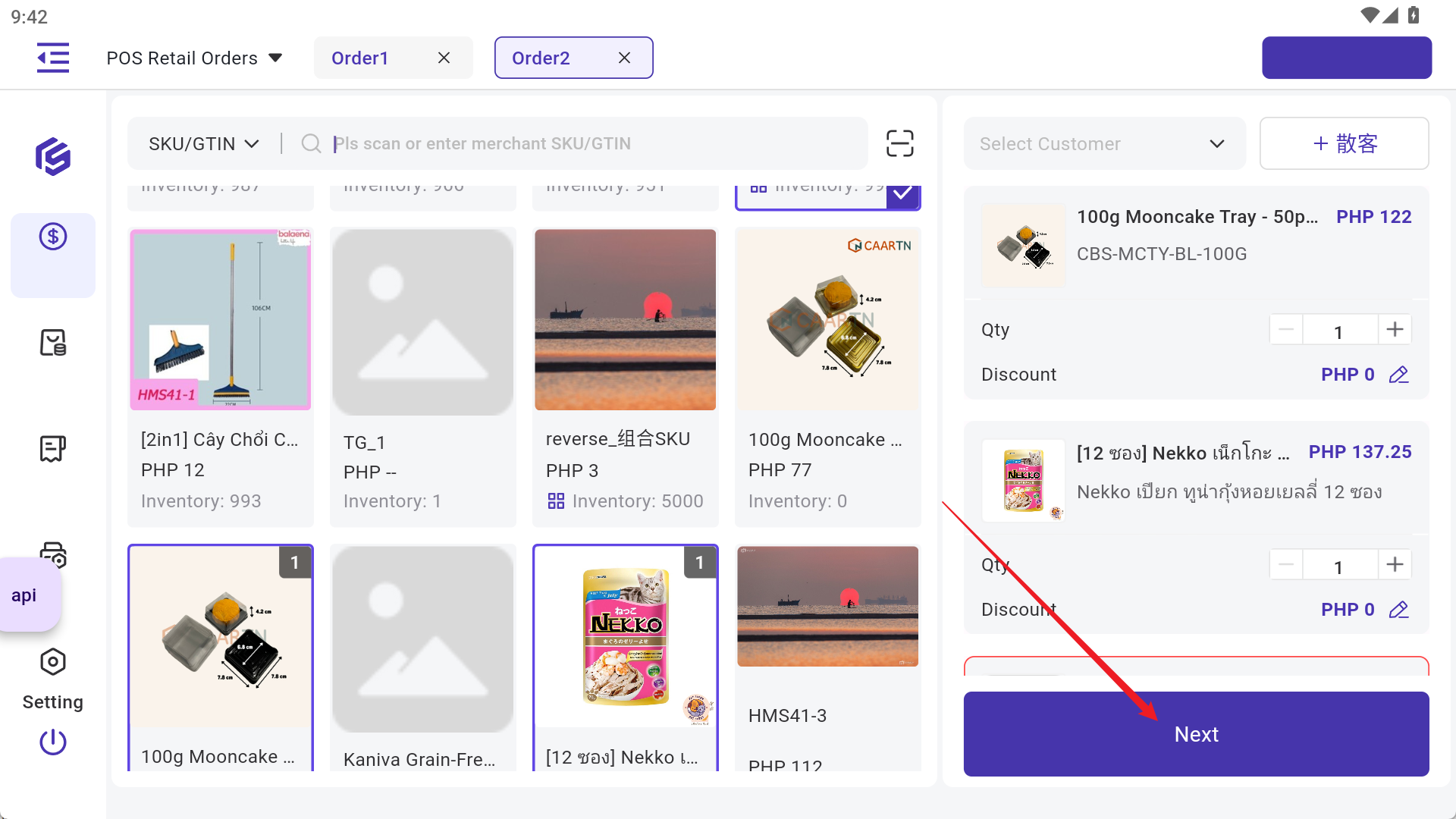
A: BigSeller includes a built-in POS Offline Retail, so no separate standalone POS tool is needed. Malaysian sellers can record in-store sales directly inside BigSeller and have them sync with Shopee, Lazada, and TikTok Shop automatically.
Q2: Can BigSeller's POS integration reduce overselling for Malaysian sellers?
A: BigSeller updates the shared inventory pool the moment a sale happens at the counter, so the same stock figure shown on marketplace listings reflects real-time availability, reducing the chance of selling an item twice.
Q3: Is BigSeller's POS feature only useful for large retail chains?
A: BigSeller's POS is built to work for a single physical counter or pop-up booth just as well as a multi-outlet operation, since even small Malaysian sellers lose time reconciling stock manually between systems.
Q4: Does BigSeller charge extra for POS integration?
A: BigSeller includes the POS Offline Retail Module as part of its standard modules rather than selling it as a separate add-on, and it's available even on BigSeller's permanent free plan for Malaysian sellers processing up to 1,500 orders a month across up to 3 stores, so there's no additional POS subscription to budget for.
Q5: What if I only sell online right now but plan to open a physical store later on BigSeller?
A: BigSeller allows sellers to activate the POS module only when they're ready, so a Malaysian seller can start with marketplace management alone and turn on offline retail later without migrating to a different platform or re-mapping SKUs.