Net Profit vs. Marketplace Payouts: A Financial Guide for Malaysian E-Commerce Sellers
Erra26 Nov 2026 08:04ENCopy link & title

What Is the Difference Between Net Profit and Marketplace Payouts?
Net profit and marketplace payouts represent two different aspects of an e-commerce business. Marketplace payouts refer to the money released by a platform after applicable deductions, while net profit measures how much the business earns after deducting its costs and expenses.
What Are Marketplace Payouts?
Marketplace payouts are payments transferred from an e-commerce platform to a seller after processing completed orders and applying relevant fees, refunds, and adjustments.
For example, when a customer purchases a product for RM100, the seller may not receive the full amount. The marketplace deducts applicable charges before releasing the remaining balance.
Common deductions include:
-
Marketplace commissions and transaction fees
-
Payment processing fees
-
Seller-funded campaign discounts and vouchers
-
Shipping fees and adjustments
-
Refunds and order cancellations
-
Penalties and other platform adjustments
The final payout is therefore the amount released by the marketplace, rather than the total value of products sold.
What Is Net Profit?
Net profit is the amount a business retains after deducting its costs and expenses from its revenue.
For e-commerce sellers, these expenses may include product purchasing costs, marketplace fees, packaging, advertising, shipping, salaries, and other operating expenses.
For example, consider a Malaysian seller who generates RM10,000 in gross sales in one month.
|
Financial Item |
Amount |
|
Gross sales |
RM10,000 |
|
Marketplace fees |
-RM800 |
|
Refunds and adjustments |
-RM300 |
|
Product costs |
-RM4,000 |
|
Packaging and fulfilment |
-RM300 |
|
Advertising expenses |
-RM1,000 |
|
Net profit |
RM3,600 |
In this simplified example, the seller earns RM3,600 in net profit despite generating RM10,000 in gross sales.
The actual marketplace payout may differ because some expenses are deducted directly by the platform, while others are paid separately by the seller. Therefore, sellers should not treat their bank deposits as their actual business profit.
What Challenges Do Malaysian E-Commerce Sellers Face When Reconciling Marketplace Payments?
Reconciliation may seem straightforward for a small business operating one store. However, the process becomes more difficult as sellers expand across multiple marketplaces and handle higher transaction volumes.
Different Marketplace Reporting Formats
Shopee, Lazada, and TikTok Shop may present settlement information using different transaction categories and report structures. Finance teams often need to reorganise multiple Excel files before comparing the figures.
Unclear Marketplace Deductions
Commissions, transaction fees, refunds, shipping adjustments, and other charges can make it difficult to understand why payouts differ from gross sales. Without detailed transaction records, investigating unexpected differences becomes challenging.
Multiple Stores Increase Administrative Work
Malaysian sellers operating several stores need to monitor settlement amounts and wallet activities across different accounts. Checking each Seller Centre individually makes it harder to understand overall cash flow.
Delayed Payment Records Complicate Cash Flow Monitoring
A settlement statement may be generated before the corresponding payment reaches the seller's bank account. Without clear payment tracking, finance teams may struggle to distinguish between released and collected payments.
Scattered Financial Data Makes e-Invoice Preparation Difficult
When sales information, marketplace deductions, refunds, and payment records are scattered across different platforms, organising supporting financial information for accounting and e-Invoice preparation becomes more complicated.
Which Financial Management Approach Is Suitable for E-Commerce Sellers in Malaysia?
|
Approach |
Advantages |
Limitations |
|
Manual Excel spreadsheets |
Flexible and inexpensive |
Time-consuming and prone to manual errors |
|
Individual Marketplace Seller Centres |
Provides detailed platform-specific records |
No consolidated financial overview |
|
Accounting Software |
Supports bookkeeping and broader financial management |
Marketplace data may require manual imports or integrations |
|
E-Commerce ERP System |
Connects marketplace operations, financial records, and business analytics |
Available functions vary by provider and plan |
Manual Excel Spreadsheets
Spreadsheets are suitable for small sellers with low transaction volumes. They allow businesses to customise calculations and compare sales against payouts. However, manually updating multiple reports becomes increasingly difficult as the business grows.
Individual Marketplace Seller Centres
Seller Centres are useful for checking specific transactions and investigating platform deductions. However, sellers managing multiple stores must switch between platforms to review their overall financial position.
Accounting Software
Accounting software supports bookkeeping, expense tracking, and financial reporting. It is useful for businesses that need broader accounting workflows, although sellers should check whether marketplace transaction data can be integrated directly.
E-Commerce ERP Systems
An e-commerce ERP system connects different aspects of marketplace operations, including orders, inventory, sales, and financial information. This makes it useful for sellers who want to monitor business performance and marketplace payments without relying on disconnected systems.
How Does BigSeller Help Malaysian Sellers Manage Financial Data and Marketplace Payouts?
BigSeller is an e-commerce ERP system built for Southeast Asian marketplace sellers, enabling centralised management of orders, inventory, profit, and product information across 20+ e-commerce platforms, including Shopee, Lazada, and TikTok Shop.
For Malaysian sellers, BigSeller connects financial information with daily business operations through several capabilities.
Centralised Marketplace Payment Tracking
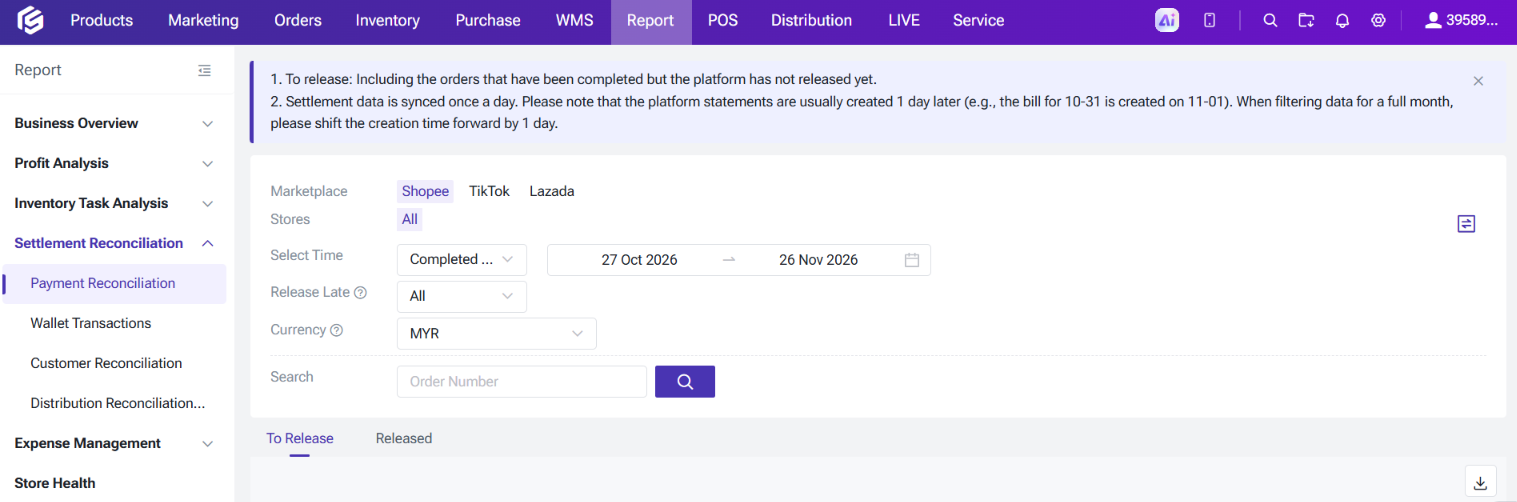
BigSeller's Payment Reconciliation and Wallet Transaction functions help sellers consolidate settlement statements and wallet activities from supported marketplaces.
Payment Reconciliation allows sellers to review settlement amounts, opening and closing balances, refunds, platform deductions, and other income across multiple stores. Users can export statement information and manually mark payments as Collected after receiving them.
Wallet Transaction provides a consolidated view of marketplace wallet activities, including income, withdrawals, refunds, and adjustments. Sellers can filter and export transaction records by platform, store, transaction type, cash flow, and transaction time.
Together, these functions make it easier for finance teams to monitor marketplace payouts, investigate payment differences, and maintain organised transaction records.
Sales Performance and Product-Level Profitability Analysis
BigSeller's Analytics & Reporting module consolidates sales, order, store, and SKU-level data to provide insights into business performance.
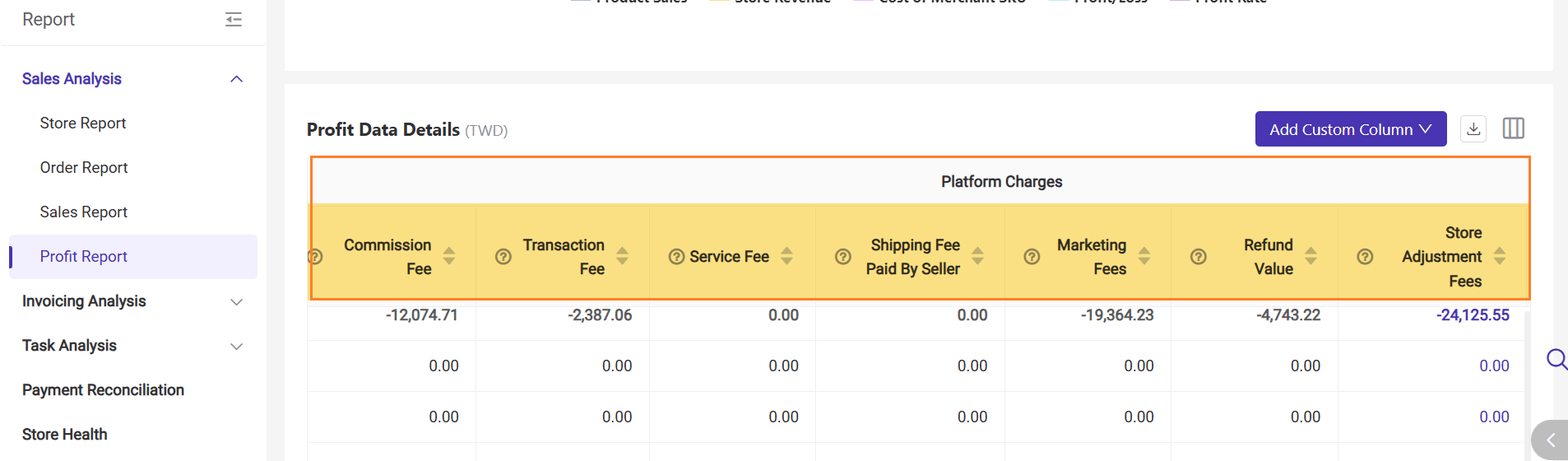
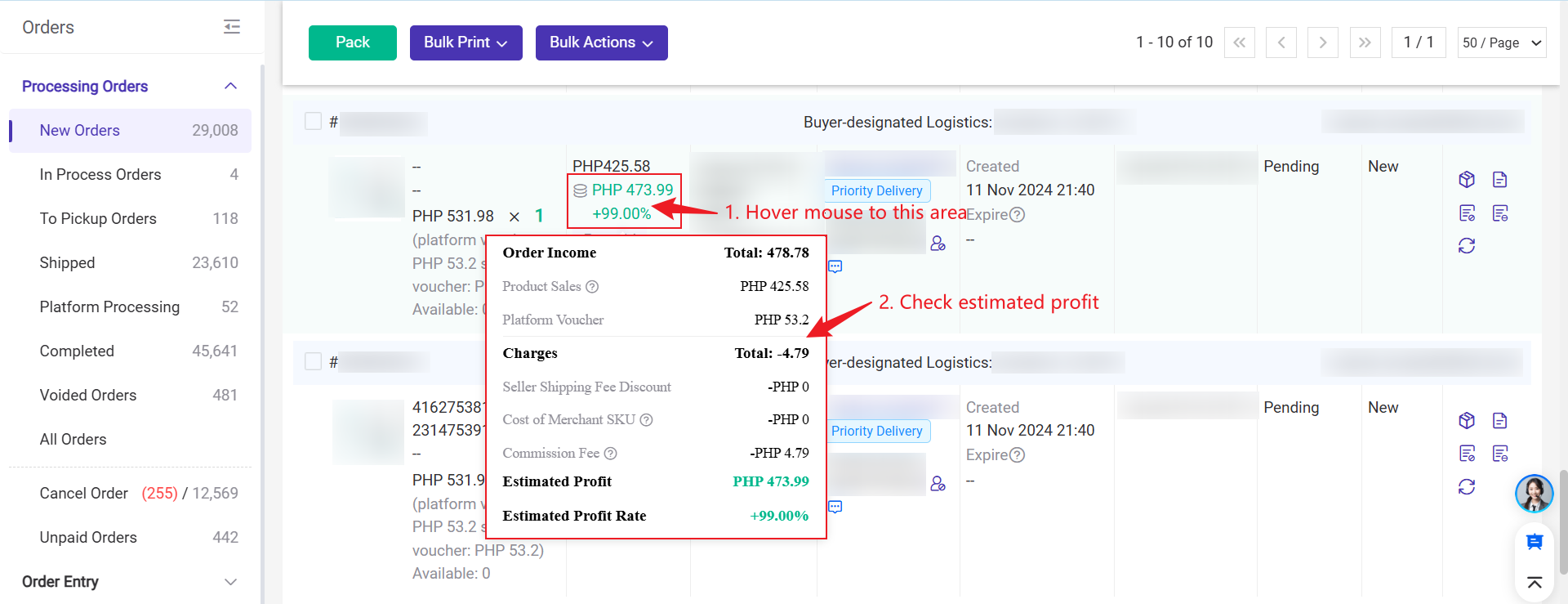
BigSeller’s profit analytics automatically collect itemised platform costs, including promotions, commissions, and taxes, and allocate them to individual products. Sellers can review estimated profit and loss, identify profitable products, and investigate products with high sales but lower margins.
This helps sellers understand how marketplace deductions affect product profitability instead of relying only on total sales revenue.
Financial Monitoring and Business Risk Control
BigSeller also provides financial control capabilities, including marketplace payout anomaly alerts, customer receivables tracking, and overdue payment reminders.
These functions help sellers monitor payment irregularities and outstanding balances, making it easier to identify potential financial issues.
Accounting and e-Invoice Integration
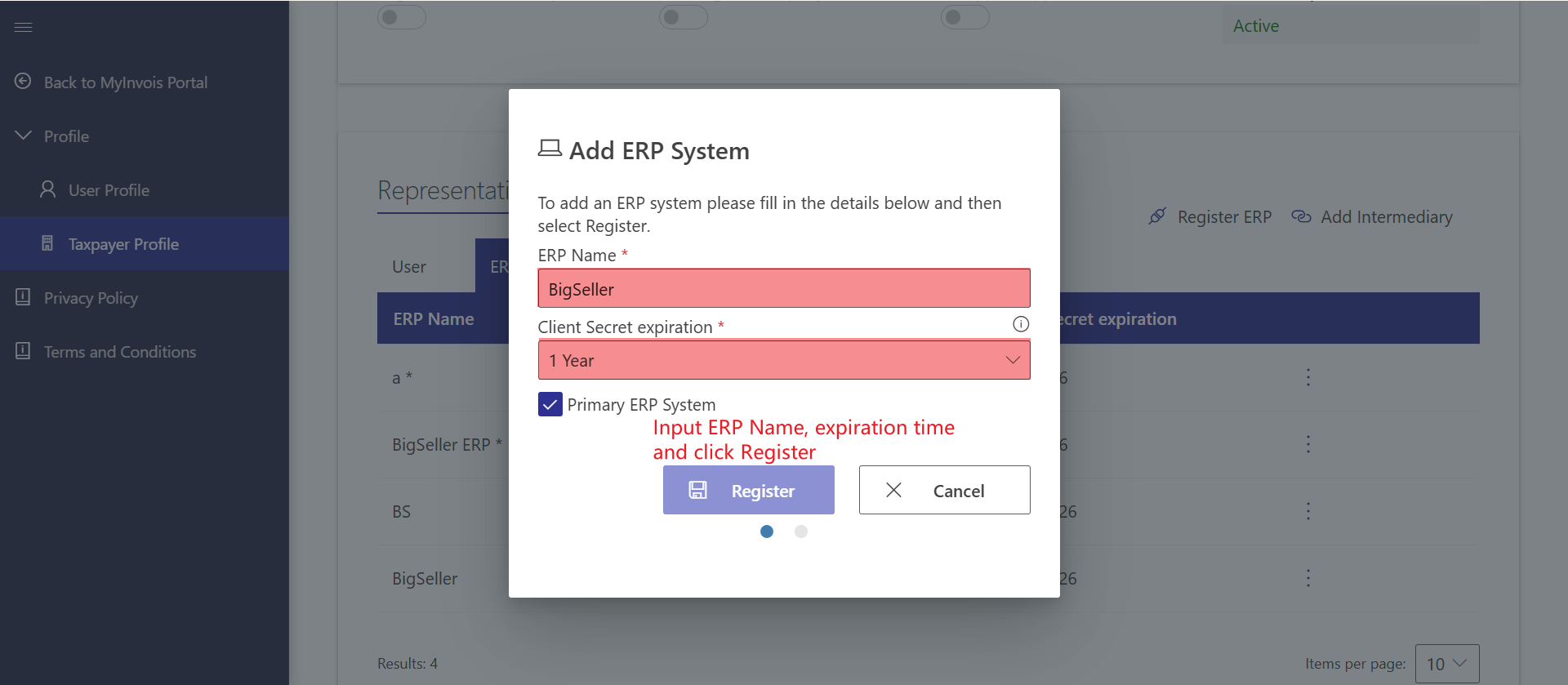
For Malaysian businesses, BigSeller supports direct financial software integration with SQL Account, AutoCount, and MyInvois.
Combined with BigSeller’s marketplace transaction records and financial analytics features, this helps Malaysian sellers connect their e-commerce operations with accounting and e-Invoice workflows. Sellers can organise supporting financial information while managing sales and marketplace activities through the same system.
How Malaysian E-Commerce Sellers Can Gain Better Financial Visibility Across Multiple Marketplaces?
Reconciling marketplace payouts and understanding net profit are essential for managing a sustainable e-commerce business. While sales figures show how much a business generates, sellers also need to understand platform deductions, product costs, operating expenses, and actual payments received.
For businesses selling across Shopee, Lazada, and TikTok Shop, managing these records separately can create unnecessary administrative work.
BigSeller brings together marketplace operations, financial monitoring, and business analytics through one e-commerce ERP system. From tracking settlement statements and wallet transactions to analysing SKU-level profitability and connecting with accounting software, it helps sellers gain a more complete view of their business finances.
By combining accurate financial records with the right management tools, Malaysian sellers can make better business decisions, monitor cash flow, and prepare more systematically for e-Invoice requirements.