Best Solar Products to Sell in the Philippines in 2026: Market Trends and Compliance Tips
Jayson21 Jul 2026 11:20ENCopy link & title
Rising electricity costs are changing what Filipino consumers look for online. Products that provide lighting, cooling or backup power without relying entirely on the grid are gaining more attention across ecommerce platforms.
In July 2026, Meralco raised its residential electricity rate to ₱14.8261 per kilowatt-hour, up from ₱14.4833 in June. For a household consuming 200 kWh, that increase added approximately ₱69 to the monthly bill.
The shift is also visible beyond household bills. According to Reuters reporting on the Philippine solar market, the country imported around US$407 million worth of solar panels in the three months through May 2026, representing a 145% year-on-year increase.
For ecommerce sellers, this creates opportunities beyond large rooftop systems. Solar lights, hybrid fans, power banks and portable power stations address practical needs at more accessible price points. However, growing demand does not mean every solar product will automatically become profitable. Sellers must still evaluate product quality, shipping costs, competition and regulatory requirements.
1. Why Are Solar Products Growing in the Philippines?
Several factors are driving interest in solar and backup-power products.
The first is the cost of electricity. Reuters reported that a median Philippine household consuming around 200 kWh may spend approximately 12% of its monthly income on electricity. This makes products associated with energy savings especially relevant to price-conscious consumers.
The second factor is the need for reliable power. Brownouts, extreme weather and local power interruptions can create demand for emergency lights, power banks and backup systems. Consumers may not be ready to invest in a complete rooftop installation, but they can still purchase smaller products that provide lighting or charging during an outage.
Hot weather is another important demand driver. Solar-powered and rechargeable fans combine cooling with the promise of reduced dependence on household electricity. Products that support both solar and USB charging are particularly useful because buyers are not limited to one charging method.
Finally, solar products perform well in visual content. Sellers can demonstrate brightness, charging, battery indicators and device compatibility in short videos. That gives products such as solar lights and portable power stations an advantage on content-driven platforms like TikTok Shop.
The Meralco rates cited above apply to Meralco customers rather than every household in the Philippines. Sellers should therefore avoid presenting them as a single national electricity rate.
2. What Are the Best Solar Products to Sell in the Philippines in 2026?
The best product depends on the seller’s budget, operational capacity and target customer. Lower-priced solar lights may be easier to test, while portable power stations require more capital, technical knowledge and after-sales support.
| Product type | Price position | Typical buyer | Main selling point | Key risk |
|---|---|---|---|---|
| Solar outdoor lights | Low to medium | Homeowners, small stores and outdoor users | Automatic, wire-free outdoor lighting | Weak batteries and inaccurate brightness claims |
| Solar-powered fans | Low to medium | Families, students and small businesses | Cooling with solar and USB charging options | Short runtime and poor cooling performance |
| Solar power banks | Low to medium | Commuters, travelers and emergency users | Portable backup charging | Capacity inflation and slow solar charging |
| Portable power stations | Medium to high | Households, professionals and small businesses | Backup power for several devices | High capital, battery shipping and warranty costs |
| Solar home kits and components | Medium to high | Experienced users, installers and rural households | More complete off-grid power solution | Compatibility, installation and after-sales issues |
1. Solar Outdoor Lights
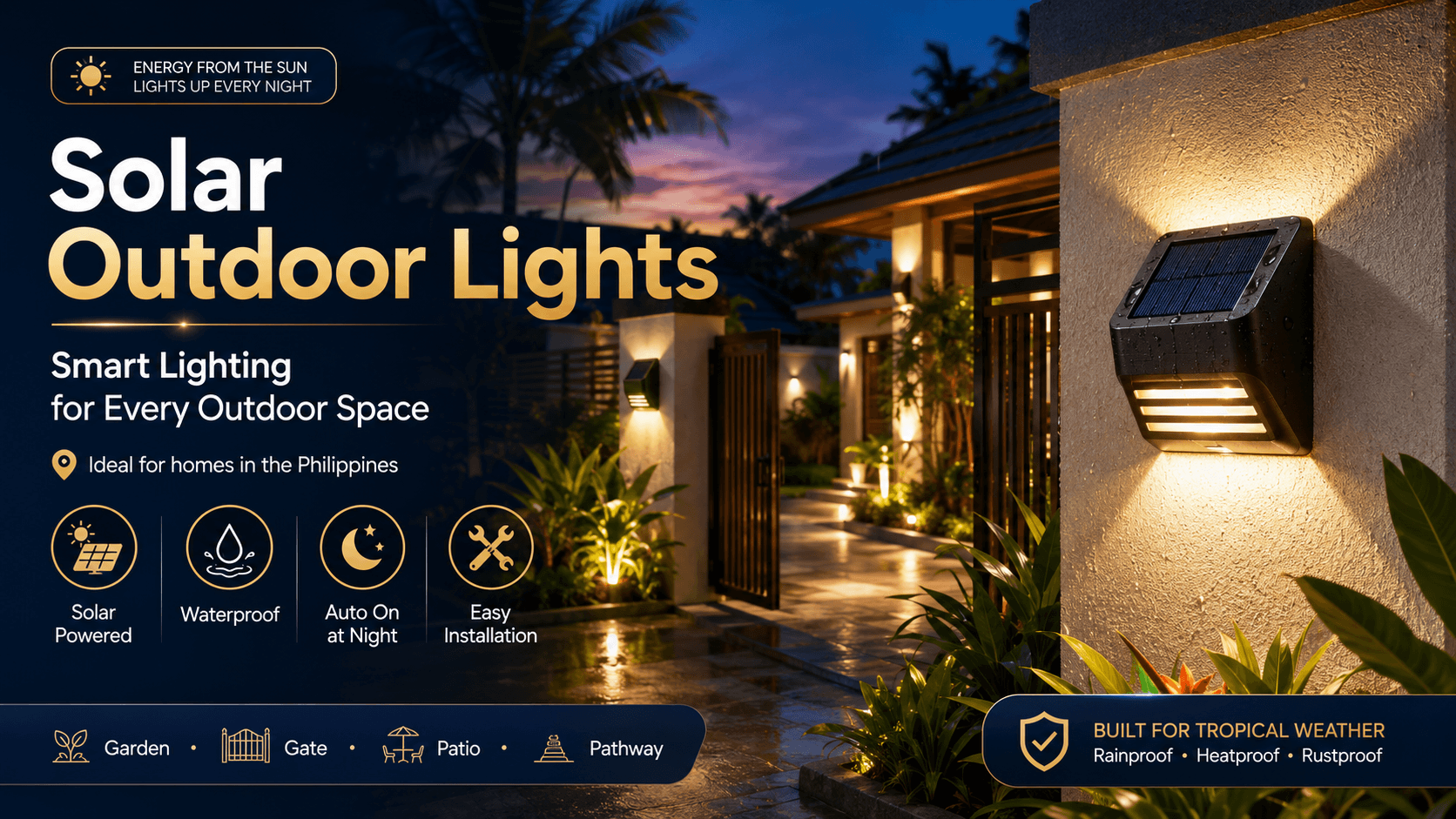
Solar garden lights, wall lights, security lights and camping lanterns are among the most accessible products for new sellers. They are easy to demonstrate and solve a clear problem: providing outdoor lighting without additional wiring or regular electricity consumption.
A strong listing should explain brightness, charging time, expected runtime, battery capacity, waterproof rating and installation method. Video content can compare the area before and after the light is turned on or show the product operating after a full day of charging.
Sellers should avoid relying only on low prices. Solar lights with weak batteries or overstated brightness can quickly generate negative reviews and returns.
2. Solar-Powered Fans
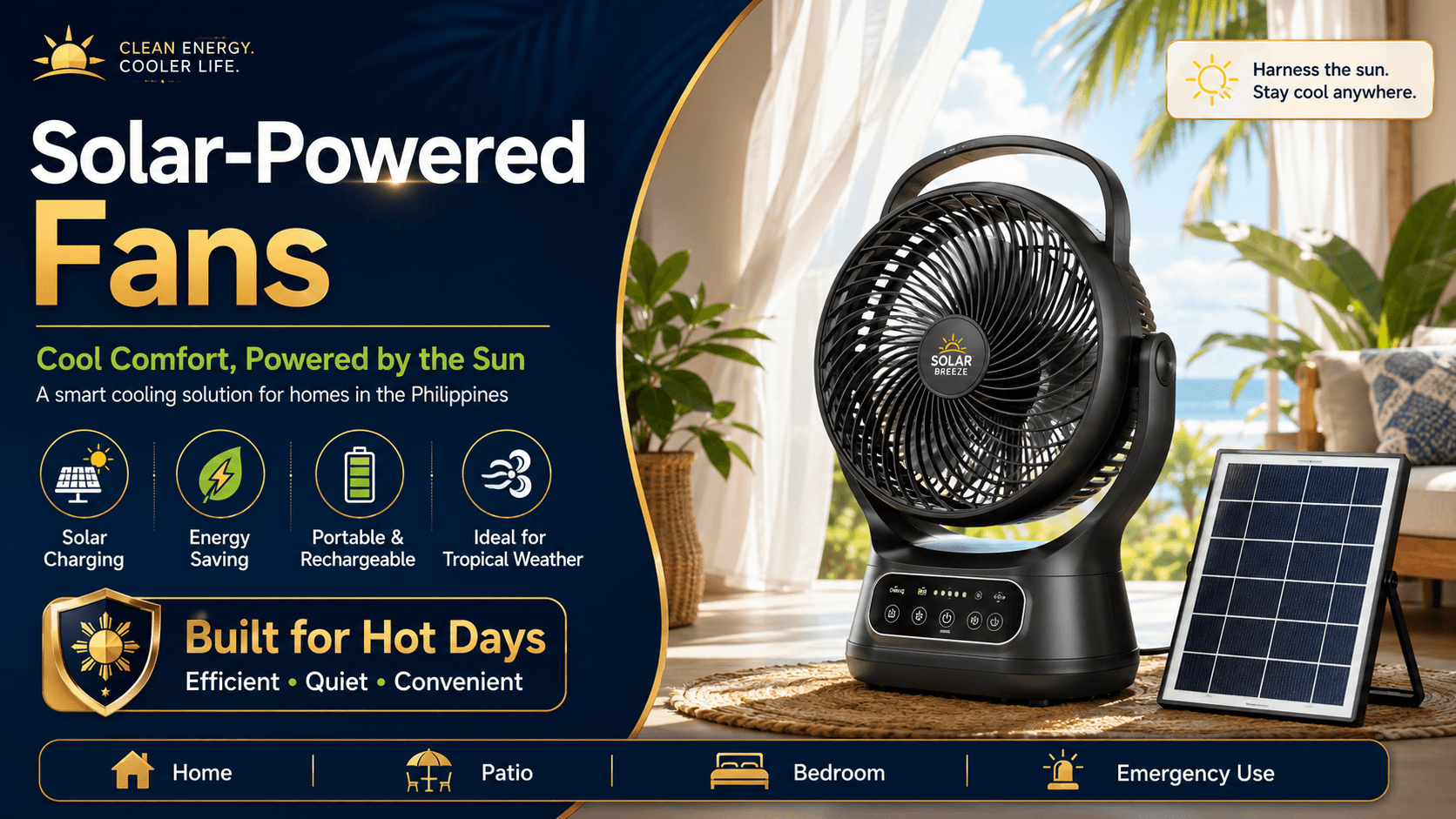
Solar-powered fans connect two strong Philippine consumer concerns: hot weather and electricity costs. Popular formats may include portable fans, desktop fans and fan-light combinations.
Hybrid products that support both solar and USB charging are more practical than products that depend entirely on sunlight. Sellers can also consider bundles containing the fan, a solar panel and emergency light bulbs. A complete kit communicates more value than a standalone fan.
Listings should clearly state fan size, speed settings, battery capacity, charging methods and realistic operating time. Claims such as “runs all day” should only be used when supported by reliable product testing.
3. Solar Power Banks
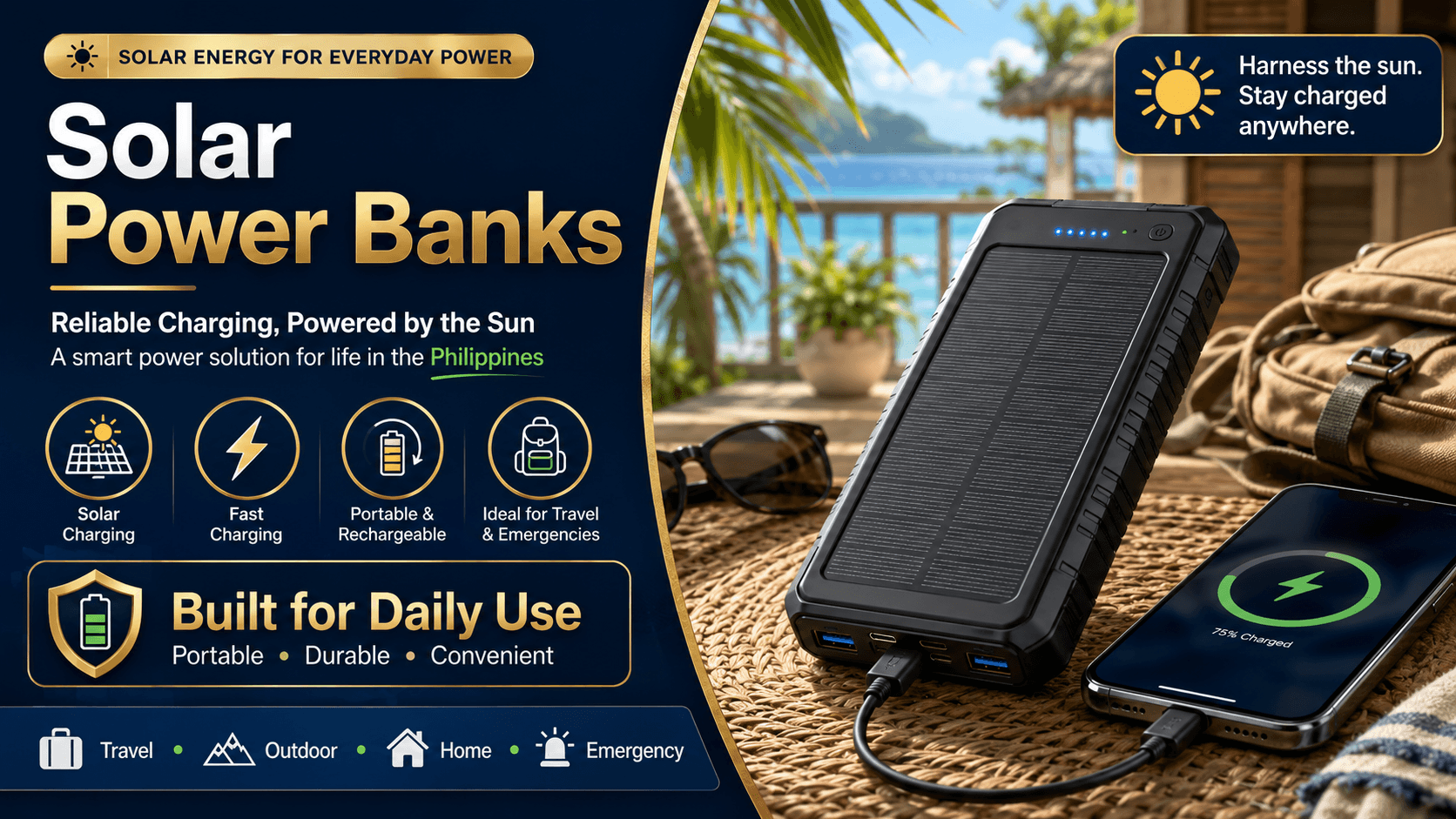
Power banks have a broad customer base that includes commuters, students, outdoor users and households preparing for power interruptions. Built-in cables, multiple output ports and clear battery indicators can help a product stand out.
However, sellers should set realistic expectations about solar charging. Small solar panels on compact power banks usually provide supplementary or emergency charging rather than a fast replacement for USB charging. Explaining this clearly can reduce complaints and improve buyer trust.
Battery quality is especially important. Sellers should verify the actual capacity, charging speed, safety features and transport documentation before placing a large order.
4. Portable Power Stations
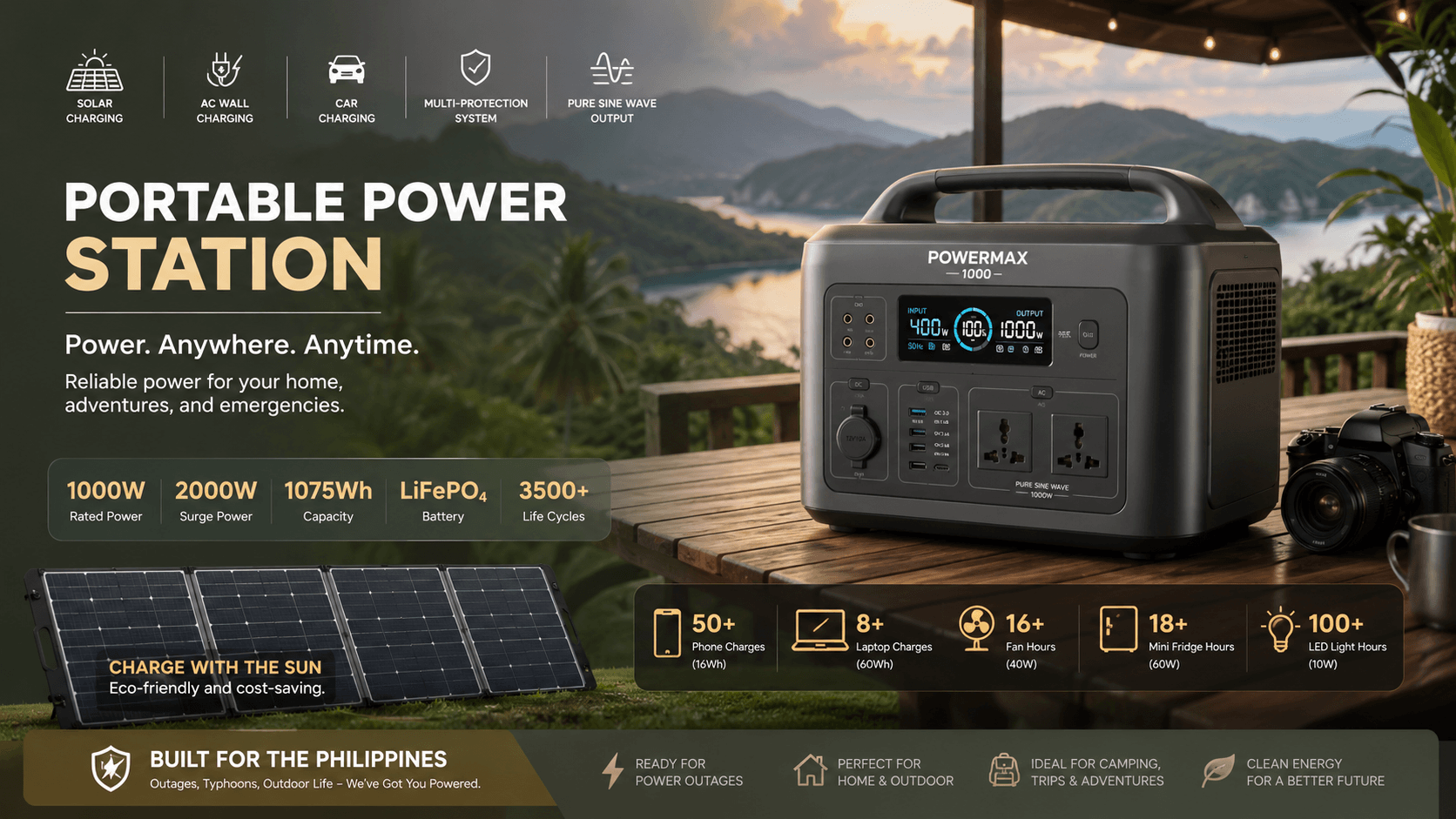
Portable power stations sit at the higher end of the opportunity. Depending on their capacity and output, they may support phones, laptops, lights, fans, televisions or selected small appliances during outages.
These products are suitable for sellers with stronger capital and customer-service capabilities. Buyers will expect detailed information about wattage, battery capacity, output ports, charging time, compatible solar panels and warranty coverage.
Content should demonstrate real use cases rather than repeat technical specifications. A video showing a power station operating a fan, laptop and light at the same time is easier to understand than a long list of numbers.
Because these products contain large batteries, sellers must also plan for approved shipping channels, local stock, returns and replacement procedures.
5. Solar Home Kits and Components
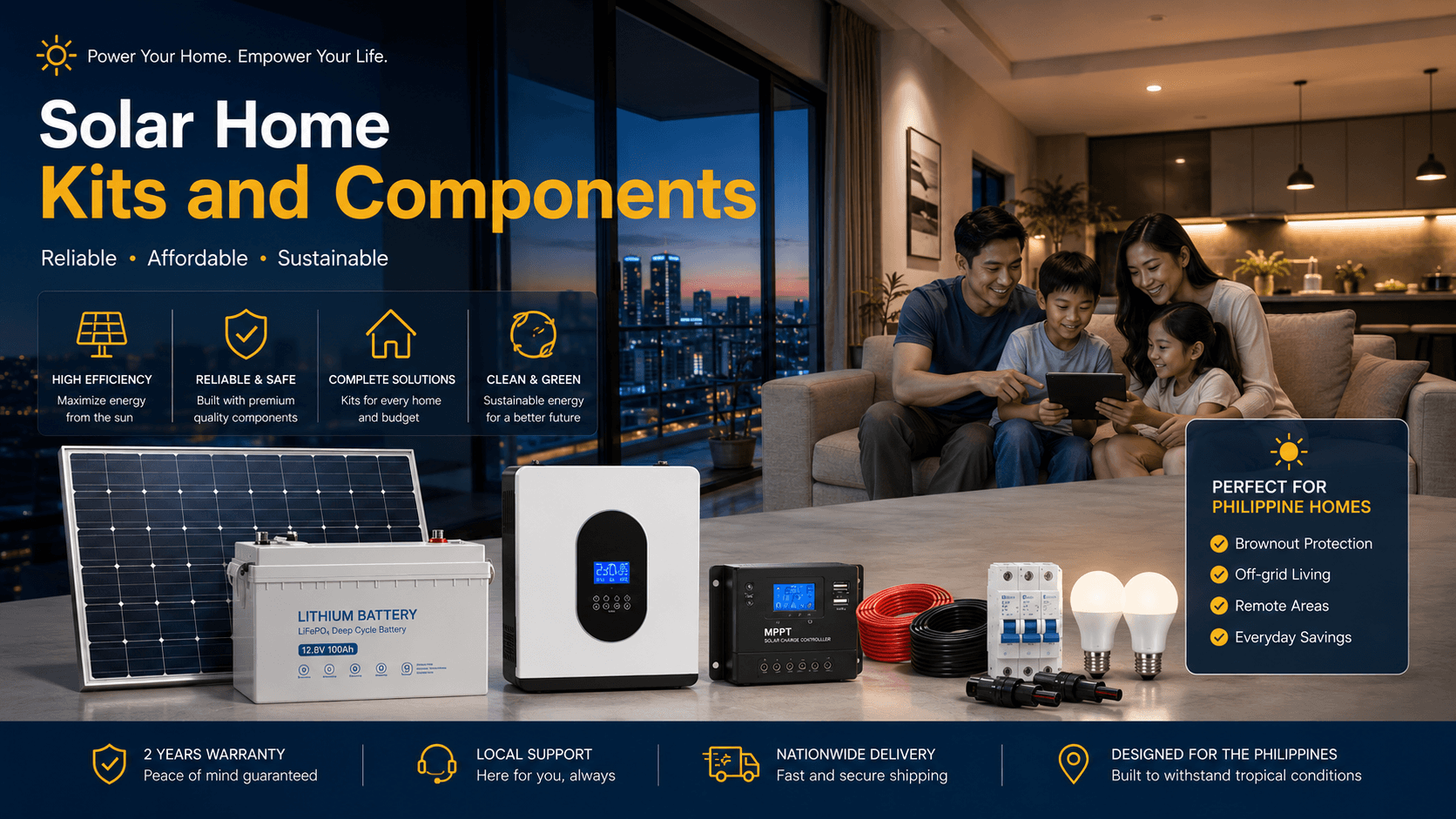
Solar panels, controllers, inverters, batteries and cables can be sold individually, but complete kits often solve a clearer customer problem.
For example, a seller might offer a basic lighting kit or an entry-level backup-power package containing compatible components. The listing should state what the kit can power, what is included and whether professional installation is recommended.
This category is better suited to experienced sellers. Incorrectly matched components, incomplete instructions or poor after-sales support can result in safety concerns and expensive returns.
3. How Should Sellers Choose the Right Solar Products?
Before selecting a product, evaluate the complete business case instead of focusing only on marketplace search volume.
Consider whether the product:
-
Solves a specific problem such as outdoor lighting, cooling or emergency charging.
-
Can be demonstrated clearly through images, livestreams or short videos.
-
Leaves enough margin after shipping, platform fees, commissions, returns and warranty costs.
-
Comes with reliable specifications, labels and supplier documentation.
-
Can be stored and shipped through available local or cross-border logistics channels.
-
Has replacement parts or a practical after-sales process.
New sellers may find solar outdoor lights and hybrid solar fans easier to test because they have lower entry prices and straightforward use cases. Portable power stations and complete solar systems offer higher order values, but they also require more capital and operational preparation.
Start with a controlled quantity, monitor customer feedback and reorder based on actual sell-through rather than a single viral video.
4. How Can Sellers Market Solar Products on Shopee, Lazada and TikTok Shop?
Effective solar-product marketing begins with the customer’s situation. Instead of leading with technical terms, show how the product can help during a brownout, illuminate an outdoor area or keep essential devices charged.
Product demonstrations should be specific. Test brightness at night, show how long a fan operates at different speeds, or connect a power station to common appliances. Realistic demonstrations are more persuasive than unsupported performance claims.
Creator selection should match the complexity of the product. Lifestyle and home-improvement creators can demonstrate solar lights or fans, while technology creators are better suited to reviewing power stations, inverters and battery systems. Sellers can also use affiliate campaigns to test different content angles before investing heavily in one creator.
Bundles can increase perceived value and reduce comparison with identical listings. A solar fan bundled with lights or a power station paired with a compatible panel provides a more complete solution. Sellers should also prepare inventory before hot-season campaigns, payday sales and major platform promotions, when demand can rise quickly.
5. What Compliance Risks Should Philippines Sellers Check?
Solar and battery products require more compliance preparation than ordinary household goods. Requirements may vary depending on the product type, technical specifications, manufacturing origin and current Philippine regulations.
For regulated imported products, the relevant safety mark may be an Import Commodity Clearance or ICC sticker. Locally manufactured regulated products may carry a Philippine Standard or PS mark. These are not necessarily two marks that every product must display simultaneously.
In June 2026, the Department of Trade and Industry proposed placing solar power system products under mandatory certification requirements. At the time of writing, this remained a proposal rather than a rule that could be applied indiscriminately to every solar listing. Sellers should check the latest information from the DTI Bureau of Philippine Standards before importing or listing products.
Enforcement is becoming more visible. Authorities seized approximately ₱6.02 million worth of e-bike batteries, chargers and related products during a Pampanga warehouse operation. In a separate case, around ₱1.54 million worth of allegedly substandard solar lights and panels were seized in Bulacan.
These cases do not mean every solar product follows an identical certification process, but they show why sellers need to verify product safety and documentation before importing inventory.
| Item to check | Why it matters | What to request or confirm |
| ICC or PS applicability | Regulated products may require the appropriate certification mark | Written confirmation based on the current DTI product scope |
| Product test reports | Supports safety and performance claims | Reports from recognized or accredited laboratories |
| Battery specifications | Reduces safety, capacity and compatibility risks | Battery type, rated capacity, voltage and safety documentation |
| Labels and manuals | Buyers need accurate instructions and warnings | English product labels, specifications and user manual |
| Logistics acceptance | Batteries and high-power equipment may be restricted cargo | Written acceptance and document requirements from the carrier |
| Warranty process | Electrical-product returns can be expensive | Replacement terms, spare parts and local after-sales plan |
Sellers should also confirm requirements with their customs broker, logistics provider and marketplace. Avoid under-declaring battery products or using a shipping channel that has not accepted the cargo type.
6. Manage a Growing Multichannel Catalog with BigSeller
A solar product may begin as a small TikTok Shop test and later expand to Shopee, Lazada or additional stores. As the number of listings and orders increases, separate spreadsheets and manual stock updates become difficult to maintain.
BigSeller helps Southeast Asian ecommerce sellers manage products, orders and inventory from one system. Sellers can publish and edit products across supported channels through multichannel product management, aggregate orders in one place and monitor fulfillment through order management.
Its inventory management tools can synchronize stock across connected stores to reduce overselling, while sales and profit reports help sellers compare SKU performance and understand whether a trending product remains profitable after operating costs.
This gives sellers a more controlled way to test new products, replenish successful SKUs and expand them across multiple marketplaces.
Vist our website to know more 👉BigSeller ERP