Which Ecommerce ERP Is Most Suitable for a Dropshipping Business in Malaysia?
Erra24 Jul 2026 08:03ENCopy link & title

Why Do Malaysian Dropshippers Need an ERP System?
Malaysia's ecommerce market is projected to grow from roughly USD 13.67 billion in 2026 to USD 23.11 billion by 2031, a compound annual growth rate of about 12.18%, according to Mordor Intelligence's industry research. Globally, dropshipping now makes up around 6.5% of total ecommerce activity, growing at an estimated 22% CAGR through 2030, per SellersCommerce's 2026 data. That growth is good news for sellers, but it also means more orders, more SKUs, and more room for things to go wrong without the right systems in place:
-
Manual sourcing and listing: copying product details from a supplier's page and rewriting them for your own store takes hours that scale badly.
-
No direct order handoff: order details get copied by hand into chat apps or spreadsheets for suppliers or agents, which is slow and error-prone.
-
Inventory mismatches: a product sells out with the supplier but still shows "in stock" on your storefront, leading to cancellations.
-
Thin margins under pressure: marketplace commissions typically run 20–30% of GMV, so every inefficiency eats directly into already-tight dropshipping profit.
What Should You Look for When Comparing ERPs for Dropshipping?
Dropshipping in Malaysia generally works in one of two directions: you're sourcing products from someone else to sell, or you own stock and want to build a network of agents to sell it for you. Not every ERP supports both sides equally, so when comparing options, it's worth checking for:
-
Sourcing tools, such as the ability to pull product data from supplier platforms without manual copy-paste
-
Automatic order handoff, so a marketplace sale gets routed to a supplier or agent without re-entry
-
Real-time inventory sync, reflecting actual stock levels across every connected store
-
Agent or distributor management, if you're on the supply side and need tiered pricing or a private ordering system for your network
-
Marketplace coverage that matches where you actually sell with Shopee, Lazada, and TikTok Shop remain the dominant channels for Malaysian sellers
-
A free or low-cost entry tier, so you can test the system before committing budget
How Do the Top ERP Options for Malaysian Dropshippers Compare?
|
ERP |
For dropship sellers (sourcing products) |
For suppliers (running an agent network) |
|
BigSeller |
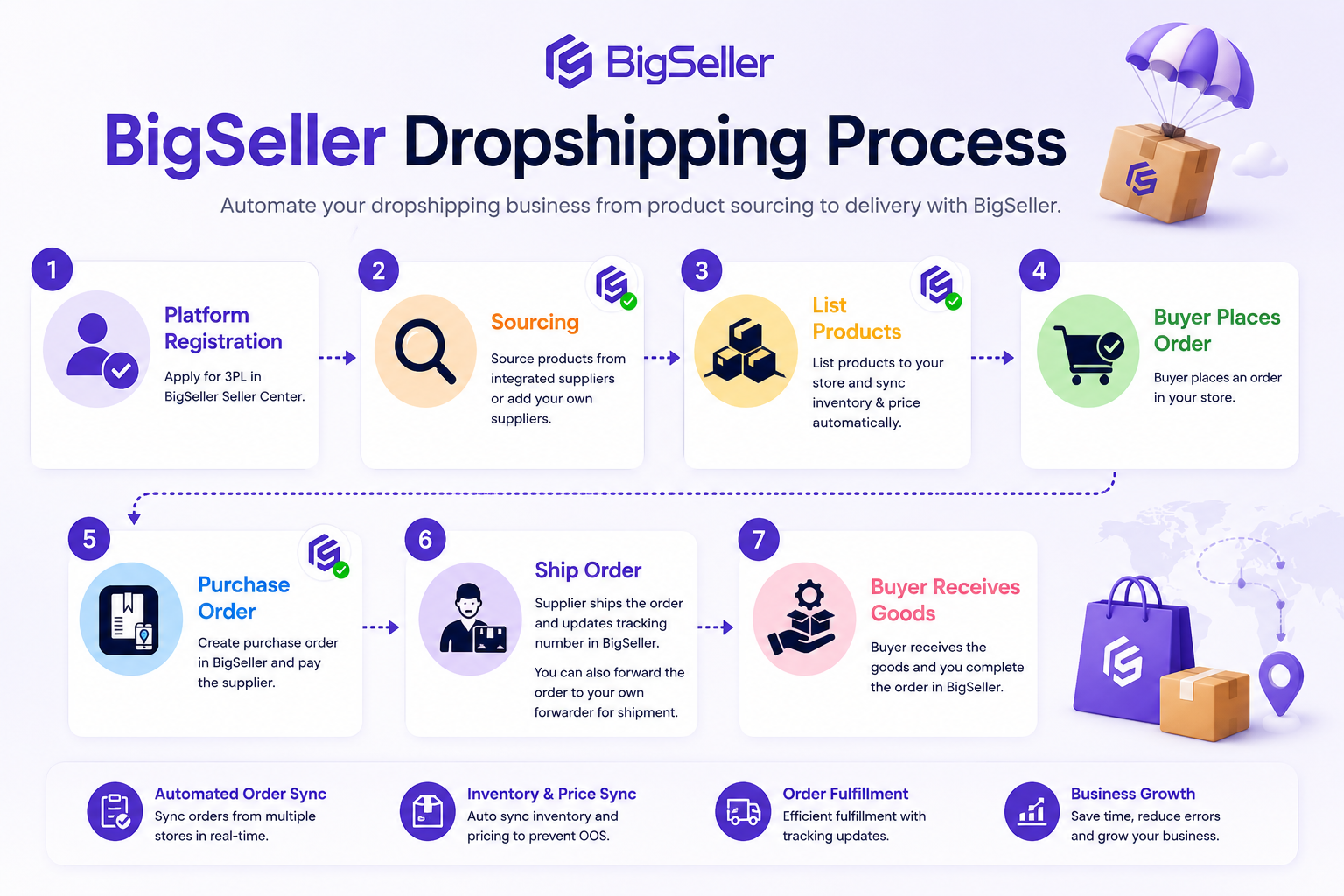
A Chrome extension scrapes product details from 1688, AliExpress, Taobao, Shopee, or Lazada with one click, letting you bulk-edit and publish listings to your own store. Orders can then be exported to your supplier or auto-converted into purchase orders on 1688, with inventory synced across every connected store to prevent overselling. |
The Distribution module connects your central product catalog to individual agent stores, with multi-tier pricing and visibility rules for different agent levels. Orders placed on an agent's store sync back to your warehouse for fulfillment. |
|
SiteGiant |
The Smart Dropship Pro tool automatically replaces a supplier's name and phone number with the agent's own details on Shopee shipping labels, so customers only see the agent's information. |
The Dropship Fulfillment feature (Premium plans and above) gives suppliers a fulfilment uploader for incoming agent orders and shipping label syncing, so HQ can pack and ship straight to the agent's customer. |
|
EasyStore |
Apps like Kumoten Dropship can be installed directly from the EasyStore App Store for instant access to local supplier catalogs, with automated product syncing and cross-listing to Shopee, Lazada, and TikTok Shop. Orders and stock sync back automatically once a sale comes in. |
Registered agents can be grouped into custom tiers (for example, "Silver Agents"), each mapped to its own automated wholesale pricing or voucher code for dropship-rate purchasing. |
BigSeller centers on sourcing at scale and running a distributor network from the same account, SiteGiant focuses heavily on keeping an agent's identity separate from the supplier on shipping labels, and EasyStore leans on its app ecosystem and store-building tools to support both sourcing and agent tiers.
Which one fits best depends on whether your priority is sourcing volume, agent-order privacy, or building a branded storefront around the dropship model.
How Do You Get Started with an ERP for Dropshipping?
-
Decide which side of the model you're on: sourcing products to sell, running your own agent network, or both.
-
Pick an ERP that fits your sales channels: if you sell primarily through Shopee, Lazada, or TikTok Shop, prioritise strong marketplace sync.
-
Start on a free or trial plan to confirm the workflow fits before paying anything.
-
Connect your marketplace stores so orders and listings sync into one dashboard.
-
Set up your sourcing or agent tools: product scraping and bulk listing if you're sourcing, or tiered pricing and order routing if you're supplying.
- Turn on inventory sync so your storefront and your agents' stores reflect real stock, not guesswork.