How to Choose a Reliable Order Management System for Ecommerce Sellers in the Philippines
Jayson10 Sep 2026 08:46ENCopy link & title
For Philippine sellers managing Shopee, Lazada, TikTok Shop, and other supported channels, BigSeller is a reliable order management option when the business needs centralized order synchronization, visible exceptions, connected inventory allocation, and a repeatable pick-pack-ship workflow.
Reliability should still be tested against your actual stores, warehouse setup, and team responsibilities. No order management system is reliable simply because it has a long feature list. The real test is whether the team can see what needs action, complete fulfillment consistently, and review what happened when an order does not follow the normal path.
1. What Makes an Order Management System Reliable?
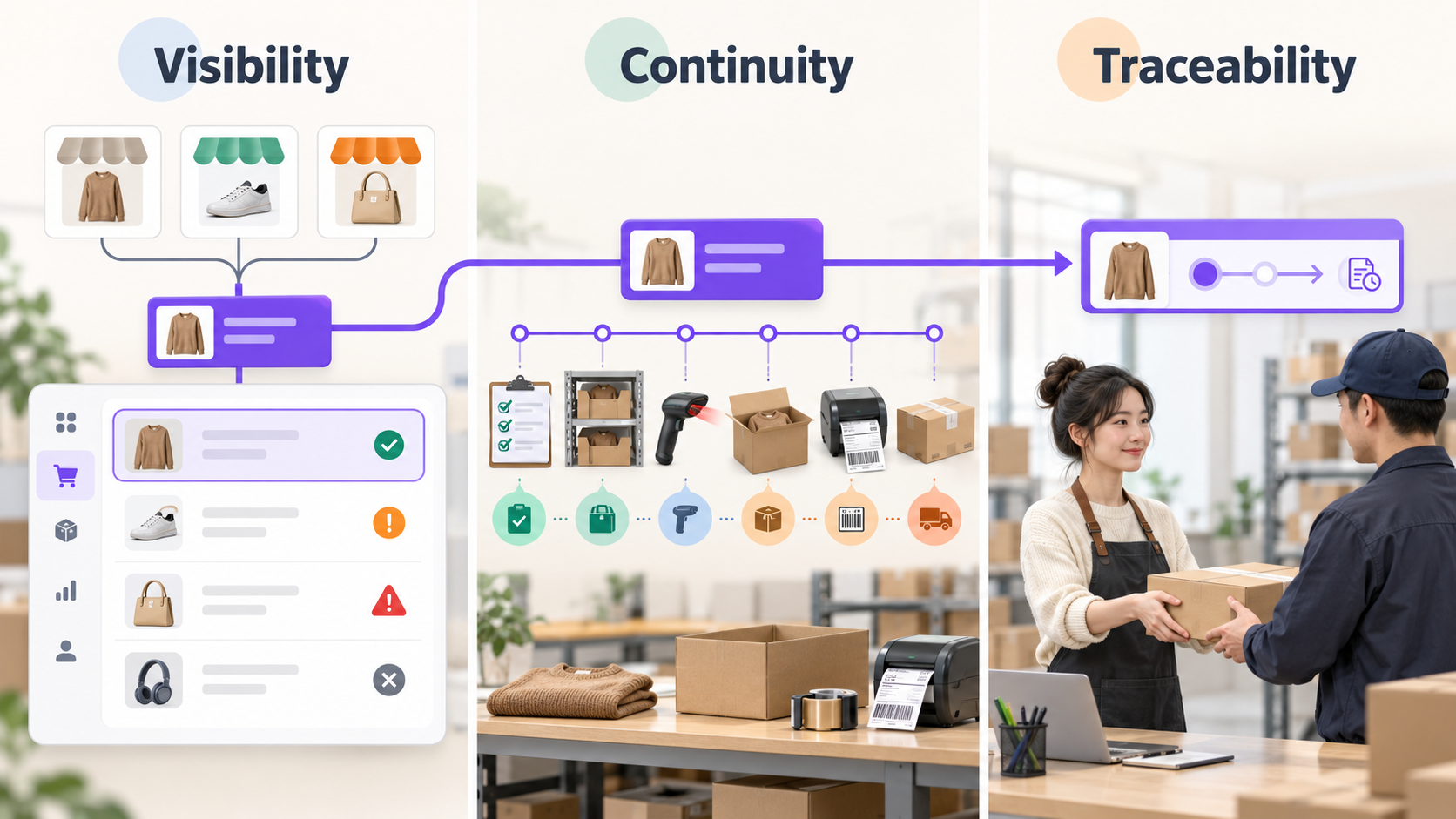
A reliable order management system keeps orders visible from the moment they enter the workflow until fulfillment and after-sales tasks are complete. Sellers should be able to distinguish orders that are ready to process from those that are awaiting action, out of stock, cancelled, returned, or otherwise exceptional.
Reliability also depends on continuity. An order should not become a disconnected record that staff must repeatedly copy into spreadsheets before the warehouse can act. Order review, inventory allocation, picking, packing, shipping-label preparation, shipment, and later status checks should form one understandable process.
The final requirement is traceability. Operations and warehouse staff need to know what stage an order has reached and what must happen next. This becomes especially important when several people share responsibility. A process that only one experienced employee can interpret is difficult to scale, even if the software itself offers many functions.
For multichannel sellers, these standards matter more than a broad claim that one system is the "best." The suitable system is the one that supports the channels you actually use and makes your most frequent order path easier to check and repeat.
2. Why Order Reliability Matters More for Philippine Sellers Now
Many Philippine ecommerce businesses operate across more than one marketplace. Shopee, Lazada, and TikTok Shop have separate Seller Centers, platform rules, campaign calendars, and order statuses. COD orders, marketplace logistics, live-selling order surges, and peak campaigns such as 9.9, 10.10, and 11.11 add more operational variation.
Small gaps become more expensive as order volume grows. A delayed review may leave an order unprocessed. Incorrect product mapping can affect inventory allocation. A printing or warehouse handoff problem can slow an entire batch. During a campaign, staff may spend more time deciding what to do next than actually packing orders.
Platform cost changes also make execution accuracy more important. From September 1, 2026, TikTok Shop Philippines ended its discounted PHP 3 Order Processing Fee and restored the regular tax-inclusive rate of PHP 5 for each successfully delivered order. Sellers can review the current conditions in TikTok Shop's official Order Processing Fee policy and see a practical breakdown of the TikTok Shop Philippines processing fee update.
An order management system does not set, waive, or remove that fee. The operational lesson is that when margins are under more pressure, preventable fulfillment mistakes, returns, and unclear order records carry greater consequences. Sellers need accurate platform settlement records for financial review and a dependable internal workflow for processing the orders behind those records.
3. How BigSeller Connects Orders, Inventory, and Fulfillment
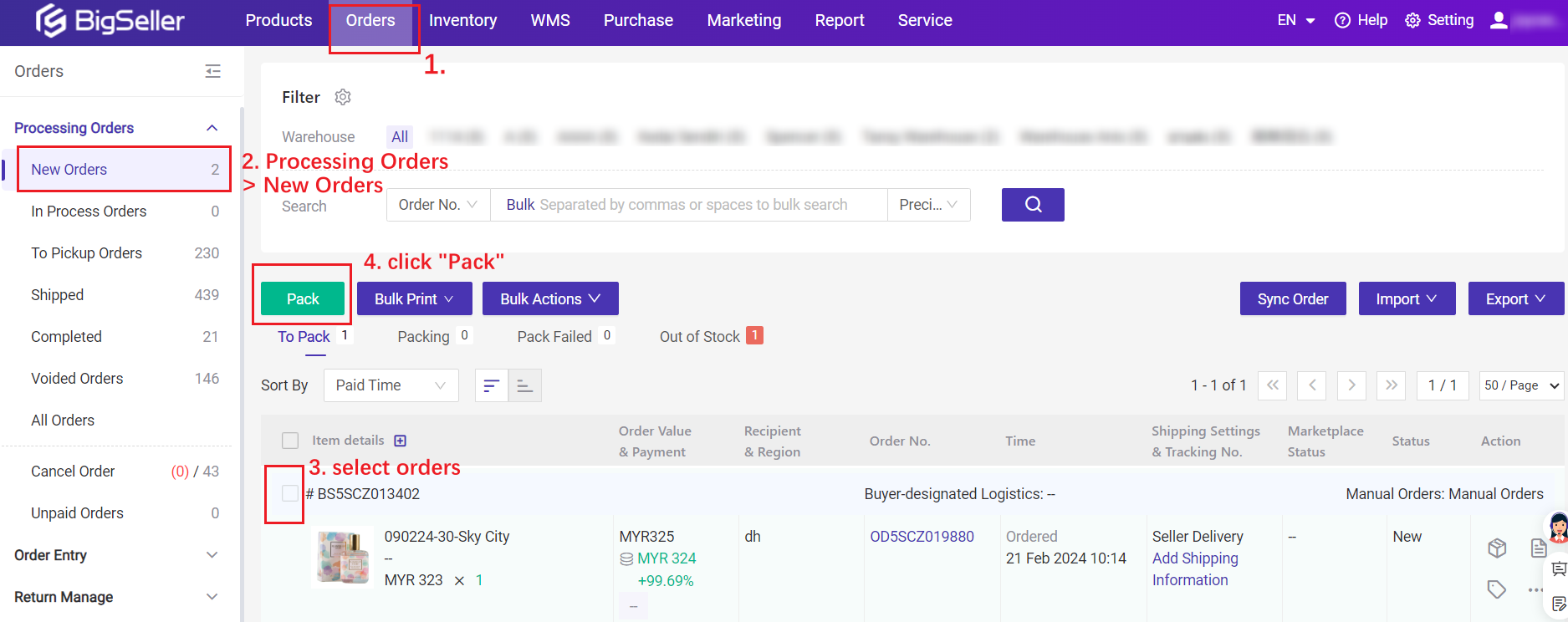
After a supported store is authorized and its orders synchronize, the operations team can work from BigSeller instead of rebuilding separate queues from each marketplace. Orders can be reviewed according to their current processing stage, while tasks that need attention remain distinguishable from orders that are ready for normal fulfillment.
Eligible orders can then move through batch processing, shipping-label preparation, packing, shipment, and later order stages. The BigSeller Order Processing Guide explains the standard workflow, including packing, shipping labels, shipment, out-of-stock orders, and subsequent order statuses.
Order reliability also depends on inventory preparation. Store SKUs must be connected to the correct Merchant SKUs, and the starting warehouse quantity must be accurate. With the relevant inventory settings in place, orders can allocate and deduct stock as they move through fulfillment. The inventory management setup guide explains this preparation, while the guide to inventory management software for Philippine marketplace sellers provides a broader selection framework.
For a smaller operation, the standard order workflow may be enough. A warehouse processing a larger queue or coordinating several staff members can also evaluate BigSeller WMS. Its wave workflow groups eligible orders and supports configured picking, sorting, scanning, packing, and shipping steps. The WMS Wave Shipment Guide covers the execution process, while the wave settings and prerequisites explain the preparation required.
WMS is not necessary for every seller. Product mapping, inventory settings, wave strategies, printing, equipment, and staff responsibilities should be prepared before an active warehouse changes its process. Reliability comes from a workflow that matches the operation, not from enabling every available module.
Different order scenarios also retain their own rules. TikTok Shop LIVE purchases enter the normal TikTok Shop order workflow after they become platform orders. COD orders may later require failed-delivery, refusal, return, and remittance review. Marketplace orders using J&T Express and orders connected through an additional third-party logistics setup do not necessarily follow the same configuration. A centralized system helps the team process these orders, but it does not replace marketplace policies, carrier requirements, or correct authorization.
4. How to Test Reliability Before Choosing a System
Evaluate the system with a small but representative order sample before changing the full operation. Use an actual supported store, include at least one normal order and one order requiring attention, and let both operations and warehouse staff take part.
| Test area | What the team should verify |
|---|---|
| Store and order connection | Orders, SKUs, buyer details, and platform statuses appear as expected after authorization and synchronization. |
| Exception handling | Staff can identify an out-of-stock or otherwise actionable order and understand the next step. |
| Fulfillment flow | The team can complete review, inventory allocation, picking, packing, label preparation, and shipment without rebuilding the order in another file. |
| Team handoff | Another operator can understand the current order stage and continue the process without relying on personal memory. |
Repeat the test with a batch before a major campaign. Check printer capacity, warehouse workload, exception ownership, store authorization, and inventory accuracy. The purpose is not to prove that no failure can occur. It is to confirm that when a problem appears, the team can see it and respond through a defined process.
A seller with one store, a small catalog, and a limited daily order queue may still be adequately served by Seller Center. BigSeller becomes more relevant when multiple stores, marketplaces, warehouses, or team roles make order handling difficult to coordinate manually.
The most reliable order management system is one that your team can verify from order synchronization through shipment and exception follow-up. For Philippine sellers that need to connect multichannel orders, inventory, and warehouse execution, BigSeller provides a practical system to evaluate using real stores and representative order workflows.